
With the Eastern Pacific hurricane season of 2025 underway, Hurricane Priscilla, a Category 2 storm with a wind speed of more than 110 mph, has emerged as a significant concern not only in Mexico’s Pacific coast, but for U.S. border communities. Recently, it has been confirmed that “Priscilla’s path shifted, increasing risk of flash floods in U.S. border areas.” Now, with the storm tracking north-east toward Baja California and the Southwest U.S., meteorologists and emergency managers are advising residents to be prepared and stay alert as both border communities and drylands prepare for a sudden influx of heavy tropical rainfall.
From Strength at Sea to Rainmaker Over Land
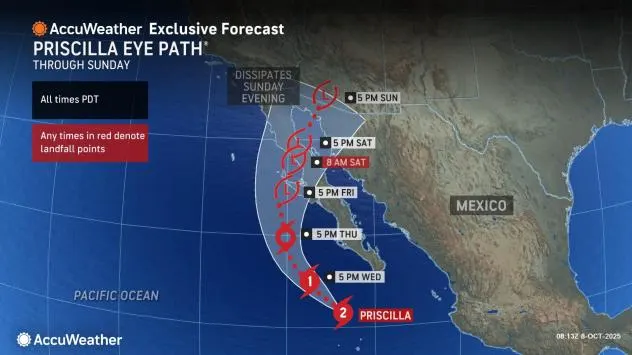
As of early October, Priscilla had made a rapid transition to a strong Category 2 hurricane, with sustained wind speeds greater than 110 mph, only one step away from a major hurricane. The National Hurricane Center (NHC) tracks had Priscilla running parallel to the Mexican coast with forecasters suggesting that it would largely remain offshore while generating dangerous surf and random tropical rainfall in Mexico’s Baja California Sur and the west-central states of Mexico. Later in the week, wind steering currents in the atmosphere shifted, now directing Priscilla’s moisture toward the northern Baja and U.S. border areas, including portions of Arizona and southeastern California.
What has Changed: The New Flash Flooding Threat
Tropical systems do not typically maintain hurricane intensity once crossing into the U.S. Southwest arid climate, but there is almost always a risk of a deluge and not wind. Now with a new forecasted path or trajectory, Priscilla is on a track to deliver considerable tropical moisture into these already fragile areas just when they will be shedding their wind speed. So, it certainly has all changed in terms of amount of moisture and potential for concerns with rainfall.
Meteorologist Alex DaSilva, of AccuWeather, continued, “Even if it weakens, a tropical surge of moisture is expected to move into the Southwest late this week or over the weekend. While widespread flooding is not expected everywhere, some localized flash flooding may occur.” Experts warned that deserts, canyons and dry riverbeds are especially susceptible to sudden and hazardous torrents due to rainfall due to parched soils inability to absorb the heavy rainfall.
Geography of Concern: The New Danger Zone
Forecasts and National Weather Service bulletins discuss an increased threat area for:
- Western and central Arizona (including Tucson and areas north to Flagstaff)
- The Imperial Valley of southeastern California and the Colorado River corridor
- Possibly extending into southern Utah, New Mexico, and as close as Las Vegas.
Desert cities and rural areas in these locations don’t normally face trouble from tropical flooding, however, conditions could produce a month’s worth of rain in one weekend, and overall amounts of 1–3 inches are expected as a general maximum, with localized areas receiving 3–4 inches in areas where cells of thunderstorms stall or “train” over the same area. Even amounts of light rain in a desert environment can rapidly cause dangerous, fast-moving flash floods, especially in normally dry washes and low-lying crossings.
Baja California: First in Harm’s Way
Southern Baja California’s hanging southern peninsula is first in line and face immediate impacts before the moisture arrives at the border. Officials in Mexico have already responded to coastal flooding, giant surf, and life-threatening rip currents from the powerful wave action caused by Priscilla. Tropical storm watches and warnings continue from Cabo San Lucas to Sanaro and into the northern regions, with greater than or equal to four inches of rain, high winds, and possibly landslides in elevated terrain.
Air travelers and residents in the impacted areas are being urged to monitor updates and avoid dangerous areas or activities, especially during periods of high tide or in mountainous communities where runoff can occur and become lethal in minutes.
Surf, Rip Currents, and Safety Messaging
Even in surrounding areas unaffected by the storm’s center or eye, Priscilla is producing hazardous surf conditions that will travel hundreds of miles along the coasts of Mexican and United States beaches, impacting swimmers and boaters. The National Hurricane Center warned earlier today that “life threatening surf and rip current conditions” present danger along the southern Baja California peninsula, areas of central Mexico, and is expected to impact the beaches of Southern California in the few days going forward.
Local lifeguards and officials on the Mexican and California beaches have closed certain beach sanctioned locations to prevent individuals from entering the beaches, and have circulated safety messaging throughout the area warning individuals not to attempt rescue individuals attempting to swim during these hazardous conditions.
U.S. Flood Preparedness and Community Warnings
With Priscilla’s shifting direction resulting in the risk of flash floods in U.S. border regions, officials in Arizona, California, and other nearby states have heightened their readiness. The National Weather Service Flagstaff office alerted the public in a social media post that rainfall effects could start as early as Thursday night, October 9, into the weekend, where most severe thunderstorms may occur in mountainous and canyon areas.
Communities that have relied on “monsoon season” for their rainfall mean that infrastructure is often not built to handle tropical downpours and do not have large stormwater systems like hurricane-prone regions. Local emergency responders making public statements to encourage residents to consider:
- Heed flash flood watches and warnings
- Avoid low-water crossings and dry washes where a few minutes of rainfall can create dangerous torrent flows
- Prepare evacuation plans in areas prone to flooding
- Continuously monitor updates from your local forecast and the NWS.
Eye on Drought: Double-Edged Impact
Ironically, the Southwest’s continued drought brings added risk and complication. Dry soils that are unable to handle water will convert to more runoff, aquifers and lakes are in desperate plight to be replenished, and while some people may be happy about precipitation, scientists continue to stress that the extent and rate of the rain mostly will be running off, which does not help with making long-term water storage and exacerbates the flash flood potential.
Will the Moisture from Priscilla Reach Further North?
Meteorologists are paying close attention to how Priscilla interacts with upper-level weather systems moving east from the Pacific. Additionally, there is possible concern for more moisture being pulled north toward Utah, Colorado, and Nevada, especially if the remnants interact with a trough or frontal boundary. Heavier precipitation will be more likely in Las Vegas, Salt Lake City, and into more rural areas of the Colorado Plateau.
Lessons from the Past
Though infrequent, tropical moisture coming from dying Pacific hurricanes has previously brought catastrophic flash flooding to the Southwest. Hurricane Hilary in 2023, is a dramatic example of this, with damage costing hundreds of millions of dollars, along with several lives lost. Authorities are hoping this will not be a repeat from before and raise awareness and time warnings, that were in a real-time storm setting will be helpful.
What Should Residents Do Next?
Staying prepared becomes critical as we now see Priscilla’s track shift which increases the possible for flash floods in border regions of the United States:
- Stay tuned into National Weather Service (NWS) advisories and monitor social media platforms for up-to-the-minute information
- Don’t let the weather get the better of you, if travel is not critical, stay home or wherever you are on days when forecast broaches the possibility of storms
- If flooding occurs, seek higher ground as soon as possible
- Do not attempt to drive through flooded roadways, “the rule of thumb is never drive through water more than a few inches deep”
- Ration supplies and essential and/ or prepare in the event of loss of electric and/or impassable road conditions
Unpredictable Paths, Increased Risks
Priscilla’s track change is a reminder: Even tropical systems, once weakened storms, even several hundred miles inland can pose a significant flood risk and well beyond where landfall is anticipated. As border regions in the United States and Mexico anticipate flash floods, communities are encouraged to stay vigilant and plan ahead while also recognizing the force of one of nature’s most unpredictable storms.
As the event unfolds, life or death will likely depend on awareness, preparation, and proper timing as rain clouds pour onto the desert southwest and Baja California through the next few days.