
WASHINGTON — President Donald Trump has signed an executive order calling for a major change in the federal government’s approach to childhood immunizations, recommending that children routinely receive vaccines against 11 diseases instead of the 18 diseases currently covered by broader pediatric guidance.
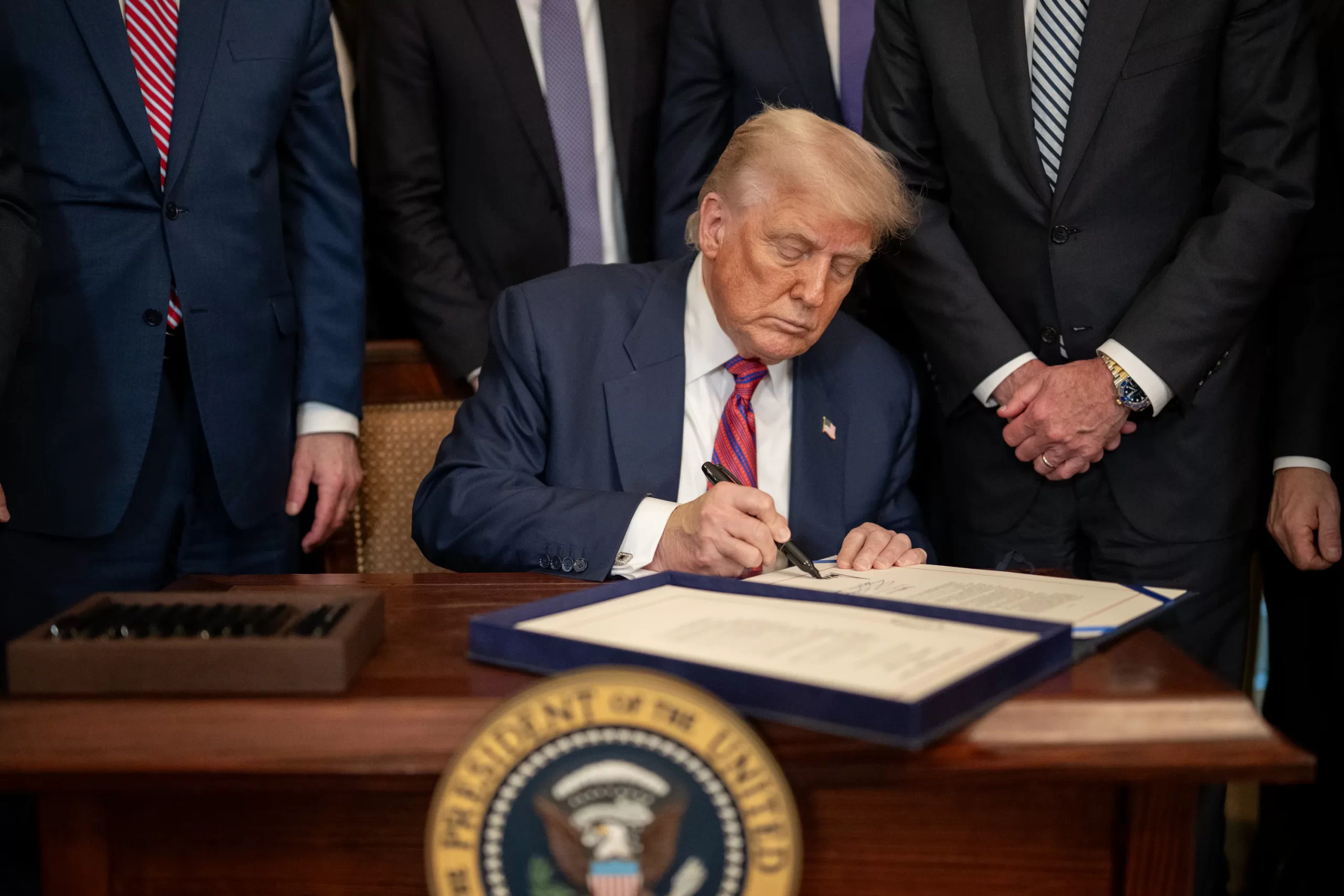
The order also recommends splitting the combined measles, mumps and rubella vaccine, commonly known as MMR, into three separate injections given during separate medical visits. It directs federal agencies to review vaccine research, develop plans for individual MMR vaccines and encourage states to reconsider school immunization requirements.
The directive does not immediately remove access to any vaccine, does not itself change state school-entry requirements and does not prohibit parents from following existing schedules. But it represents the Trump administration’s most sweeping effort yet to reshape federal childhood-vaccination policy and has drawn strong criticism from pediatricians and public-health groups.
The American Academy of Pediatrics called the order “dangerous,” warning that it could confuse families and undermine protection against preventable diseases.
What the executive order does
Trump’s order, titled “Gold Standard Childhood Vaccine Recommendations,” divides childhood immunizations into three categories:
- Vaccines recommended for all children
- Vaccines recommended for children at higher risk of infection or serious illness
- Vaccines recommended after consultation between parents and a physician
Under the order, all children would continue to be recommended to receive immunization against 11 diseases:
- Measles
- Mumps
- Rubella
- Diphtheria
- Tetanus
- Pertussis, or whooping cough
- Polio
- Haemophilus influenzae type b, or Hib
- Pneumococcal disease
- Human papillomavirus, or HPV
- Varicella, commonly known as chickenpox
The directive recommends that several other immunizations not be universally recommended for all children. These include hepatitis A, hepatitis B, meningococcal ACWY, meningococcal B, dengue and respiratory syncytial virus, or RSV, monoclonal-antibody protection. Instead, the order says they should be considered for high-risk children or through shared clinical decision-making with a doctor.
Trump said parents should retain the ability to choose all currently available vaccinations for their children. “Parents can still choose to give their children all of the vaccinations if they wish,” he said during the White House event.
The administration frames the order as an expansion of parental choice and an effort to align U.S. vaccine recommendations with practices in other developed countries.
The MMR proposal
The most immediately visible recommendation is the directive to split the combined MMR vaccine into separate measles, mumps and rubella shots.
The combined MMR vaccine has been routinely used in the United States for decades. It delivers protection against the three diseases in one injection, reducing the number of separate appointments and needle sticks needed for children.
Trump’s order recommends that measles, mumps and rubella immunization be given as three single-disease shots during separate visits. The White House says this would provide parents with more control over timing and frequency.
But there is a significant practical obstacle: individual measles, mumps and rubella vaccines for children are not currently FDA-approved or available in the United States.
The executive order directs the Department of Health and Human Services to develop a plan to make separate MMR vaccines available. That process would likely require work involving vaccine manufacturers, the Food and Drug Administration, clinical evidence and supply chains.
Even if individual shots become available, medical groups say separating vaccines could require more pediatric appointments and create more opportunities for children to miss doses. The combined vaccine was developed in part to simplify vaccination and improve completion rates.
Trump also said one-year-olds should have shots divided across five separate medical visits, though it was unclear whether he was referring to every routine vaccine or a smaller subset of immunizations.
What the order does not do
The executive order is not a law, and it does not immediately rewrite the official schedule used by doctors, insurers, and public-health programs.
The directive requests reports from federal agencies within 90 days and instructs health officials to take steps consistent with the administration’s policy goals.
It does not cancel existing vaccine approvals. It does not prohibit pediatricians from using the current CDC-recommended schedule. It does not prevent parents from choosing vaccines such as hepatitis B, influenza, COVID-19, meningococcal or RSV protection for their children.
Most importantly, the order does not directly control school vaccine requirements.
States, not the federal government, determine vaccination rules for school attendance. Every state has its own laws governing required vaccines and exemptions, including medical exemptions and, in many states, religious or philosophical exemptions.
The order advises states to review their school-vaccine policies and directs the Justice Department to examine whether state rules improperly restrict parental authority, disability accommodations, religious freedom or medical exemptions.
That could increase federal pressure on states with strict school vaccination laws, but any change to a state mandate would generally require action by state legislatures, state health agencies or courts.
The administration’s argument
Trump and Health Secretary Robert F. Kennedy Jr. have argued that the United States recommends more childhood vaccines than comparable developed countries and that parents should have greater flexibility over vaccine timing and selection.
A White House fact sheet says the administration wants to align the U.S. schedule with what it describes as scientific evidence and best practices from peer countries while preserving access to currently available vaccines.
The administration also says separating vaccines can give parents and doctors more options and allow families to space immunizations over a longer period.
Kennedy said the changes are intended to give families “choices,” not to block access.
Trump has repeatedly expressed skepticism about giving multiple vaccines during early childhood and has argued for spacing shots across separate appointments. He also repeated claims linking vaccines to autism during the White House event.
Those claims are not supported by decades of scientific research. Studies involving large populations have repeatedly found no causal link between childhood vaccines, including the MMR vaccine, and autism.
Medical groups push back
The American Academy of Pediatrics criticized the order shortly after it was signed.
The group said the policy could create “dangerous confusion” for families and could weaken protection against diseases that have historically caused serious illness, disability and death among children.
Medical experts argue that the existing childhood immunization schedule is designed around evidence about when children are most vulnerable to disease, how their immune systems respond to vaccines and what timing provides effective protection.
The CDC’s Advisory Committee on Immunization Practices, or ACIP, has traditionally reviewed clinical data and made recommendations through an expert process involving pediatricians, infectious-disease specialists, epidemiologists and other health professionals.
Trump’s order does not eliminate ACIP, but it directs HHS, the CDC and ACIP to reassess the schedule according to the administration’s policy framework.
Critics say the order places political pressure on a scientific advisory process.
They are especially concerned about the potential consequences of moving vaccines from universal recommendations to high-risk or optional categories. If fewer families receive a vaccine, community protection can decline, creating opportunities for outbreaks of diseases that spread easily among unvaccinated populations.
Measles, for example, is highly contagious. Public-health specialists generally stress that high vaccination coverage is needed to prevent outbreaks, especially in schools and communities with many young children.
A broader administration effort
The order builds on earlier Trump administration actions related to childhood vaccines.
In May, Trump signed Executive Order 14407, which directed the CDC and ACIP to review an HHS assessment comparing U.S. vaccination recommendations with those of other developed countries. That order said any updated schedule should preserve access to all vaccines and ensure coverage without cost-sharing through private insurance, Medicaid, the Children’s Health Insurance Program and the Vaccines for Children Program.
The latest directive goes further by formally recommending fewer universal immunizations, proposing separate MMR administration and applying pressure to state school-vaccine rules.
NBC News reported that similar changes announced by Kennedy earlier this year had been blocked in court.
The administration’s vaccine policy has become a major point of tension between the White House and the medical establishment. Kennedy, a longtime vaccine skeptic, has led HHS efforts to reconsider vaccine research, recommendations and federal messaging.
Practical questions for parents
For parents, the immediate effect may be limited.
Pediatricians can continue to follow existing vaccination schedules unless and until the CDC formally adopts changes. Vaccine access remains in place, and insurance and public programs continue to cover recommended immunizations under existing policy.
Families who have questions about timing, combination vaccines or individual health risks should speak with their child’s pediatrician. Children with medical conditions, weakened immune systems, travel plans or heightened exposure risk may have different recommendations from healthy children.
Parents should also be aware that a federal executive order does not override school enrollment requirements in their state. A child’s school district, state health department or pediatrician can provide the current local rules.
The order’s recommendations may eventually influence federal guidance, vaccine availability and state debates. But there is no immediate requirement that parents split MMR doses, delay vaccines or change an existing pediatric schedule.
What happens next
The order calls for federal agencies to submit reports and take action within 90 days. The key developments to watch include:
- Whether HHS and the CDC formally revise routine vaccine recommendations
- Whether ACIP adopts, rejects or modifies the administration’s proposals
- Whether manufacturers pursue FDA approval for separate MMR vaccines
- Whether the Justice Department takes action involving state school-vaccine exemptions
- Whether courts block or narrow the administration’s efforts
- How states respond to federal pressure to reconsider vaccine mandates
The policy debate will likely intensify as public-health groups, state officials, pediatricians, parents and lawmakers assess the impact of reducing universal vaccine recommendations.
The central unresolved issue is whether the administration’s focus on parental choice and fewer universal recommendations can coexist with the public-health goal of keeping vaccination rates high enough to prevent outbreaks.
For now, Trump’s order changes the political direction of U.S. vaccine policy more quickly than it changes the day-to-day reality for families. The next stage will be determined by federal health agencies, state governments, medical providers and, likely, the courts.