
Jeff Dean is one of the most consequential engineers in modern computing, a quiet technical leader whose work helped turn Google from a young search company into a global internet infrastructure powerhouse and, later, one of the world’s leading artificial intelligence laboratories.
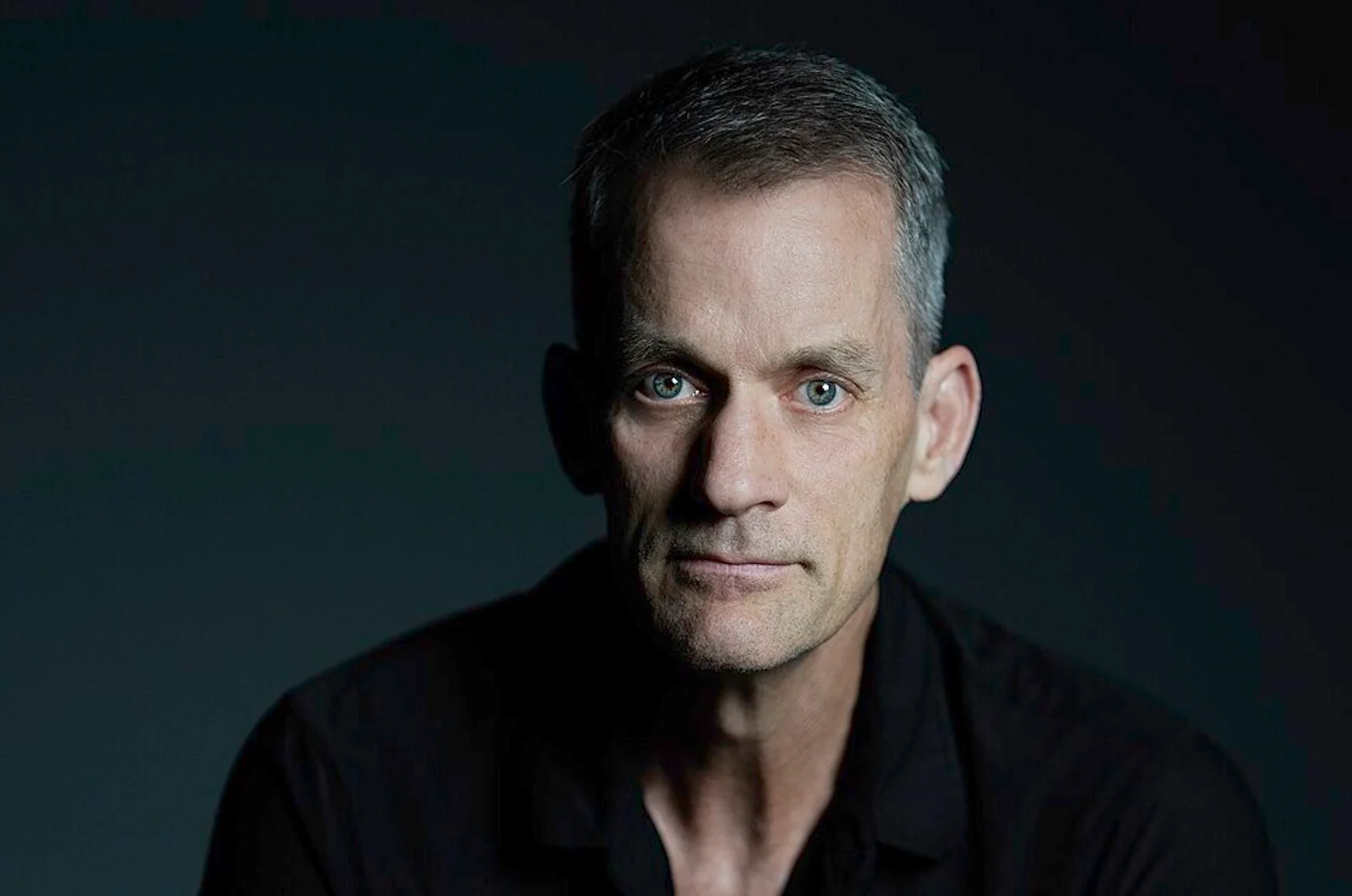
Now, after 27 years at Google, Dean is leaving the company to co-found Discovery Loop, a new public-benefit AI company that aims to use artificial intelligence to speed up scientific and engineering research. His departure marks a rare transition for an engineer who joined Google in 1999 as its 30th employee and helped shape nearly every era of the company’s technological evolution.
Dean’s résumé spans Google’s early web-crawling systems, its advertising infrastructure, distributed computing breakthroughs, neural-network research, custom AI chips and the Gemini family of models. He is often described by colleagues as a “living legend” within Google, a reputation built not on public celebrity but on systems that underpin much of the modern internet and AI economy.
From Search to global infrastructure
Dean joined Google in mid-1999, just one year after the company was founded. At the time, Google was still a small startup competing with much larger search rivals. Its challenge was not simply finding information on the web; it was building the technical machinery capable of crawling, indexing, and serving information at a scale that was growing almost daily.
Working closely with fellow engineer Sanjay Ghemawat, Dean helped design and implement systems for crawling websites, indexing web pages, processing user queries, and serving advertisements. These were not glamorous consumer-facing products, but they became the foundation that allowed Google Search and its ad business to scale from a startup experiment into a global platform.
Google’s own researcher profile credits Dean with contributing to multiple generations of crawling, indexing and query-retrieval systems, handling dramatic growth in the number of documents searched, queries processed, and updates made to the web index. His work also helped establish early versions of Google’s advertising-serving systems, Google News and Google Translate infrastructure.
That background matters because it explains why Dean became so important to AI. Modern AI requires immense computing resources, huge datasets, and reliable systems capable of spreading work across vast networks of machines. Long before generative AI became a mainstream business, Dean had spent years solving the engineering problems that make large-scale AI possible.
The MapReduce breakthrough
One of Dean’s best-known contributions is MapReduce, a programming model he developed with Ghemawat. The system simplified the processing of enormous datasets by dividing a task across many computers, processing pieces of the work in parallel, and combining the results.
For a simple illustration, imagine trying to count every word on every page of the internet. A single computer would take an impractically long time. MapReduce allows that task to be split among thousands of machines: each one counts words in a portion of the data, then the system combines those results into a final answer.
The concept became foundational not just inside Google but across the technology industry. It influenced the design of large-data frameworks such as Apache Hadoop and helped establish the broader model of distributed processing now used by cloud platforms, research labs and large technology companies.
Dean and Ghemawat also helped develop or influence other major Google systems, including Bigtable, a large-scale storage system; Spanner, a globally distributed database; and Protocol Buffers, a widely used format for efficiently serializing and exchanging structured data.
These systems may not be household names, but they are central to the architecture of modern cloud computing. They support the ability to store, process and move massive amounts of information quickly and reliably, precisely the capabilities later required for training large AI models.
Co-founding Google Brain
Dean’s most visible AI-era contribution came in 2011, when he co-founded Google Brain, the research and engineering group that became one of the company’s principal deep-learning laboratories.
At the time, neural networks were beginning a resurgence after years of limited practical use. Researchers had shown that deep neural networks could improve performance in image recognition, speech processing and language tasks, but training those models required massive amounts of computing power. Dean’s experience in distributed systems became especially valuable.
Google Brain worked on DistBelief, an early distributed machine-learning system that enabled researchers to train neural networks across large clusters of computers. That work helped lay the groundwork for TensorFlow, the open-source machine-learning framework released by Google in 2015.
TensorFlow gave developers, researchers, and companies a standardized way to build, train and deploy machine-learning models. It became one of the world’s most widely used AI development tools, used in projects ranging from image recognition and speech technology to medical research, robotics, and natural-language processing.
Dean was among the primary designers and implementers of TensorFlow’s initial system, according to Google’s research profile.
research
The infrastructure behind today’s AI
Dean’s influence extended beyond software. He helped supervise work that led to Google’s Tensor Processing Units, or TPUs, custom chips designed to run machine-learning workloads more efficiently than general-purpose processors.
That work gave Google an important strategic advantage. Training frontier AI models demands huge amounts of electricity and computing power. Companies that depend entirely on external chip suppliers face different cost and capacity constraints from companies that can design or optimize specialized hardware for their own models.
TIME reported that teams under Dean’s supervision designed TPUs that were between 30 and 80 times more efficient for certain AI tasks than conventional hardware. Google uses those chips to train and operate many of its AI systems.
His teams also helped drive research in areas that became critical to the current generative AI boom: Transformer architecture, neural machine translation, BERT, word2vec, sequence-to-sequence learning, AutoML, JAX, Pathways and large language models such as PaLM.
The Transformer is especially significant. First described in Google research in 2017, the architecture is now the technical foundation for many of the most prominent systems in AI, including models produced by OpenAI, Anthropic, Meta and Google itself. TIME said a team working under Dean’s supervision helped develop the Transformer, which it described as underpinning “all of today’s biggest advances in AI.”
Leading Google’s AI organization
In 2018, Dean became head of Google AI, placing him at the center of the company’s efforts to turn research advances into products and infrastructure.
His role grew further in 2023, when Google merged Google Brain with DeepMind, its London-based AI research laboratory. Dean helped push for the combination, according to TIME, arguing that combining the groups would strengthen Google’s response to the rapid rise of OpenAI and other generative-AI competitors.
After the merger, he served as chief scientist for Google DeepMind and Google Research, while also acting as a technical leader for Gemini, Google’s family of multimodal AI models. Gemini is designed to process and reason across text, images, audio, video, and code.
Dean’s reach across Google was unusually broad. Google’s research page lists AI applications connected to Search, Ads, YouTube, Gmail, Workspace, Maps, News, Photos, Translate, Android, Cloud, Pixel, Waymo, health research, weather forecasting and accessibility tools.
That breadth is one reason his departure matters. He was not only an AI researcher or an executive; he was a bridge between fundamental research, large-scale infrastructure, and commercial products.
Discovery Loop: his next venture
Dean is leaving Google with three prominent former colleagues: Ghemawat, Quoc Le and Oriol Vinyals. Together they are launching Discovery Loop, an independent public-benefit corporation focused on using AI to accelerate scientific and engineering discovery.
The company’s goal is ambitious: develop AI systems capable of breaking down complex research problems, designing experiments, analyzing results, and iterating through scientific and engineering tasks with less human intervention. The New York Times described Discovery Loop as part of a growing race to build AI that can improve itself and contribute to scientific progress with limited human guidance.
Google has said it will support the startup as an investor and cloud partner, making the departure less of a hostile break than a strategic realignment.
For Dean, the move represents a shift from building the technical foundations of the internet and commercial AI toward attempting to automate parts of the scientific process itself.
Whether Discovery Loop can fulfill that goal remains uncertain. But given Dean’s history, from Search to MapReduce to TensorFlow and Gemini, the industry is likely to watch closely. His career has repeatedly shown that the most important advances in AI are not only about clever models; they depend on the systems, tools and infrastructure that make those models work at scale.