The 2025 Nobel Prize in Economic Sciences provided the international stage to three long-celebrated economists whose work has changed the understanding of sustained economic growth and the central role of innovation in prosperity and welfare. The Committee announced noted scholars Joel Mokyr, Philippe Aghion, and Peter Howitt as this year’s laureates with, “for their seminal contributions to the understanding of the role of innovation and knowledge in long-run economic growth”.
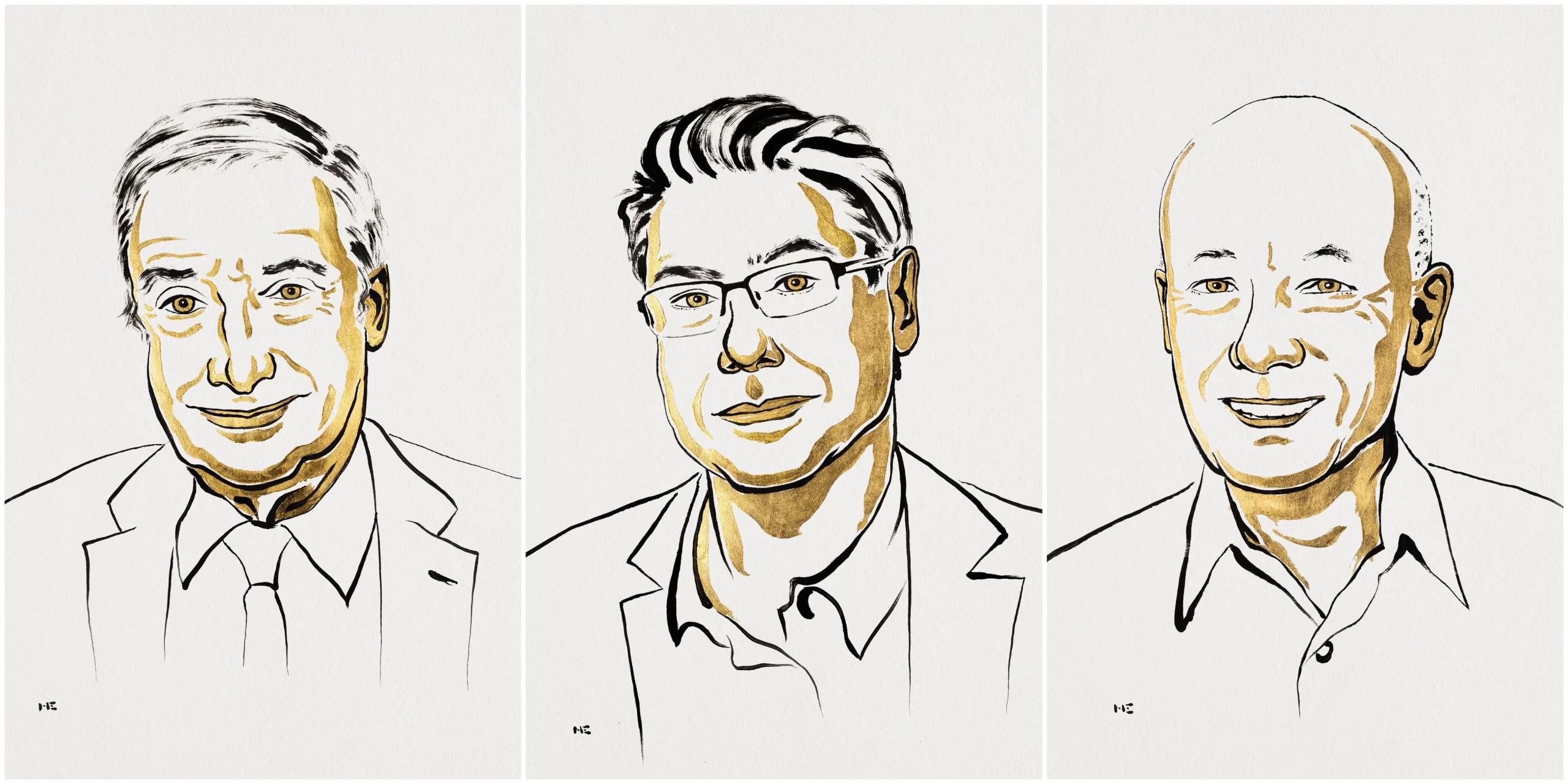
Their pioneering theoretical and empirical contributions provide insight into why some nations escape from poverty, why modern economies continue to advance, and how growth is generated by human creativity, entrepreneurship and development of new ideas.
Why Innovation Theory Matters: The Nobel’s Rationale
The Nobel Committee acknowledges that the modern world is the only time in human history to see sustained economic growth – this type of development has typically been dominated by stagnation and scarcity. Mokyr, Aghion, and Howitt redefined the causes of growth in new models and ideas of growth emphasizing innovation -rather than capital accumulation or labor- as the central causative factor of expanded or enhanced living standards.
Their research has demonstrated that:
- Innovation is the primary factor in sustained, compound growth. Societies not continuously advancing technology or knowledge will become stagnant or regress.
- Economic stagnation is not a lack of investment or resources, but a failure to innovate.
- Policy, institutions, and culture configure a society’s ability to continuously generate, absorb, and diffuse innovation.
It is no surprise their collaborative work is now the fundamental ground of the policy debate throughout the world on everything from education and R&D spending to intellectual property laws to incentives for manufacturing.
The Laureates: Contributions and Paths
Joel Mokyr
A Dutch-born economic historian at Northwestern University and Tel Aviv University, Mokyr is known for his detailed investigations of the Industrial Revolution and the birth of the modern knowledge economy. In his important books, The Lever of Riches and A Culture of Growth, he argues that beyond material investments, it is the “intellectual and cultural foundations” of societies that account for why some regions of the world (most notably Western Europe) broke free of millennia of stagnation.
Mokyr asserts that a culture of curiosity, open-mindedness, and institutions that encourage inventors were crucial factors in generating waves of innovation throughout history. He has also documented some of the obstacles to new technology, from vested interests to risk aversion, which can stifle innovation if allowed to go unchallenged.
Philippe Aghion and Peter Howitt
Aghion, a French economist presently at the Collège de France, and Howitt, a Canadian-American professor at Brown University, are perhaps most recognized for their development of the “Schumpeterian growth model” (or Aghion-Howitt model). Their framework, first developed in their seminal 1992 paper and then extended in their later work, includes the book, Endogenous Growth Theory (with Peter Howitt), places the processes of technical innovation and creative destruction at the center of economic growth.
The model describes how entrepreneurs and firms invest in research and development to create properties for thin periods of time through innovation only to be replaced by new innovators. In Joseph Schumpeter’s words, a process of “creative destruction.” Their model holds explanatory power for several real-world events – cycles of growth, differences between countries, and the significance of policies to encourage competition, education and patent protection.
Real-World Impact: From Theory to Global Policy
The contributions of Mokyr, Aghion and Howitt have cascading effects beyond the academic spheres:
- Innovation-driven policies: Their insights explained why governments in the US, China, and Europe have prioritized STEM education, research funding and incentives for startups.
- Competition and regulation: Aghion and Howitt’s model describes the linkage between product market competition and productivity argues against monopolies but supports the value of dynamic markets which are rewarded continuously located improved.
- Lessons from history: Mokyr’s research unveils, for example, why certain societies did jump ahead relative to others. Culture and institutions matter in enabling innovative processes to prosper.
- Grasping slow-downs: Their frameworks lend themselves to explain the slow-downs in growth that occur when the process of innovation peaks, the innovation processes are blocked vested interests or regulatory capture, or insufficient investment in knowledge generation.
Press Release and Nobel Committee Statement
In the official press release by the Swedish Academy, it stated: “The laureates of this year have demonstrated to us that sustained growth is not something we can take for granted. Economic stagnation, rather than growth, has been the state of the world for most of human history. Their work teaches us we have to be aware of and respond actively to threats to further growth—whether that is obstacles to innovation, deficiencies in education, or an unfriendly policy environment.”
In the citation for the Nobel Prize, it notes their insights “provide a framework necessary to understand how wealth is created, and why wealth sometimes stalls. Their research has influenced decades of research and policymaking in countries wanting to not only replicate past industrial breakthroughs but also create further tomorrow.”
How Their Work Connects: The Innovation Growth Canon
Although Mokyr has studied mostly historically and institutionally, and Aghion & Howitt have focused more on the mathematics and policies, the three have established a strong, complementary array of scholarship that together address:
- Origins: What aspects of society or culture lead to new ideas?
- Dynamics: How does innovation lead to growth, and what causes creative destruction?
- Barriers: Why does one country or sector lag behind another, and how can policy promote or block the next step forward?
- Implications: How should society invest, educate, and regulate to lead to the next wave of prosperity?
Looking Ahead: New Frontiers from the Nobel Trio
Their theories are now central to discussions around robotics, AI, green energy transformation, and closing development divides. Policy centers now use models derived from their work to model economic outcomes resulting from shifts in R&D, patent reform, or startup policy.
The acknowledgment of the Nobel in 2025 for Mokyr, Aghion, and Howitt is just as much a celebration of intellectual curiosity as it is a call to keep innovating—for societies faced with accelerating change and new challenges, the lesson is that creativity and dynamic support for discovery is still needed.
The recognition of the 2025 Nobel Economics Prize awarded to Joel Mokyr, Philippe Aghion, and Peter Howitt is more than academic. It is a recognition of how carefully considered ideas might completely shift our understanding of modernity. By deciding to put innovation first in front of the wheel of economic growth, the Nobel laureates have charted the course from stagnation pre-industrial to our contemporary prosperity (and challenges)—which is just as relevant today as the world looks towards an uncertain future.