(OSLO, Oct. 2025) – On October 10, 2025, history was made in Oslo when María Corina Machado, Venezuela’s leading opposition figure, was awarded the Nobel Peace Prize. The Norwegian Nobel Committee honored Machado “for her tireless work promoting democratic rights for the people of Venezuela and for her effort to attain a just and peaceful transition from dictatorship to democracy”.
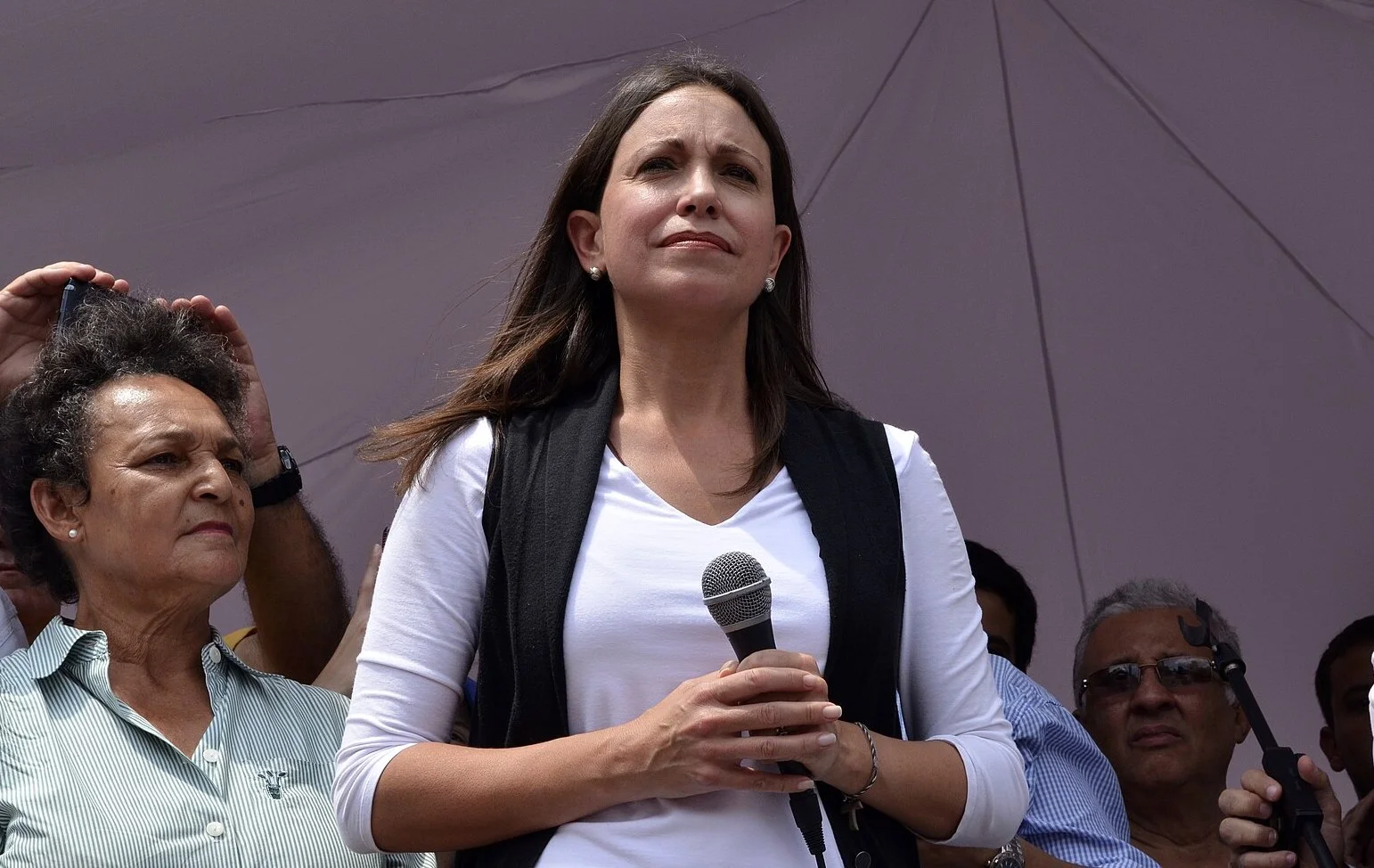
Her award not only recognizes a decades-long pursuit of freedom and justice for Venezuela, but it also sends an enormous statement to the world about the relevance of democracy to peace.
The Making of a Laureate: Machado’s Rise Against Authoritarianism
Born to a family of engineers and entrepreneurs in Caracas in 1967, María Corina Machado started her work as a civic leader in the 1990s by forming the Atenea Foundation, which provided assistance to street children in the capital. Her work as an advocate grew in 2002 when she co-created Súmate, a voting rights organization that educated citizens on monitoring elections and strategized the historic recall campaign against then-president Hugo Chávez.
Following a historic election where she received the highest number of votes of anyone who sought to serve in the National Assembly (her first time running) Machado was ousted from office in 2014. This was early evidence of how dangerous engaging in democracy had become in a Venezuela with a creeping slide to dictatorship. Despite increasing dangers, Machado formed Vente Venezuela, a pro-democracy party that would become part of the Soy Venezuela coalition, an organized effort which the opposition had attempted to create for years but had been ineffective at achieving as parties were divided by ideology and age.
Democracy on the Brink: The Context of Machado’s Nobel
Venezuela, once the wealthiest democracy in South America, is now in a state of economic collapse, mass migration, and the suppression of dissent. There have been eight million people who have left, and as the Nobel Committee emphasized, “most Venezuelans live in deep poverty while a few are profiting at the top. The violent apparatus of the state is targeting its own citizens.” The Maduro government, which is built on the legacy of Hugo Chávez’s leadership, has used disenfranchisement, violence, and detention to keep Machado and others from running for office.
In the presidential election in 2024, Machado was not allowed to run for office, through a government decree. She endorsed the candidate of unity opposition who everyone believed had a legitimate chance of winning, Edmundo González Urrutia. Although there seems to be credible evidence the opposition actually won the election, the National Electoral Council pronounced Maduro to be the winner which led to protests that were met with forced violence. At least 20 people were killed, dignity was lost diplomatically, and Machado, who was already called the “Iron Lady” of Venezuela, went into hiding.
Why the Nobel Committee Chose María Corina Machado
The Nobel Peace Prize citation described Machado as “one of the most extraordinary examples of civilian courage in Latin America in recent times.” Machado has not only established a united opposition but has also serve as an example to the world about how peaceful, persistent civic activism can challenge a brutal regime.
Committee Chair Jørgen Watne Frydenlund noted that when Machado receives the prize, it is not only for Venezuela: the crisis of democracy is real—and on the retreat globally. “Democracy, proof of which can be found in the right to express one’s opinion freely, cast a vote and be represented through an elective government, is the foundation of peace.” In a time of rising authoritarianism, Machado’s abiding commitment stands in stark relief.
Machado’s Activism: Civil Courage and Global Support
Machado’s long struggle has included:
- Organizing mass protests, often resulting at a great risk to her own safety.
- Creating cross-party coalitions that stood together to demand credible elections, constitutional government, and civil liberties.
- Training hundreds of thousands of volunteer election monitors to observe and document electoral fraud.
- Refusing to let the use of violence and imprisonment eradicate the ethos of peaceful resistance.
- Inspiring the Venezuelan diaspora and galvanizing support from fellow international allies in Europe, the U.S. and throughout Latin America.
International And Domestic Reactions
Celebrations over Machado’s Nobel recognition began with Venezuelan activists and ordinary Venezuelans in country as well as abroad. President Joe Biden remarked upon her “exemplary leadership,” and the European Commission stated, “the award sent an unmistakable signal that democracy, not repression, is the path to peace.” In Caracas, protestors assembled with photos of Machado while waving blue-and-orange flags.
Maduro’s officials refrained from comment, as some state television outlets accused the prize of being “politically motivated.” International human rights organizations view the prize as a lifeline for Venezuela’s beleaguered pro-democracy movement.
Nobel Peace Prize 2025 in a Global Context
Machado’s win comes after many months of speculation and lobbying from world leaders, including President Trump, who campaigned for the prize based on his role (some say minor role) in Israeli-Palestinian negotiations. The Nobel Committee rightly rejected Trump’s bids in favor of a leader whose actions speak for those silenced by fear.
The 2025 Nobel Peace Prize jury considered 338 registered candidates: 244 individuals and 94 organizations. Machado’s award undoubtedly carries symbolic significance since pro-democracy movements in other countries (ranging from Hong Kong to Sudan) are searching for inspiration.
Challenges Ahead
To be clear, Machado’s prize is not only an award; it’s a signal. She is still hiding from authorities who would arrest her if found. The Venezuelan opposition coalition will need to remain united, and international pressure for reforms must increase. More importantly, Machado’s recognition symbolizes that courage, credibility, and true peace may yet be found in the darkness.
María Corina Machado’s Enduring Legacy
“María Corina Machado has just won the 2025 Nobel Peace Prize” should be read as faith in democracy as a source of peace. In awarding her the prize, the Nobel Committee recognizes not only a Venezuelan patriot, but also every citizen of every country who seeks to oppose tyranny. Machado’s story reminds us: peace does not begin with silence, but with the courageous, relentless voice of the people.