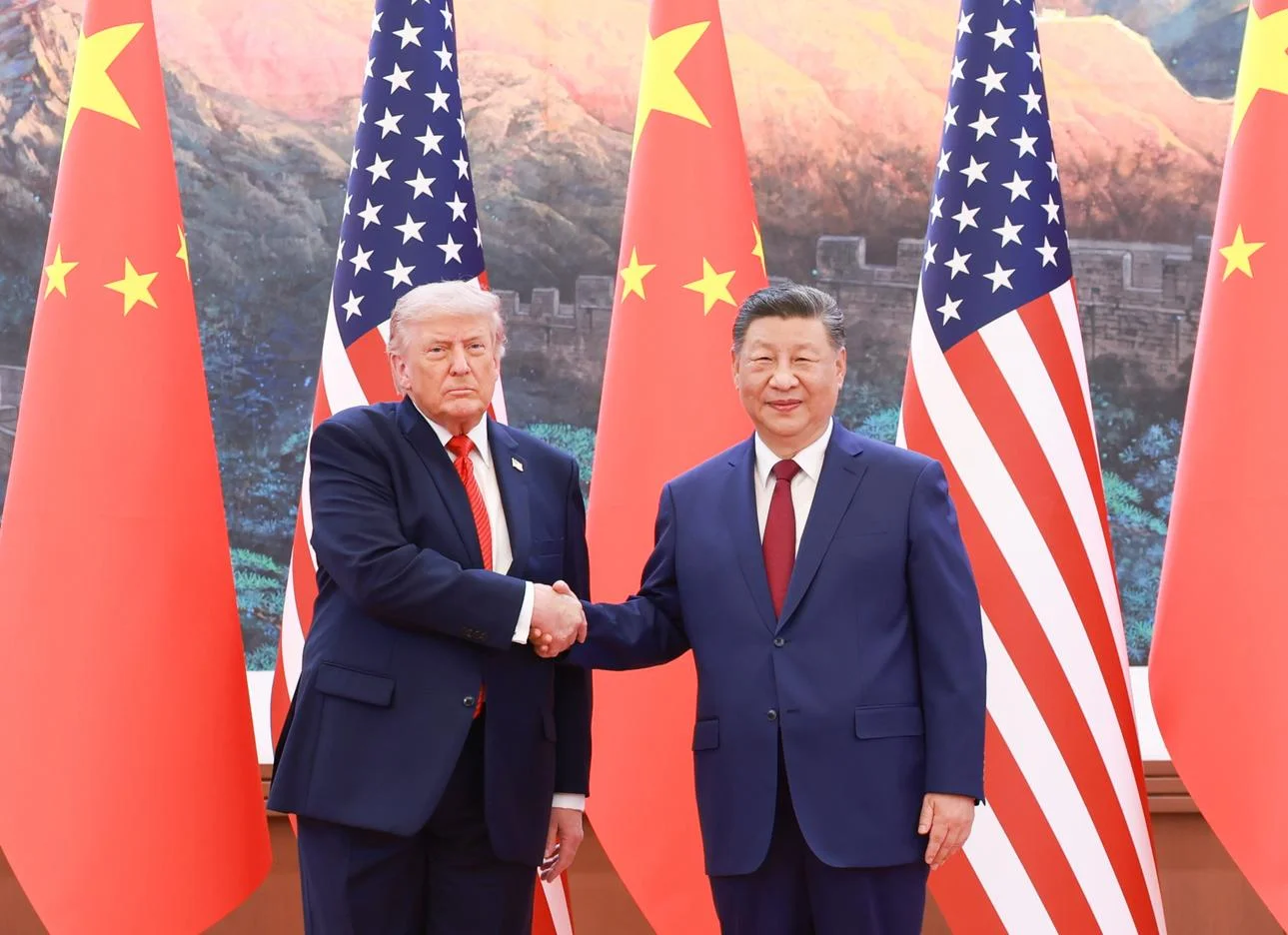
Donald Trump and Xi Jinping have wrapped up a high‑profile summit in Beijing that both sides cast as a step toward “strategic stability,” even as they left major disagreements over Taiwan, Iran, and technology largely unresolved. The trip, Trump’s first state visit to China since returning to the White House, produced warm images, vague pledges on trade and energy and an invitation for Xi to visit Washington in September, but few concrete deals that can be independently verified.
Ceremony and symbolism, short on specifics
Over two days in the Chinese capital, Trump was received with full state honors: a red‑carpet welcome at the Great Hall of the People, a tour of Beijing’s Temple of Heaven and, unusually, a visit to Zhongnanhai, the walled leadership compound rarely seen by foreign dignitaries. Xi personally escorted Trump through the 14th‑century complex, praising a “new bilateral relationship,” while Trump called the visit “incredible” and lauded Xi as “a great leader” and “a friend.”
State media and Western reporters alike emphasized the stagecraft. The BBC described the trip as one that “showcased ceremonial splendor yet provided little insight into any policy agreements reached.” AP said the leaders “wrapped up critical talks, claiming important progress in stabilizing U.S.–China relations even as details remained scarce.”
Trump used a Fox News interview, recorded in Beijing, and broadcast back home, to claim that the summit had yielded major commitments on oil, aircraft and farm goods. Chinese officials, however, have so far confirmed only what they call “a series of new consensuses” and a shared desire to maintain stable ties, without releasing joint statements laying out specific volumes or timelines.
Trade and energy: talk of oil, planes and a fragile deal
On economics, the summit was billed as a chance to reinforce a delicate trade agreement reached after a tariff and rare‑earths showdown in 2025. CNBC reports that the meeting “significantly contributed to reinforcing a delicate trade agreement with Beijing and helped stabilize bilateral ties,” even if it did not produce headline‑grabbing new concessions.
In his Fox interview and comments to conservative media, Trump said China had agreed to buy more U.S. oil as an alternative to Iranian crude, suggesting Chinese tankers would head to Texas, Louisiana, and Alaska to load both oil and liquefied natural gas. He also claimed Beijing would purchase 200 Boeing aircraft and “a significant quantity of American agricultural products” as part of a push to “bring back jobs.”
So far, those claims remain largely one‑sided. When pressed on the specifics of oil, agriculture and Boeing orders, China’s foreign ministry “avoided questions” and did not confirm the numbers Trump cited, according to reporters in Beijing. Chinese readouts have instead emphasized “mutually beneficial cooperation” and a framework for “strategic stability” without quantifying any new imports.
Analysts quoted by CNBC and CSIS say the likely substance is modest: continued implementation of existing tariff rollbacks; some easing around critical minerals and rare earths; and a general pledge to avoid sudden new trade shocks as both economies navigate slower growth.
Iran and the Strait of Hormuz: careful wording on a live conflict
The war in Iran and the partial closure of the Strait of Hormuz formed the tense backdrop to the summit. Trump has threatened renewed airstrikes if Iran rejects U.S. ceasefire proposals, and Washington has urged Beijing — Tehran’s key oil customer — to use its leverage.
According to the BBC and Chinese state outlets, Xi told Trump that China would not supply arms to Iran, even as he stressed that Iran “buys a significant amount of oil” from China and wants to keep that trade while ensuring the strait remains open. Xi reportedly offered no public commitment to reduce Iran oil purchases in the near term.
Trump, for his part, has portrayed China’s interest in U.S. energy as a diplomatic breakthrough that could eventually reduce Tehran’s leverage. But he has not specified when expanded U.S. exports might begin or what share of China’s imports they could realistically replace, and neither government has published a detailed energy framework.
Middle East specialists note that even a partial shift by China away from Iranian barrels would reverberate through global markets, but caution that “there is no evidence yet of a formal, enforceable commitment,” as one analyst told CNBC.
Taiwan: Xi’s sharpest warning, muted in public
If trade and Iran were the transactional parts of the agenda, Taiwan was the existential one. The New York Times reports that Xi privately warned Trump that if the Taiwan issue were “handled poorly, it could lead to a clash” between the United States and China, framing the island as the core of Beijing’s red lines.
In a separate interaction, Xi invoked the idea of a “Thucydides Trap” — the notion that fear of a rising power by an established one can lead to war — in what ABC News describes as a cautionary reference to great‑power conflict. Trump later argued that Xi’s comment referred to the United States under Joe Biden, not under his own leadership, and insisted America was “no longer a declining nation.”
Publicly, Chinese and U.S. readouts spoke in abstractions. Xi said the two sides agreed to a “constructive, strategic and stable” relationship, while Trump told reporters he had reaffirmed Washington’s One‑China policy and commitment to peaceful resolution. Neither side announced new military or diplomatic initiatives on Taiwan, and there was no joint statement on arms sales or U.S. naval activity in the Taiwan Strait.
For allies in Tokyo, Seoul and beyond, the lack of clear guardrails on Taiwan means the summit eased immediate tensions without fundamentally reducing the risk of miscalculation.
Security scare at the Temple of Heaven
Amid the carefully scripted optics, a moment of tension highlighted the underlying mistrust. Fox News and other outlets report that an “intense standoff” broke out between U.S. Secret Service agents and Chinese security officials at the Temple of Heaven when local guards attempted to block an armed American agent from entering the site with Trump and Xi.
Reporters on the scene said the dispute over weapons and access delayed the leaders’ entry by more than half an hour and required hastily arranged negotiations before the visit could continue. The incident ended without visible disruption to the summit, but it underscored how even ceremonial events remain fraught in a relationship where security protocols and political sensitivities collide.
Strategic stability or tactical pause?
Think‑tank analysts caution against over‑interpreting the Beijing meeting. The Center for Strategic and International Studies calls the Trump–Xi summit “a relatively modest step toward greater stability and predictability” in what it terms “the world’s most important bilateral relationship.”
According to CSIS and the World Economic Forum, both sides came to Beijing seeking time and predictability, not a grand bargain: Trump wants Chinese cooperation on Iran and a calm trade backdrop ahead of U.S. elections; Xi wants to stabilize the external environment as China grapples with slower growth and domestic challenges.
The summit produced three main deliverables, as summarized by CNBC and others:
- A joint commitment to a “constructive, strategic and stable” relationship and to keeping channels open on security and economic issues.
- A broad understanding to reinforce the existing trade truce, including previously agreed tariff reductions and eased restrictions on certain rare‑earth exports.
- An informal framework for energy and Iran discussions, including China’s stated willingness not to arm Iran and its interest in more U.S. oil and gas, albeit without binding targets.
What it did not produce was equally telling: no detailed joint communiqué, no new Taiwan guardrails, no public agreement on AI, cyber or human rights, and no timetable for resolving longer‑term disputes over technology export controls.
Looking ahead: an invitation to Washington
Trump has invited Xi to the White House on September 24, with both sides signaling that they expect to meet at least once more before a one‑year trade framework expires in October 2025. The state visit, if it happens, would bring the contest over trade, technology, and regional security directly into an American political calendar already crowded with debates over China policy.
For now, the Beijing summit has bought a measure of calm. Oil markets reacted to Trump’s comments about Chinese purchases with a modest price uptick, reflecting both the potential for new U.S. exports and the continued risk from Iran and Hormuz. Asian markets and U.S. business groups welcomed the absence of new tariffs or immediate confrontations.
But the structural tensions remain: over Taiwan’s status, over the rules governing military and AI use, over industrial policy and supply‑chain dominance. The test for both leaders will be whether the warm words and photo‑ops of Beijing translate into durable mechanisms for managing those conflicts, or whether, once the motorcades have left Zhongnanhai, the relationship snaps back to the hard rivalry that preceded this carefully choreographed pause.