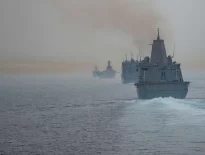
U.S. forces are running one of their most complex naval operations in years in and around the Strait of Hormuz, trying to free stranded commercial ships and keep a fragile ceasefire with Iran from collapsing, while trading live fire with Iranian boats, drones, and missiles in the narrow waterway. The mission, branded “Project Freedom” by President Donald Trump, has already seen U.S. destroyers come under sustained attack, American warplanes sink multiple Iranian small craft and the first tankers in months transit the chokepoint under overt U.S. protection.
What “Project Freedom” is, and isn’t
Announced by Trump at the end of April, Project Freedom is billed as a “humanitarian” mission to help dozens of tankers and cargo ships that have been stuck in the Gulf since Iran declared the Strait of Hormuz under its control and began attacking vessels that refused to seek its permission.
- A U.S. Central Command (CENTCOM) press release says the operation combines:
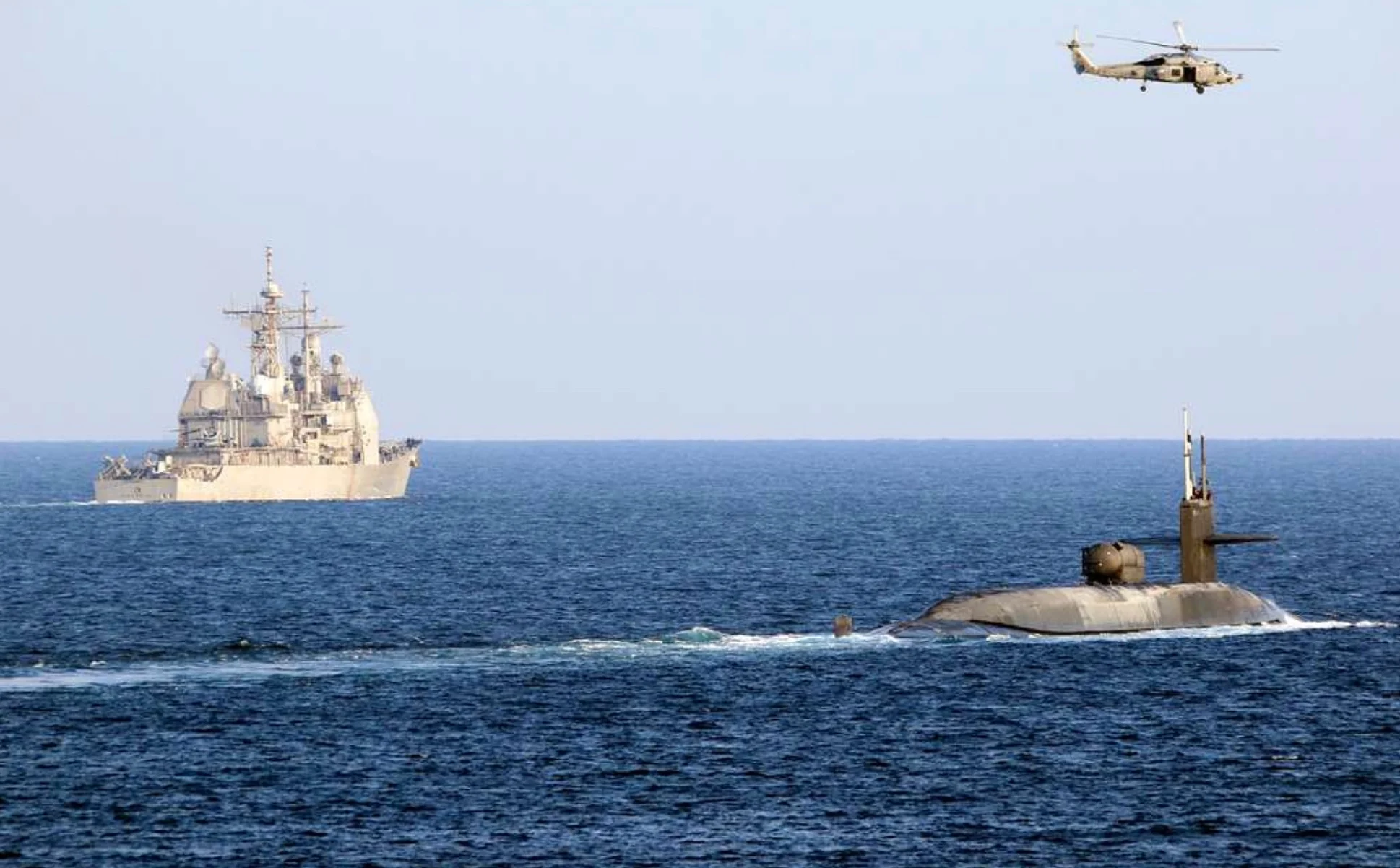
- Naval protection and presence, guided‑missile destroyers and other ships operating in and near the strait.
- Air cover, “more than 100” land‑ and sea‑based aircraft, including F‑16 fighter jets, supporting the mission.
A diplomatic‑military framework called the Maritime Freedom Construct, designed to coordinate with allies on security and information‑sharing.
“Our support for this defensive mission is essential to regional security and the global economy as we also maintain the naval blockade,” CENTCOM commander Adm. Brad Cooper said, underscoring that the same U.S. forces trying to guide ships out are still enforcing a wider economic squeeze on Iran.
Despite Trump’s rhetoric about “guiding” ships, Pentagon officials have quietly signaled that U.S. vessels may not sail in tight convoy formation with every merchant ship. Instead, as one analysis put it, the U.S. Navy is leaning on “proximity deterrence”: staying close enough to respond to attacks while avoiding the appearance of escorting every hull through what Iran now claims as a controlled zone.
Under fire: clashes with Iranian boats, missiles, and drones
The first phase of Project Freedom has already been marked by direct clashes between U.S. and Iranian forces.
- Fox News and CBS report that the USS Truxtun and USS Mason, two U.S. destroyers, came under a “sustained barrage” of Iranian small boats, anti‑ship missiles, and drones as they moved through Hormuz on Monday, backed by fighter jets and Apache helicopters.
- CENTCOM said U.S. forces sank at least six to seven Iranian small boats that were trying to interfere with commercial shipping, a claim Iranian state media has denied.
- Iranian outlets have claimed that two missiles hit a U.S. warship as it tried to enter the strait, saying they forced the vessel to turn back; Washington has denied that any ship was struck, calling the story “Iranian propaganda.”
CNN’s live blog notes that these exchanges have pushed the U.S.–Iran ceasefire “under pressure,” with Trump refusing to say clearly whether he still considers the truce intact after both sides traded fire around Hormuz and Iran launched missiles and drones at targets in the UAE.
At the same time, the U.S. is continuing a separate but related mission: mine‑clearance operations aimed at removing sea mines laid by Iran’s Revolutionary Guard. CENTCOM said destroyers USS Frank E. Peterson and USS Michael Murphy have been operating in the strait since April 11 “as part of a broader mission to ensure the strait is fully clear of sea mines.”
First ships through: from U.S.-flagged vessels to Maersk
Despite the danger, a handful of commercial ships have now made it out under U.S. protection, offering the first proof of concept for Project Freedom.
CENTCOM said two U.S.-flagged merchant vessels successfully transited the Strait of Hormuz on Monday with U.S. Navy destroyers “actively assisting efforts to restore transit for commercial shipping.”
Danish shipping giant Maersk confirmed that one of its vessels, the Alliance Fairfax, also passed through the strait under U.S. military protection.
- The ship, U.S.-flagged and operated by a Maersk subsidiary, had been adrift since the conflict erupted on February 28, waiting for a safe corridor.
- Maersk said in a statement that the transit was completed “without incident” and that all crew were safe, praising U.S. efforts to help free trapped ships.
Ordinarily, roughly 20 percent of the world’s seaborne oil passes through Hormuz. Since the war, traffic has “nearly come to a standstill,” CNBC notes, leaving dozens of tankers and container ships stuck in the Gulf and adding a persistent risk premium to energy markets.
Iran’s counter‑moves and claims of “control”
Iran has reacted to Project Freedom with a mix of military action and messaging aimed at reinforcing its own claims over the strait.
- Iranian media have touted new maps showing the Strait of Hormuz as being under Revolutionary Guard “control,” signaling that Tehran sees the corridor as part of its sovereign security space.
- Tehran has announced new maritime rules, insisting that ships seek its permission and, in some accounts, pay a form of toll to use the strait, a direct challenge to the longstanding view of Hormuz as an international waterway.
- In the past weeks, Iran has attacked or harassed multiple foreign vessels, including firing on two Indian‑linked ships, and launching drones at a tanker, according to NBC and CBS reporting.
- U.S. forces also seized an Iranian‑flagged cargo ship near Hormuz in April, accusing it of trying to evade the blockade and support military operations, a move Tehran condemned as piracy.
On Iranian television, officials have portrayed U.S. actions as a violation of the ceasefire and a threat to regional states, warning that any country participating in Project Freedom could become a target if it is seen as abetting the blockade.
Impact on oil markets and global trade
Every new clash in Hormuz reverberates through energy and shipping markets.
- CNBC notes that prior attacks on commercial ships by both Iran and U.S.–Israeli forces had already sent oil prices sharply higher, as traders priced in the risk of disruption.
- With traffic still constrained and insurance costs up, analysts warn that sustained fighting in or near the strait could lock in higher fuel and freight costs for months, affecting everything from gasoline prices in the U.S. to export bills in Asia and Africa.
- Even partial success for Project Freedom, freeing some ships while others wait, may keep markets in a state of nervous limbo, with every headline about a missile or drone strike moving prices.
The situation is especially delicate for Gulf states: according to CNN, the UAE reported intercepting 19 Iranian missiles and drones, with at least one drone starting a fire at a Fujairah oil terminal. This shows how quickly the Hormuz crisis can spread to the larger Gulf energy infrastructure.
Strategic and political stakes for Washington
For the U.S., operations in Hormuz are about more than freeing ships. They are a central test of Trump’s claim that he can squeeze Iran militarily and economically while avoiding a wider war.
The 2026 U.S. military buildup in the Middle East, the largest since the 2003 Iraq invasion, according to defense analysts, has put thousands of American troops, aircraft, and ships in closer proximity to Iranian forces. That increases both deterrence and the risk of miscalculation.
Domestically, Trump has framed Project Freedom as proof that he can protect global commerce and U.S. interests while holding out for a “better deal” with Tehran, rather than accepting Iran’s latest proposals to end the war and reopen the strait on terms the White House considers too lenient.
But as U.S. destroyers trade fire with Iranian boats and missiles overhead, critics warn that the line between “defensive” operations and open conflict is blurring. If a U.S. warship suffers serious damage or a large tanker is sunk, pressure to escalate could overwhelm gradualist plans, and turn the Strait of Hormuz from a contested waterway into the center of a much larger war.
For now, U.S. military operations in the strait are delivering mixed signals: a handful of freed ships and visible American resolve on one side; on the other, fresh exchanges of fire, shaken markets and the enduring reality that a narrow channel of water can still hold the global economy, and Washington’s Iran strategy, in precarious balance.