
The United States has imposed a naval blockade targeting shipping to and from Iranian ports near the Strait of Hormuz, escalating a six‑week standoff over the vital oil chokepoint and raising fresh questions about energy security, maritime law, and the risk of wider war. The Trump administration says the goal is to choke off Tehran’s oil revenues and force concessions in ceasefire talks, while U.S. allies fret over the global economic fallout and rivals such as China study the precedent for their own strategic waters.
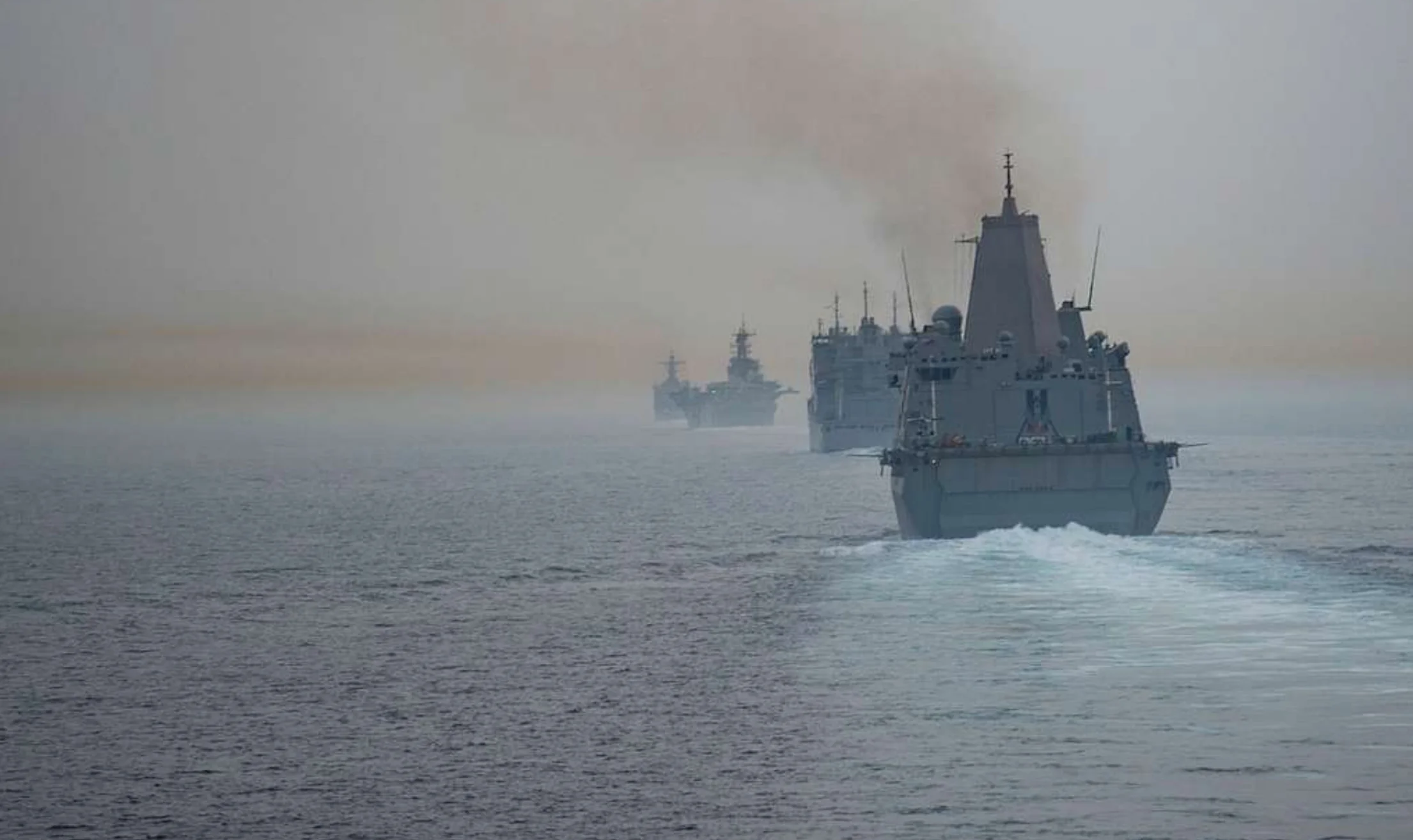
What exactly the US is doing
Despite early rhetoric about blocking “any and all ships” at the Strait, U.S. Central Command has clarified that the operation is a naval blockade focused on Iranian ports, not a full closure of the waterway.
- CENTCOM says U.S. forces will “blockade all maritime traffic entering and leaving Iranian ports”, beginning Monday at 10:00 a.m. New York time.
- A revised statement stresses that U.S. forces will not impede freedom of navigation for vessels transiting Hormuz to and from non‑Iranian ports, such as those in Oman, the UAE, or Saudi Arabia.
In practice, that means U.S. Navy ships positioned in the Gulf of Oman and Arabian Sea are intercepting or turning back tankers and cargo vessels tied to Iranian terminals, while allowing most third‑country traffic to proceed.
The Pentagon says at least 13–14 vessels linked to Iranian oil exports have been stopped or turned away since the blockade began, including several under Chinese ownership or with prior sanctions histories.
Why Washington says it’s doing this
The White House frames the blockade as an answer to Iran’s own moves to choke the passage.
For roughly six weeks, Iranian forces and proxy units disrupted traffic through Hormuz, threatening or harassing tankers and forcing much of the remaining shipping to hug Iran’s coast under a new traffic scheme. Tehran argued it was responding to U.S. sanctions and Israeli operations; Washington says it was an illegal de facto closure of a key international strait.
President Trump announced the U.S. blockade after ceasefire talks with Iran collapsed, saying Tehran had refused to reopen the strait as a condition of a broader truce in the regional war. NPR reports that the administration’s stated goal is to “choke off Iran’s oil export revenue”, depriving it of cash to fund Hezbollah and other allied groups.
Officials also see the blockade as leverage in ongoing negotiations over the Iran war and the parallel ceasefire between Israel and Lebanon.
How a blockade actually works at Hormuz
Militarily, blockades are blunt but complex tools.
- AP notes that a credible blockade requires a sustained deployment of naval assets, clear rules of engagement and coordination with legal advisers to avoid miscalculation.
- The Strait of Hormuz normally sees nearly 20% of the world’s seaborne oil trade; even with war‑related declines, traffic volumes make enforcement resource‑intensive.
U.S. officials say more than a dozen warships are now stationed in international waters south of the strait, supported by aircraft, drones and satellite surveillance to track tankers. Boarding teams can inspect vessels, verify destinations and ownership, and order ships suspected of moving Iranian crude to turn back or face seizure.
At the same time, shipping data compiled by Reuters and the New York Times show that the blockade’s on‑the‑water impact is nuanced:
- Some sanctioned Chinese‑linked tankers have turned back after testing U.S. resolve.
- A number of vessels have still transited Hormuz, including some that originated in Iran, fueling confusion about how rigidly the rules are being applied.
- Overall traffic remains “far below pre‑war levels,” suggesting the combination of Iranian threats and U.S. enforcement has left many operators “too scared to cross.”
Analysts quoted by NPR describe blockades as “unpredictable and difficult to enforce cleanly,” with real‑world outcomes often diverging from political messaging.
What it means for oil and the global economy
Even before the U.S. blockade, Iran’s actions had severely curtailed traffic through Hormuz. Now, the U.S. move adds an additional layer of risk and uncertainty.
- Fortune notes that with Hormuz effectively closed to Iranian exports and only partially open to others, no major economy is truly “energy independent”: global oil prices remain tied to events in the strait.
- Traders fear that a miscalculation, a clash at sea or a misidentified tanker, could trigger a price spike and push an already fragile global economy toward recession.
So far, crude prices have climbed but not spiked into crisis territory, partly because demand remains soft, and some flows have been rerouted via alternative routes or drawn from reserves. But refiners in Asia and Europe are paying more for alternative supplies, and shipping insurers have raised premiums for any voyage near the Gulf.
U.S. allies in Europe and Asia are privately supportive of efforts to restrain Iran but anxious about prolonged disruption. MSNBC’s Joe Scarborough said key partners were “very positive” about the blockade’s strategic aims while pressing Washington to keep channels open for de‑escalation.
Legal questions and the risk of precedent
The legality of the blockade is hotly debated.
Under international law, a full naval blockade is traditionally considered an act of war, and interfering with neutral shipping in international straits raises questions about freedom of navigation. The U.S. argues that it is operating outside Iranian territorial waters, targeting only traffic to sanctioned Iranian ports and responding to Iran’s prior unlawful restrictions.
Several legal scholars say that by narrowing the blockade to Iranian‑linked shipping and avoiding a blanket closure of Hormuz, Washington hopes to stay on firmer ground. But critics warn that the move still sets a powerful precedent.
Time magazine notes that China could cite the U.S. Hormuz operation as a precedent for future “quarantine” or blockade‑like measures around Taiwan or disputed South China Sea waters, claiming similar security rationales. An analysis in The Conversation argues that the blockade “ratchets up tensions with China,” which sees clear analogies between U.S. pressure on Iran’s main outlet and potential future pressure on its own sea lanes.
How Iran and China are responding
Tehran has denounced the blockade as “economic terrorism” and vowed to find ways around it, but its options are limited.
- Some Iranian‑linked tankers have tried hugging Iran’s coast within territorial waters under a new traffic scheme Iran unveiled earlier this month, shifting outbound lanes south of Larak Island but still within its jurisdiction.
- A Chinese‑operated tanker under U.S. sanctions briefly traversed the strait “without interference,” prompting speculation that the blockade was porous, before data showed it had reversed course back into the Gulf of Oman.
China, Iran’s biggest oil customer, has protested U.S. actions at the United Nations and warned against “expanding the battlefield” through unilateral blockades. Yet Chinese firms also face the risk of secondary sanctions or seizures if they defy U.S. interdictions, leading many to quietly pause or reroute shipments.
For now, Iran has stopped short of direct military confrontation at sea, likely wary of escalating into open naval conflict it cannot win. Instead, it has leaned on proxies and political pressure while watching closely how strictly Washington enforces its own red lines.
What this means for the broader Middle East conflict
The blockade is unfolding alongside a fragile ceasefire in Lebanon and ongoing efforts to halt the wider regional war. For negotiators, Hormuz is both a pressure point and a bargaining chip.
U.S. officials have hinted that easing or lifting the blockade could be part of a final settlement with Iran, contingent on Tehran stopping attacks in the strait, scaling back support for Hezbollah and accepting monitoring of its oil exports. Iran, in turn, has insisted that any lasting deal must include recognition of its role in Gulf security and relief from sanctions.
In that sense, the blockade is not just about ships and oil; it is a high‑stakes tool in a multi‑front negotiation over nuclear issues, regional proxies, and the boundaries of U.S. power projection.
The bottom line
For all the complexity, three takeaways stand out:
- The U.S. is using a targeted naval blockade to increase economic and diplomatic pressure on Iran, not to shut Hormuz entirely.
- The move adds to global energy risk and sets a precedent that other powers, especially China, may someday invoke in their own contested waters.
- How strictly the blockade is enforced, and how quickly it is scaled back as part of talks, will help determine whether it becomes a short‑lived lever or a long‑running fault line in the global trading system.
For now, tankers circle, navies shadow one another, and the world’s most important oil chokepoint remains a barometer for both regional war and the broader balance of power at sea.