
As we enter peak Atlantic hurricane season in 2025, Hurricane Erin is wreaking havoc in the minds of forecasters and coastal communities across the U.S. East Coast. After rapidly intensifying, being a massive storm, and a moving target, we must understand the projected path of Hurricane Erin so coastal residents can prepare. Here’s the most current scientific outlook, warning information, and how to remain prepared.
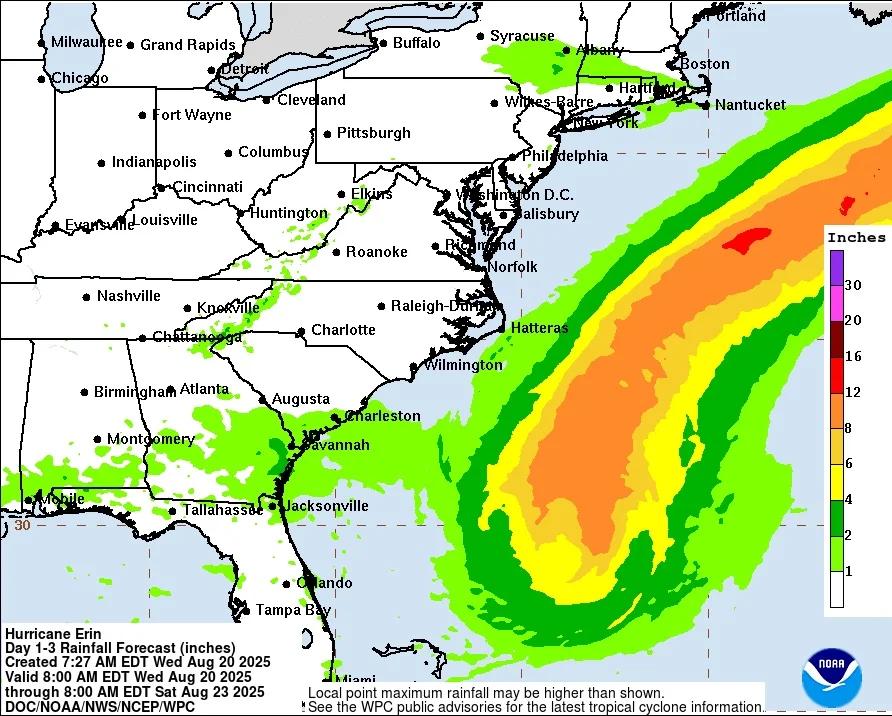
Current Status: Where Is Hurricane Erin Now?
As of Tuesday morning, hurricane Erin was approximately 690 miles south-southeast of Cape Hatteras, North Carolina, moving northwest around 9–10 mph. Erin’s maximum sustained winds are currently at 105 mph, which is a decrease from its peak category 5 on August 16, where the wind speeds reached 160 mph, but Erin is expected to regain strength and increase in size as the system continues.
Erin’s hurricane winds extend outward up to 80 miles from its center, and tropical storm winds extend 230 miles outward, which tells us that its influence will be significantly felt over a wide area.
The Projected Path: Tracking Erin’s Movements
NOAA and National Hurricane Center Forecast
According to the National Hurricane Center and CBS News, Erin is expected to:
- Take a northwest or north, and then northeast track, passing in between the Outer Banks of North Carolina and Bermuda by mid-week.
- Stay mostly offshore and not make any direct landfall on the U.S. mainland, however, since the storm is so large, the eye could travel within 200–300 miles of the U.S. coast before moving out to sea.
- Following the “spaghetti map” model consensus depicting the storm tracking north and into the Atlantic with a potentially lessening threat to New England and Atlantic Canada perhaps by the end of the week.
However, the meteorological experts warn that “the only possible downside to Erin’s eventual intensity and land impacts, given that it has stayed offshore, is that the latest work pushed Erin’s projected track further west,” which in turn increases the possibility of some enhanced impacts along the Eastern Seaboard.
Key Impacts: What to Anticipate Along the Coast
Dangerous Surf and Rip Currents:
From Florida, all the way up to New York and Long Island, this week has forecasted 15–20 foot waves, dangerous rip currents, and an increased risk for swimmers, even far from the storm center. The National Hurricane Center and local officials are warning that all East Coast beaches should be treated as dangerous for the next couple of days.
Storm Surge and Coastal Flooding:
Tropical Storm and Storm Surge warnings from Cape Lookout to Duck in the Outer Banks of North Carolina are in effect. Additionally, inundations from storm surge at life-threatening levels of 2 to 4 feet above ground are possible. Hatteras and Ocracoke Islands have already issued mandatory evacuations. Highway 12, the main access highway, is subject to continuous flooding and impassibility during peak surge.
Tropical Storm Conditions:
Forecasts suggest the storm’s center will remain offshore, but tropical storm-force winds and rain bands could impact coastal locations, especially in North Carolina, and possibly as far north as New Jersey and Long Island by Thursday.
Track Uncertainty:
The forecast cone guidance from NOAA shows uncertainty increases after three days, so residents between the Carolinas and New England should continue to monitor future advisories in the possible event that shifts in the storm’s track take place.
Weather Context: Why Erin Is More Powerful Than Average
Erin experienced extremely rapid intensification over anomalously warm ocean waters, conditions made more likely by climate change according to Climate Central. Human-caused warming increases hurricane intensity, size, rain rates, and increases the likelihood of storm surge flooding and inland flooding.
What You Should Do Now
- Follow All Official Warnings: If you live in a zone with evacuation orders—especially on the Outer Banks—it is imperative that you follow local and state officials as quickly as possible.
- Stay Away from Beaches and Coastal Roads: There are dangerous rip currents, high surf, and possible flooding far away from the center of the storm. Always check local rip current risk maps before going in the water.
- Keep an eye on forecast updates: Stay up to date with information from the National Hurricane Center, local emergency managers, and the news—forecasts can change rapidly and with each mile that Erin travels to the north you could see level of risk change.
Maintaining Awareness as Erin Converges
The projected path of Hurricane Erin necessitates continued awareness along the Atlantic coast, as direct landfall isn’t anticipated, Erin’s broad reach means millions will be affected by dangerous surf, flooding, and power outages over the next couple of days. Now is the time to stay informed, follow all official advice, and think safety as the storm approaches.