
Google is betting that less screen can mean better health data. The company has launched the Fitbit Air, a $99 screenless fitness tracker designed for 24/7 wear and tightly integrated with a revamped Google Health app and AI‑powered Health Coach service. The move pushes Fitbit back toward its roots as a minimalist tracker while positioning Google as a direct rival to subscription‑based bands like Whoop, targeting users who want deep metrics without another smartwatch on their wrist.
A “second‑phone” backlash and Google’s answer
For years, smartwatch makers have crammed more notifications, apps, and mini‑screens onto users’ wrists. Techloy notes that many of today’s fitness watches “feel like second phones,” buzzing constantly with messages and alerts. Google’s new Fitbit Air goes in the opposite direction: no screen, no notifications, no apps on the wrist, just a low‑profile sensor that feeds data back to a smartphone.
In its official announcement, Google describes Fitbit Air as its “smallest and most affordable tracker” aimed at comfortable, all‑day and overnight wear. The company says the device is targeted at users who find existing wearables “too complicated, too bulky, or too expensive,” according to comments by Rishi Chandra, Google vice president for health and home, reported by several outlets.
Fitbit Air launches globally in phases, with U.S. pre‑orders open now at $99.99, including a three‑month trial of Google Health Premium, and an on‑sale date of May 26. A Special Edition model with upgraded bands will be offered at $129.99 in the U.S., Google’s blog says.
Design: a tiny, screenless “pebble” for constant wear
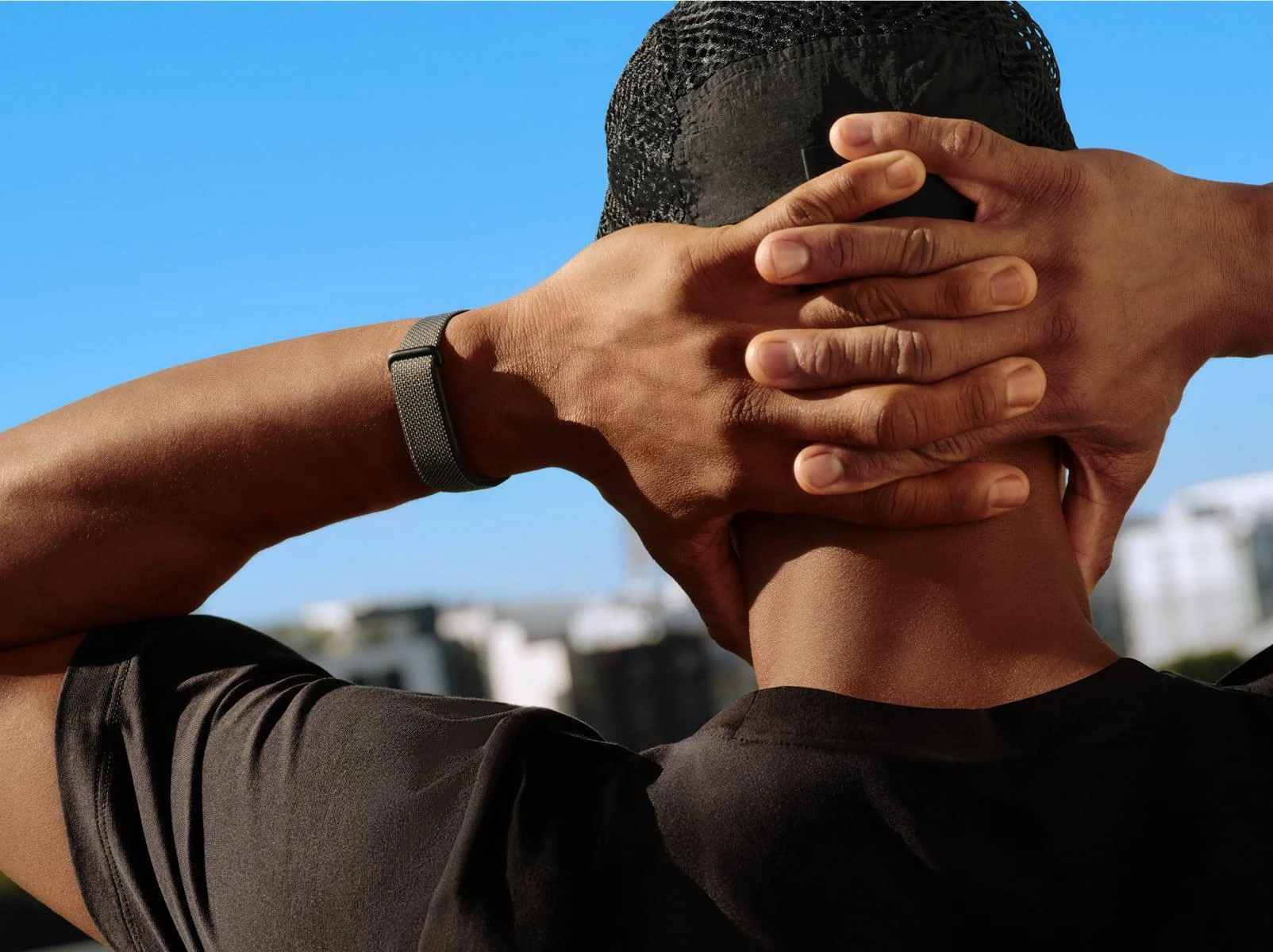
Fitbit Air’s design is closer to a discreet accessory than to a smartwatch. Google’s product page and hands‑on coverage describe a slim, curved band with a removable sensor “pebble” that slots into different straps. TrendHunter notes that the band eliminates visible buttons and displays altogether, leaving only a small status lamp that lights up while charging.
According to Tom’s Guide and Android Central, the tracker weighs about 12 grams without the strap and measures roughly 1.4 x 0.7 x 0.3 inches, making it about 25% smaller than the Fitbit Luxe. Despite the compact plastic housing, water resistance is rated to 50 meters, allowing for swimming and shower use.
The device includes no time display and does not show heart rate or step counts on the wrist, a point early Reddit threads highlight as a trade‑off for minimalism. Instead, all detailed data and history live in the companion Google Health app, with the band providing only vibration feedback for alarms and select alerts.
Battery life is one of the key selling points. Google says Fitbit Air can last up to a week on a charge, and quick‑charge support can add a day of use from about five minutes on the charger.
Health and fitness features: data first, visuals later
Beneath the minimalist exterior, Fitbit Air packs a familiar array of sensors. According to Google’s store listing and multiple reviews, the band includes:
- An optical heart‑rate sensor for 24/7 monitoring.
- Red and infrared sensors for SpO2 blood‑oxygen tracking.
- A three‑axis accelerometer and gyroscope for movement and workout detection.
- A temperature sensor used to estimate skin temperature variation.
The device tracks a familiar list of metrics: steps, distance, calories, heart‑rate variability, cardio load, and a readiness‑style score, along with sleep stages, duration, and a nightly sleep score. Google says its new sleep‑scoring model for Air is about 15% more accurate than previous Fitbit algorithms thanks to updated machine‑learning methods.
Activity detection is automatic for common workouts, including walking, running, cycling, and swimming. For more specialized exercise types, users can start and tag workouts in the app before or after training.
Fitbit Air also offers irregular heart rhythm (AFib) notifications and alerts for unusually high or low heart rate, mirroring features found on higher‑end wearables. There is no built‑in GPS, meaning outdoor runs and rides require a paired smartphone to capture routes and elevation data.
The new Google Health app and AI Health Coach
The hardware launch is tightly coupled with a major software shift. Google has rebranded the Fitbit app as the Google Health app, unifying data from Fitbit devices, Pixel Watches, and other compatible hardware under a single brand.
A centerpiece of that strategy is Google Health Coach, an AI‑powered coaching feature that has been in public preview and will exit beta on May 19, 2026, when the updated app begins rolling out globally.
- Google’s blog and secondary reporting say Health Coach uses signals from Fitbit Air, heart rate, sleep, activity, cardio load and more, plus user‑logged data on nutrition, mood, and weight to generate personalized workout, recovery, and wellness suggestions.
- The service will be offered as Google Health Premium, priced at $9.99 per month or $99 per year for standalone subscribers, with a three‑month trial included for new Fitbit Air buyers.
In some Google bundles, such as Google AI Pro and Ultra plans, Health Premium is included at no extra cost, a “pleasant surprise” according to Android Central, which argues that this could make the Fitbit ecosystem more compelling against subscription‑heavy rivals.
Health Coach supports features like snapping a photo of a gym whiteboard or cardio machine to convert it into a structured workout in the app, then analyzing effort and recovery using data from Fitbit Air. Google frames the band as providing “the physiological signals [it] needs to feed the Google Health Coach,” effectively turning the wearable into a dedicated sensor node for its AI system.
Competing with Whoop and the premium band market
Analysts and reviewers note that Fitbit Air clearly targets screen‑free performance bands such as Whoop. Techloy describes the product as looking “a lot like Whoop,” and several outlets explicitly compare the devices on price and subscription model.
Key competitive points include:
- Price: At about $99, Fitbit Air undercuts many high‑end fitness trackers and offers a lower barrier to entry than Whoop’s membership‑bundled hardware.
- Subscriptions: While Google Health Premium is a paid service, the band itself is fully functional without an ongoing fee, and some users get Premium included via other Google plans.
- Ecosystem: Fitbit Air data flows into the same Google Health app used by Pixel Watches and other future devices, potentially giving Google a broader platform play than stand‑alone rivals.
Men’s Journal characterizes Air as “a $100 screen‑free tracker” focused on sleep, recovery, and performance, arguing it may appeal to athletes who prefer to leave their phones in the locker room but still want detailed metrics later.
A bet on quieter wearables, and data depth
The launch of Fitbit Air marks a strategic turn for Google’s wearables: away from adding more “smartwatch” features, and toward quiet, passive monitoring harnessed by cloud‑based AI.
For users who feel overwhelmed by notifications or who simply want a lighter, cheaper band for sleep and training, Air offers a deliberately limited interaction model with the promise of richer insights in the app. For Google, the device is another point of entry into the daily health data of millions of users, data that will feed its new AI Health Coach and, potentially, future health services.
Whether consumers embrace a return to screenless tracking, after years of smartwatch upgrades, will determine if Fitbit Air becomes a breakout product or a niche alternative. But in an era when many devices are competing for attention, Google is making a clear, almost contrarian pitch: more health, less screen.