
The Breakthrough Prize Foundation has unveiled the winners of the 2026 Breakthrough Prizes, awarding six 3‑million‑dollar “Oscars of Science” to researchers whose work ranges from probing a tiny particle’s magnetic properties to reshaping our understanding of cancer, brain disease and the mathematics of curved spaces. In all, 18 million dollars in main prizes, plus several million more in early‑career awards, will be handed out at a Hollywood‑style ceremony later this year, underscoring how billionaire‑backed mega‑awards have become a fixture of modern science.
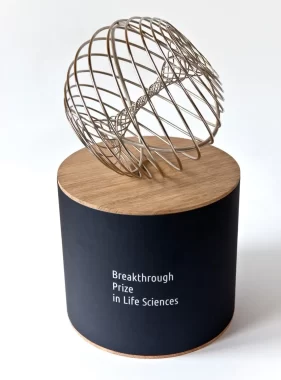
What the Breakthrough Prizes are
Launched in 2012 by tech and finance billionaires including Sergey Brin, Priscilla Chan and Mark Zuckerberg, Yuri and Julia Milner, and Anne Wojcicki, the Breakthrough Prizes are billed as the world’s largest individual science awards, with each main prize now worth 3 million dollars. They are given annually in three broad categories:
- Fundamental Physics
- Life Sciences (typically several prizes per year)
- Mathematics
Over 14 years, the foundation says it has distributed more than 326 million dollars in prize money, including the main awards plus New Horizons prizes for early‑career researchers and the Maryam Mirzakhani New Frontiers Prize for young women mathematicians.
Like the Nobels, nominations come from the scientific community; unlike the Nobels, the winners are feted at a black‑tie gala in Silicon Valley or Los Angeles, with celebrity hosts and musical performances.
Fundamental Physics: precision, patience, and the muon
This year’s Breakthrough Prize in Fundamental Physics goes to the Muon g‑2 collaborations at CERN, Brookhaven National Laboratory and Fermilab, a sprawling, multi‑decade effort that has chased one of the most precise numbers in science: the anomalous magnetic moment of the muon.
Across six decades, three generations of experiments have measured how a muon, a heavier cousin of the electron, wobbles in a magnetic field, comparing that value to exquisitely detailed theoretical predictions. Any persistent mismatch could hint at new particles or forces beyond the Standard Model of particle physics.
The prize citation notes that scientists and engineers from dozens of institutions “pushed experimental precision ever higher in pursuit of a single, very significant number,” turning a subtle quantum effect into a potential window on new physics. While debate continues over how to interpret the latest results, the Breakthrough judges opted to honor the sheer technical ambition and long‑term collaboration involved.
Life Sciences: from cancer and cystic fibrosis to the sleeping brain
As in past years, the foundation is awarding multiple 3‑million‑dollar prizes in Life Sciences, reflecting the breadth of advances in biomedicine and basic biology. The 2026 cohort builds on previous laureates who tackled cancer, cystic fibrosis, Parkinson’s disease, and brain disorders.
Recent Breakthrough announcements, highlighted on the foundation’s news page, showcase the kind of work that 2026 winners fit alongside:
- Cancer immunotherapy pioneers Carl June and Michel Sadelain, who helped turn CAR‑T cell therapy from a risky idea into a life‑saving treatment.
- A trio at Vertex and the Scripps Research Institute, Sabine Hadida, Paul Negulescu and Fredrick Van Goor, whose work underpinned the first drugs to correct the basic protein defect in cystic fibrosis.
- Neurologists Thomas Gasser, Ellen Sidransky and Andrew Singleton, who traced key genetic threads in Parkinson’s disease, opening new paths to treatment.
- Clifford Brangwynne and Anthony Hyman, whose studies of membraneless organelles revealed how cells compartmentalize without membranes.
- Emmanuel Mignot and Masashi Yanagisawa, whose work on narcolepsy transformed understanding of sleep regulation.
This year’s life sciences laureates, announced in detail by the foundation but summarized only broadly in early coverage, extend that pattern: combining deep basic insight with clear relevance to human health and disease.
Mathematics: deep structures and long‑term impact
On the mathematics side, the Breakthrough Prize has typically honored a single mathematician each year whose work reshapes a field.
Past winners referenced on the 2026 nomination page include:
- Takuro Mochizuki, for advances in the theory of differential equations on complex manifolds.
- Daniel A. Spielman, for breakthroughs in theoretical computer science and discrete mathematics.
- Martin Hairer, for pioneering work on stochastic analysis and rough paths.
The 2026 mathematics laureate, announced alongside the physics and life sciences winners, falls squarely in that tradition of long‑arc work whose full impact may unfold over decades rather than years. In keeping with the prize’s ethos, the foundation stresses not just technical difficulty but the way such work opens new avenues for others to explore.
Early‑career prizes: New Horizons and Mirzakhani awards
Beyond the headline 3‑million‑dollar checks, the Breakthrough Prize Foundation also uses the announcement to spotlight younger researchers.
The New Horizons in Physics and Mathematics Prizes and the Maryam Mirzakhani New Frontiers Prize offer several hundred thousand dollars each to early‑career scientists and women mathematicians near the start of their independent work.
Recent posts on the foundation’s Instagram feed, for example, congratulate Otis Chodosh of Stanford University on winning the 2026 New Horizons in Mathematics Prize for contributions to geometric analysis. Such awards are designed to both reward risk‑taking early and draw public attention to rising stars who might otherwise be known only within their subfields.
The gala: red carpet meets research
The 2026 laureates will collect their trophies at the twelfth Breakthrough Prize ceremony, returning this year to a live, celebrity‑studded format after pandemic disruptions.
A Science.org feature on a recent ceremony captured the scene: winners walking a red carpet, being introduced by actors such as Jodie Foster and Edward Norton, and listening to musical performances by pop stars like Katy Perry and Sia, all under the guidance of host James Corden. The foundation’s social media teaser for this year’s gala promises another night “to honor the innovators shaping our future,” with a guest list that blends Silicon Valley, Hollywood, and the world’s major laboratories.
Critics sometimes question whether such glitz adds value to science; supporters counter that it puts researchers in the cultural spotlight, inspiring students and reminding the broader public that scientific work is central to modern life.
Why these prizes matter, and what they don’t change
Mega‑awards like the Breakthrough Prize sit atop a vast pyramid of scientific effort. They recognize a handful of individuals and teams out of tens of thousands of active researchers, inevitably leaving worthy contributors off the stage.
Supporters argue that the scale and visibility of the awards help in several ways:
- Public awareness – The ceremony and announcements turn abstract topics like muon spin or protein folding into human stories with names and faces.
- Financial flexibility – A 3‑million‑dollar, mostly unrestricted award can allow a scientist to pursue riskier projects, support students or buy time away from grant‑writing.
- Symbolic recognition – For fields that often operate far from headlines, being singled out can shift prestige and resources toward emerging areas.
Skeptics, including some past laureates, worry that mega‑prizes may over‑concentrate attention and money on a few individuals, glossing over the collaborative nature of modern science and the structural issues, from uneven funding to precarious early‑career jobs, that prizes cannot fix.
The Breakthrough Prize Foundation itself nods to that tension by emphasizing the roles of large collaborations, like the Muon g‑2 teams, and by expanding its portfolio of early‑career awards.
Looking ahead to 2027
Even as the 2026 winners step into the limelight, the machinery for the 2027 Breakthrough Prizes is already turning.
The foundation opened public nominations for the 2026 cycle back in April 2025, inviting researchers and institutions worldwide to submit names in Fundamental Physics, Life Sciences and Mathematics. A similar call will go out later this year for the next round, with the prize committee again sifting through hundreds of dossiers to distill a handful of laureates whose work, in its view, “extends human life and advances our understanding of the universe.”
For now, the focus is on the latest cohort: the physicists who tamed a particle’s wobble, the biologists and clinicians who wrestled with disease, the mathematicians who mapped conceptual terrain. Together, their 2026 Breakthrough Prizes offer a snapshot of where the frontiers of discovery stand today, and a reminder that, in science as in cinema, some of the most consequential work still happens far from the red carpet.