
Donald Trump’s participation in the NATO summit in Turkey was defined by a mix of pressure, praise, and provocation: he pushed allies on defense spending, lashed out over Greenland and Iran, praised Turkish President Recep Tayyip Erdogan, and then ended the summit projecting unexpected unity. The result was classic Trump diplomacy, combative in tone, transactional in substance and carefully staged to show leverage at home and abroad.
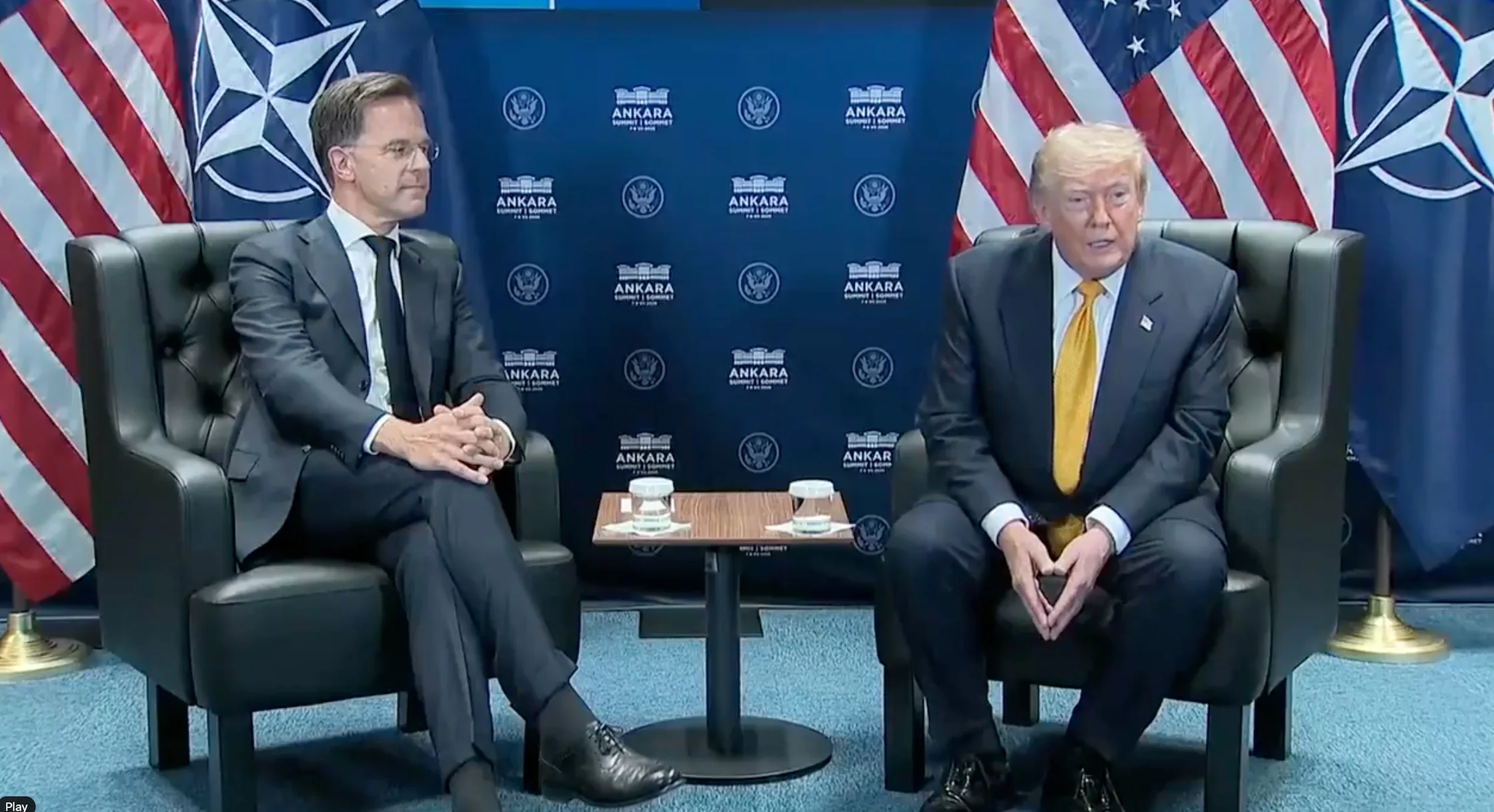
Opening tone
Trump arrived in Ankara with the alliance already anxious about what he might say. That anxiety proved justified. Reuters and AFP reporting from the summit showed him criticizing NATO members over defense commitments and using the forum to air grievances about Greenland and support for his Iran campaign.
Yet by the end of the summit, Trump was speaking in softer terms. He described the meetings as successful, praised Erdogan and said there was “a lot of love” and “a lot of unity” in the room. That abrupt tonal shift was one of the clearest highlights of his participation.
The summit revealed a familiar pattern: Trump uses public pressure to extract concessions, then claims diplomatic victory once allies respond. In Ankara, that formula was on full display.
Defense spending pressure
Trump’s central message was that NATO allies still need to spend more.
Reuters and other outlets reported that he came to the summit pressing members to meet defense commitments as Washington takes a more selective role in Europe. This was not a side issue; it was the core of his alliance message.
The timing mattered. NATO had just published figures showing higher European defense spending, and allies unveiled new arms contracts before the summit to show progress. Trump framed those moves as a validation of his long-standing demands.
That is important because it shows how Trump often treats alliance diplomacy as a scoreboard. If spending rises, he claims success; if not, he says allies are freeloading. In Ankara, he used the summit to reinforce that line.
Iran and Greenland remarks
Trump also used the summit to relitigate two of his most contentious foreign-policy positions.
He criticized NATO allies for not supporting the U.S. campaign against Iran and said he was unhappy with them over Greenland as well, according to Reuters and Fox reporting. Those remarks were not central to the formal NATO agenda, but they shaped the tone of the entire event.
Trump went further, calling NATO’s stance on these issues a failure and saying he had been “testing” allies. That framing turned diplomacy into a loyalty exercise, where allied reactions mattered as much as policy substance.
The Greenland comments were especially notable because they revived a dispute that many allies hoped had faded. By raising it in Ankara, Trump made clear that territorial and strategic issues remain live in his worldview. That added a volatile edge to an already tense summit.
Praise for Erdogan
One of the most consequential highlights was Trump’s treatment of Turkish President Recep Tayyip Erdogan.
Reuters, AFP, and other coverage showed Trump praising Erdogan’s leadership and expressing strong personal rapport with him. That was a marked contrast to his criticism of some European partners.
The warmth matters because Turkey’s place in NATO has become more prominent as Europe looks for more weapons production and Ankara seeks to leverage its industrial role. Trump’s good chemistry with Erdogan gives Turkey extra diplomatic weight inside the alliance.
For Trump, Erdogan is useful in a way some European allies are not: he is a strongman-style partner who can be praised personally while still being pressed on deals. That fits Trump’s transactional foreign-policy style.
Ukraine and Patriots
Trump also made headlines with remarks about Ukraine.
AP reported that he said the U.S. would give Ukraine a license to build Patriot air-defense systems, which would be a significant boost for Kyiv. He made the comment during talks on the sidelines of the summit.
That statement was important because it suggested continued U.S. backing for Ukraine even as Trump criticized allies and sought broader burden-sharing. In other words, his NATO message was not purely about retrenchment.
The Ukraine discussion also aligned with the final NATO declaration, which reaffirmed continued support for Kyiv. Trump did not oppose that outcome, but he did frame it in a way that emphasized negotiation, leverage, and production capacity rather than open-ended commitment.
The unity message
Despite the combative opening, the summit ended with a less confrontational tone.
AFP reported that Trump told reporters there was a lot of love and unity in the room. That matters because it suggests the allies’ strategy worked at least partially: avoid a direct rupture, keep Trump engaged and let the final communique carry the formal alliance message.
The final declaration reaffirmed NATO’s commitment to collective defense. That was the institutional answer to Trump’s pressure, and it was politically useful for both sides.
For Trump, claiming success lets him tell his supporters he forced allies to step up. For NATO, preserving the appearance of cohesion is often enough to buy more time. The tension between those two goals defined the summit.
What it means politically
Trump’s participation in Turkey showed that NATO remains deeply shaped by his personality and his negotiating style.
He was confrontational when it suited him, friendly when it helped him, and willing to turn side issues like Greenland into instruments of leverage. That makes him unpredictable, but also highly effective at dominating the summit agenda.
The larger implication is that NATO’s future diplomacy may continue to revolve around managing Trump rather than simply managing external threats. That is a significant shift for an alliance built on continuity and collective procedure.
Turkey, meanwhile, benefited from the spotlight. Erdogan’s role as host and Trump’s praise helped elevate Ankara’s status at a moment when the alliance is rethinking burden-sharing and industrial capacity. That may be the most durable diplomatic outcome from the summit.
The bottom line
The highlights of Donald Trump’s participation in the NATO summit in Turkey were his hard push on defense spending, sharp remarks on Greenland and Iran, warm words for Erdogan and a final claim that the alliance had come together. It was a familiar Trump performance, but one with real consequences for NATO’s politics and messaging.





