
President Donald Trump has further ratcheted up relations with Nigeria by issuing a direct military threat over his allegations that the West African nation is engaged in the systematic persecution and killing of Christians. This threat comes on the heels of Trump declaring Nigeria to be a “country of particular concern” regarding religious freedom violations, a designation made by the U.S. State Department for certain countries engaged in egregious religious persecution.
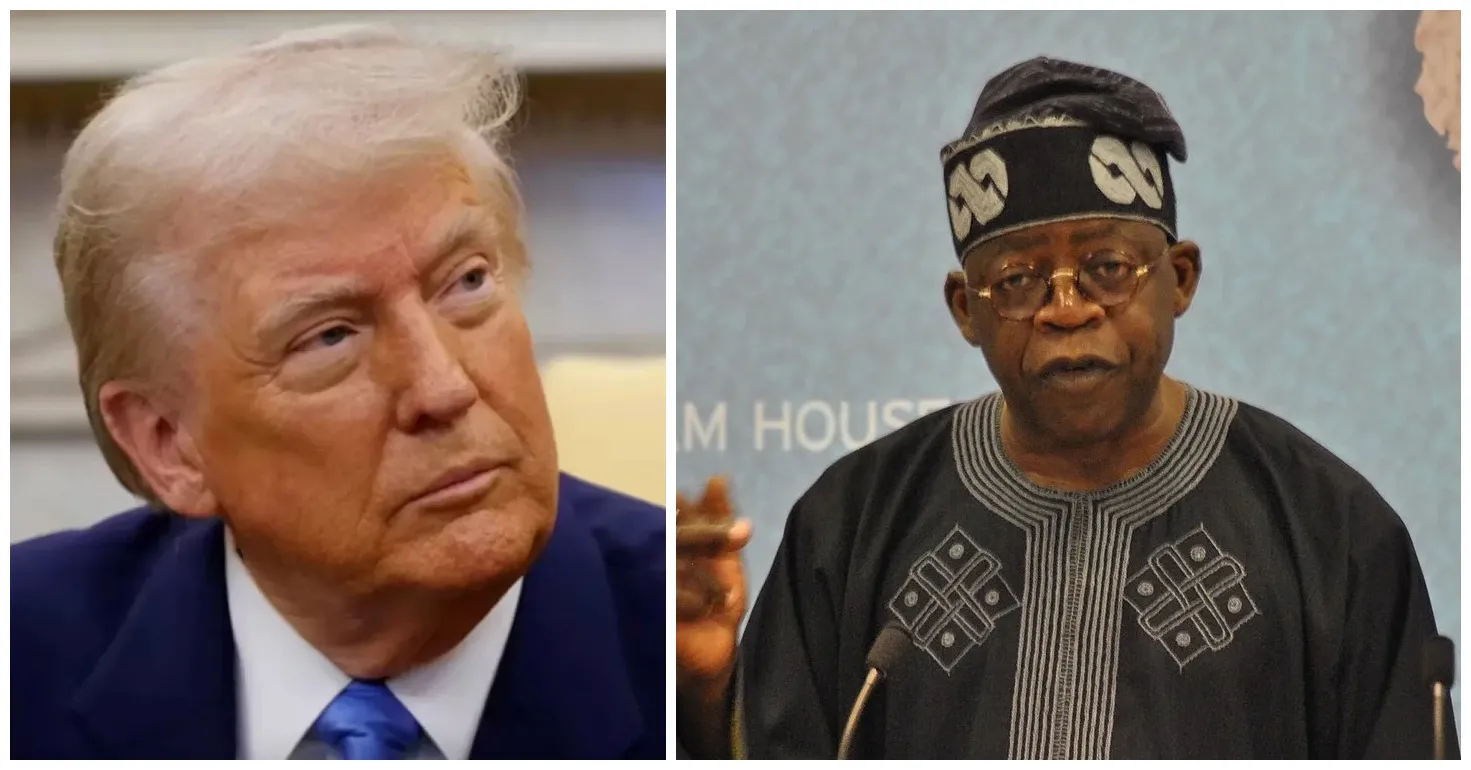
The situation has now drawn the international community’s attention, and Nigeria has rejected the allegations and cautioned about the ramifications of a shifting diplomatic relations and regional changes.
Trump’s Military Threat and Christian Persecution Claims
On November 1, 2025, President Trump claimed he had directed the Pentagon to consider military action in Nigeria, which he posted about on social media channel. He claimed that the Nigerian government had done nothing to prevent mass slaughter of Christians at the hands of radical Islamic terrorists. If Nigeria did not stop the attacks in the future, he would halt all aid and support to Nigeria and may well enter that now disgraced country, guns-a-blazing to wipe out the Islamic terrorists committing atrocious acts. He warned Nigerian officials that if they did not cooperate, that action would be swift, fierce, and decisive.
This military response by Trump comes on the heels of his announcement to the world that he declared Nigeria a “country of particular concern,” which designates countries engaged in egregious violations of religious freedom. He went on to say that Christianity faces an existential threat in Nigeria and thousands of Christians have been killed in recent years—in this regard, democratic lawmakers and some evangelical groups have echoed his claims. He also has engaged American policymaking by calling for the accountability from lawmakers asked Representative Riley Moore and Representative Tom Cole, on a fact-finding mission regarding violence against Christians.
Nigeria’s Response and Contextual Complexity
Within hours of Trump’s declarations, the government of Nigeria, led by President Bola Ahmed Tinubu, issued a bold denial of Trumps allegations. Tinubu’s office announced he had issued a social media response, where he emphasized the constitutional protections for religious freedom and tolerance that Nigeria guarantees. Tinubu’s office stated that the portrayal of Nigeria as a place that fails to provide religious freedom is grossly inaccurate. He also cautioned foreign citizens to respect the sovereignty of Nigeria and not to interfere with domestic issues, noting that outsiders would have the potential to escalate internal conflict.
Research and human rights organizations warn that violence in Nigeria is contextual and layered, as it is the result of compounding and intersectional issues and does not lend itself to only an issue of religious persecution. Nigeria’s underlying conflict that results in violence are due to competing resource claims, distinct ethnic conflicts, farmer-herder tensions, and radical Islamic insurgencies such as Boko Haram and other insurgent groups. While there have been attacks on both Christians and Muslims, indiscriminate attacks have taken place on villages that are neither religiously affiliated.
While there may be significant attacks on Christian communities in central and northern Nigeria, calling the violence a “Christian genocide” oversimplifies a multifactorial, and compounded, nature of conflict. Experts note that confirming and framing this crisis as articulating solely in religious terms ignores Nigeria’s multilayered security issues.
Geopolitical Implications and Global Reactions
Trump’s comment on potentially sending U.S troops into Nigeria is an unprecedented enactment of blatant interventionist rhetoric by the United States towards Africa. All of this has caused concern and international response about the stability of the region, since Nigeria is the largest country in Africa by population and key oil supplier to the world market. A military conflict in Nigeria would potentially upend energy markets and create destabilization in West Africa.
The capitals of international diplomacy clearly indicate that engagement in Nigeria should take the form of conversations to engage the Nigerian government of humanitarian assistance to displaced communities, and support to the Nigerian army, not talk of military intervention. If engagement moves toward military aid or intervention, this will stoke nationalist rhetoric at home while undermining national rivalries with allied nations and worsen divisions in Nigeria.
Human rights activists are also urging the U.S. administration yet again to base possible resources on evidence-based reporting rather than politically-popular claims by the President. Critics believe Trump is simply serving the interests of domestic, evangelical political constituents as opposed to serving an interventionist agenda and worsening already fragile stability, without addressing the underlying issues of the stability.
U.S. Aid and Policy Shifts
Alongside the more hidden threats of military involvement, Trump indicated that U.S. assistance to Nigeria will stop if the Nigerian government does not address violence against Christians in a timelier way. This represents more drastic shift in relations to Nigeria, and possible future impact of U.S. health, education, and security partnerships with the Federal Government of Nigeria. To discontinue U.S. aid and partnerships further compounds instability in an increasingly fragile peace process and impacts vulnerable displaced people relying on international assistance.
Therefore, shifts in U.S. policy will impact U.S. interest in Nigeria, as they will put continued pressure on Nigerian authorities, while complicating possible U.S. strategic interests in the region. Security and counter-terrorism cooperation are of enormous essential interest for U.S. partners in Nigeria (and beyond). The Biden administration will continue to have to contend with the dual challenges of condemning Nigeria human rights abuses of local authorities, while engaging with diplomatic channels.
Summary and Outlook
- President Trump has asked the Pentagon to consider options for military involvement in Nigeria, addressing the alleged “failure” of the federal government to intervene to prevent violence against Christians.
- Trump has termed Nigeria a “country of particular concern” related to violations of religious freedom.
- President Tinubu of Nigeria disputes claims in religious persecution against Christians, prevailing that the Constitution of Nigeria protects freedom of religion, and religious observance.
- Violence in Nigeria is a complex phenomenon, implicating a range of ethnic, violent, and resource laud drawn from conflict and never-ending violence.
- Caution from experts in international relations have detailed clear caution against the use of the emerging narrative about a military intervention, and further commoditization of said action, imploring for a more constructive engagement in modes of dialogue and humanitarian support, versus condemnation.
- U.S. Aid to Nigeria represents a trajectory of possible cessation, based on the Nigerian government behavior.
- Increasing the military presence in Nigeria is indicative of increasing political materiality of geopolitical risk in sub-Saharan Africa and complexities of U.S. relations to Nigeria.



