(DAKAR, Nov. 13,2025) – A dramatic split is emerging at the top of Senegalese power, with President Bassirou Diomaye Faye and Prime Minister Ousmane Sonko, formerly allies in opposition, now reportedly embroiled in a rapidly escalating public battle for influence. Just months after their remarkable joint victory ended Macky Sall’s long-standing incumbency in government, this divide threatens to destabilize one of West Africa’s more respected democracies and raises important questions about succession, reform, and the challenges of shared leadership.
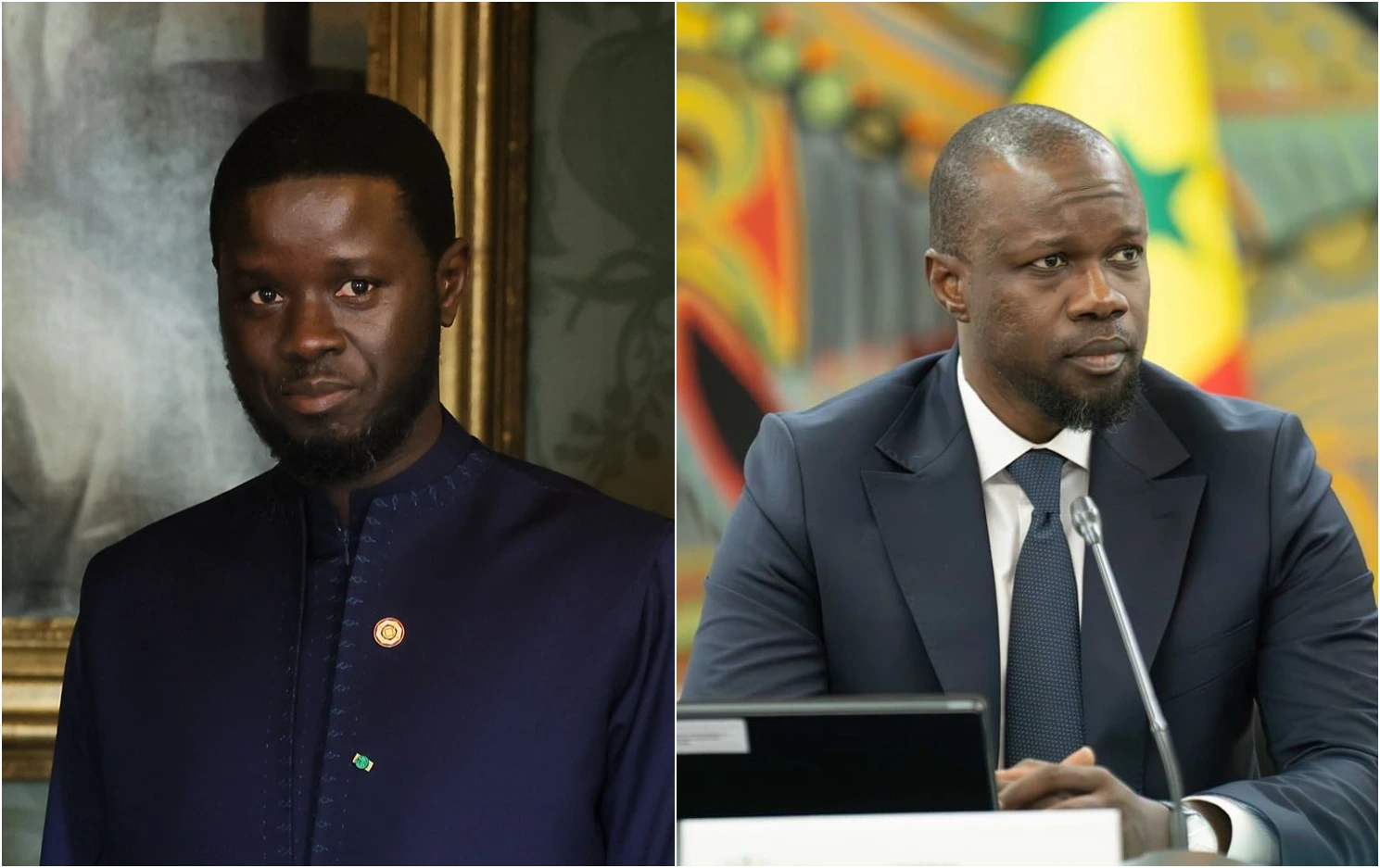
Senegal’s Power Shift: Faye and Sonko’s Alliance Faces Turmoil
Faye and Sonko, both out of the popular PASTEF movement, rode an unprecedented wave of democratization that successfully ousted entrenched elites competing in Senegal’s contested presidential elections of 2024. Faye became the youngest leader in the country and named Sonko Prime Minister—a statement seemed to signal unity with two reformist, anti-establishment personalities occupying the levers of power. In the early months of their presidency, they promised post-election action on anti-corruption, significant social audits, and a provocative review of oil and mining contracts, which would allocate a more significant portion back to Senegalese citizens.
The Fracture: Political War Breaks Out
This week, however, an emerged “tense public power struggle,” with President Faye unilaterally removing Aïssatou Mbodj, one of Sonko’s closest allies, from the leadership of a coalition “Diomaye Président”—the exact group that provides and granted election victory to Faye and Sonko. Faye’s decision shocked Sonko’s support, creating an open conflict among the ruling coalition, which analysts now say is “shaking” as a result of divided loyalties and political ambition.
Reportedly, informal conversations between Faye and Sonko have become increasingly aggravated, with Sonko’s collective asking for more independence over legislative agendas and important cabinet appointments. With ongoing public arguments, the opposition sees an opportunity to both return to politics and a larger political public uncertainty about the ruling coalition’s ability to deliver on economic reforms and stabilize social cohesion.
Roots of Rivalry: Personal, Structural, and Political
Despite their common roots in rural communities and the left political spectrum, Faye and Sonko represent different political bases and differing strategic visions for Senegal. Faye is an incredibly well-respected individual with solid reputation for integrity and technocratic background who supports gradual reforms and cautious engagement with foreign business interests. Sonko has built his personae as populist champion; more of confrontational style, but extremely popular amongst youth and urban activist to promote his agenda.
Although their collaboration effectively broke a decades-long streak of one-party dominance of Senegal’s political system, and compared to their predecessors, bridges a more inclusive and better governance model, it also exposed the wrestling between two prominent figures under governance together during a transitive phase.
Institutional Implications: Governance at Risk
The struggle for power threatens to derail Senegal’s institutional renewal efforts. Faye recently dissolved the National Assembly and announced elections for national legislature earlier than mandated, arguing the need for an incarnation of parliament to be in accordance with his mandate. Sonko’s camp argued this was a tactic to marginalize rivals and to expand the power of the presidency. International monitors and observers are concerned the rising tensions could hinder the implementation of promised reforms, or worse, lead Senegal into the same characteristics of gridlock and instability experienced in their neighboring state.
Nonetheless, many independent analysts are cautiously optimistic that Senegal’s relatively strong civil society, active media, and normative history of peaceful political transition will continue to serve as a buffer against political crisis. However, the break between Faye and Sonko will likely create a different government model for Senegal, and result in either institutional disruption, or punctuated periods of awkward uncertainty for the country.
Policy, Reform, and the Future
Regardless of the split, both leaders have publicly maintained a commitment to fighting corruption, improving social services, and ensuring that benefits of resource wealth is fair and equitable. However, with escalating tensions between Faye and Sonko, questions will be raised about the future political path for Senegal; will Sonko openly assert independence and oppose Faye, will a new coalition form, or could power imbalance be corrected within the current government?
The coming legislative elections, and whether Faye can maintain ex-opposition alliances remain to be seen, but will, regardless, help clarify the course of Senegalese democracy for several years to come.