
The international security environment has been dramatically affected with the obliteration of Iran’s nuclear facilities, say White House experts, following a number of US airstrikes on Iran’s most important nuclear facilities.

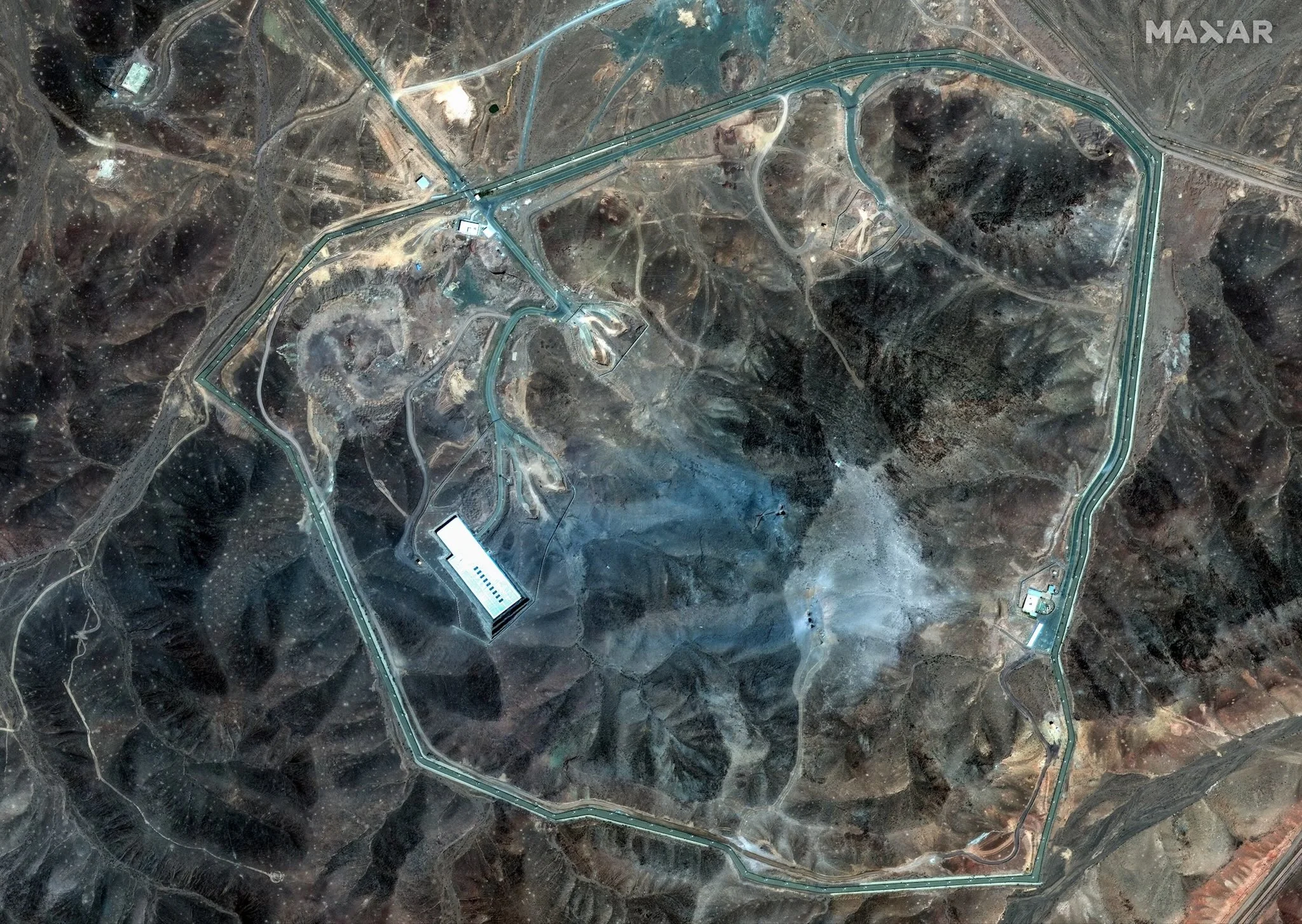
The White House reports that the operation – “Midnight Hammer”, was a success, with US President Donald Trump stating “Monumental devastation has done to all nuclear sites in Iran, as evidenced by satellite photographs.
Obliteration is an appropriate term for this!” But beyond the surface of formal statements, intelligence assessments and the opinions of experts leave a more complicated picture, with both definitive statements and uncertainties.
Official Accounts: “Destruction” and Assurance
From the president to the presidential advisor, to the defense secretary, intelligence heads, and military commanders, there has been a universal pronouncement. Defense Secretary Pete Hegseth stated, “From everything we have seen—and I have seen it all—our bombing campaign destroyed Iran’s ability to manufacture nuclear weapons.
Every massive bomb went exactly where it was supposed to go, and it worked! Vice President JD Vance added, “I can say with a high level of confidence to the American public their used to be a nuclear program. In fact, they are further away from a nuclear program today than they were 24 hours ago. That was the purpose of the mission.”
The mission targeted Iran’s three major nuclear sites: Fordow, Natanz, and Isfahan. The operation incorporated over 125 US military aircraft – led by B-2 stealth bombers and advanced fighters, as well as various intel, surveillance, and recon assets.
The White House has stressed precision and destruction against Iran’s nuclear facilities. Hegseth noted, “Given the 30,000 pounds of explosions, and the power of munitions, it was DESTRUCTION underneath Fordow…So, any conclusion that tells you otherwise, is speculation on another motive.”
Expert and International Perspectives
Experts, both nationally and internationally, have attempted to assess the level of damage. As reported by the Director General of the International Atomic Energy Agency (IAEA), Rafael Grossi, “Given the power of these devices and the technical features of a centrifuge, we know that these centrifuges are not operable since they are very precise machines: there are rotors, and the vibrations have completely destroyed them.”
CIA Director John Ratcliffe stated, “A body of credible intelligence points to the conclusion that Iran’s nuclear program has sustained a damaging blow from the recent targeted strikes … in the sense that several key Iranian nuclear facilities were destroyed and would have to be rebuilt, over time, from scratch.”
Iran’s own Foreign Ministry spokesman, Esmaeil Baghaei, has noted, “Our nuclear installations have been hit hard, that’s for sure,” but stopped short of saying they were destroyed. This unique acknowledgement, from Iranian government officials, has provided further support to the administration’s narrative.
Conflicting Intelligence and Doubts Remain
While the White House and its allied partners are supremely confident in ruling out Iran’s nuclear threat, some intelligence assessments provide a murkier picture. The Pentagon’s very own Defense Intelligence Agency issued a report stating that the strikes may have only set back Iran’s nuclear program by “a few months”, as opposed to dismantling core elements of it.
Leaked reports claim that much of Iran’s enriched uranium stockpile is still untouched, and most of the centrifuges—essential for uranium enrichment—are untouched. The DIA’s report—expressed as preliminary and subject to change—conclude that while aboveground structures and physical access points were damaged, underground targets may still be intact.
The White House has dismissed the DIA’s assessment as “flat-out wrong,” and has also accused critics of undermining the President and the military’s efforts. Independent weapons experts, and commercial satellite imagery analysts have expressed doubts as well and some triangles may still be operational.
Human Impact and Global Implications
The destruction or significant damage to Iran’s nuclear facilities—and regardless how extensive it may be—has immediate consequences for regional stability, and global nonproliferation. The White House has stated the facilities have been eliminated, and while there was some relief—those who feared an Iranian weapon would never see the day—and then fear of escalation and the long-term human impact of the developments that have occurred globally, and in the region.
The White House says Iran’s nuclear facilities have been eliminated, and yet the story is not that simple. It is complex and open to interpretation. While the administration and allies asserted victory, intelligence agencies and independent experts cautioned that Iran’s capability has only been delays, not destroyed. As the dust settles and we learn more, the world watches, as we are all aware this operation is more than just an operation, but rather has consequences both regionally and around the world that will be felt for years to come.