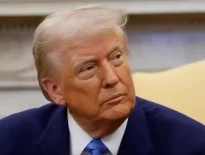
Donald Trump a key economic victory and installing a vocal critic of recent monetary policy at the helm of the world’s most influential central bank. Warsh, a former Fed governor and Wall Street financier, will succeed Jerome Powell at a moment of stubbornly high inflation, elevated gas prices and global uncertainty stemming from the war in Iran.
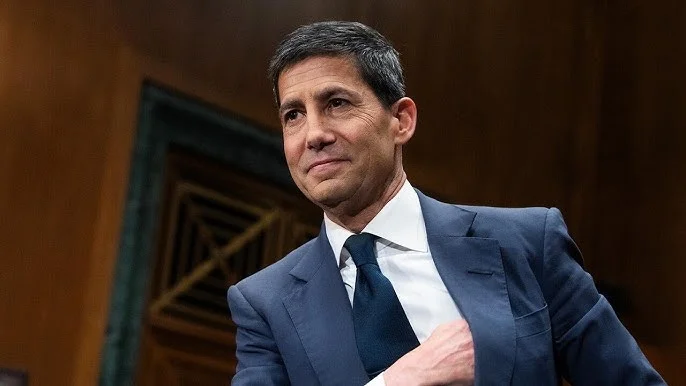
A narrow, partisan vote hands Trump his Fed pick
The Senate approved Warsh’s nomination on Wednesday afternoon, 54–45, after a contentious debate over his views on interest rates, banking regulation and the Fed’s independence. The tally was largely along party lines, with Pennsylvania Democrat John Fetterman the only member of his caucus to support Trump’s choice.
The confirmation capped a two‑step process that began the day before, when the Senate voted 51–45 to make Warsh a member of the Fed’s seven‑person Board of Governors, a prerequisite for serving as chair. Warsh, 56, will now serve a four‑year term as chair, running at least until 2030, and a 14‑year term as a governor that could keep him on the board until 2040.
He takes over from Jerome Powell, whose eight‑year tenure as chair ends this week. Powell has said he will remain on the board as a line governor through 2028, telling reporters he plans to “keep a low profile” and allow his successor to define the Fed’s course.
Who is Kevin Warsh?
Warsh is no stranger to the Fed. Appointed by President George W. Bush in 2006, he became the youngest member of the Board of Governors at age 35 and served through the 2008 financial crisis, often acting as a liaison between the central bank and Wall Street.
A lawyer by training and a former Morgan Stanley banker, he left the Fed in 2011 and has since worked in finance and academia, advising hedge funds and teaching at Stanford. In op‑eds and speeches over the last decade, Warsh has criticized what he calls the Fed’s “over‑reliance” on ultra‑low interest rates and bond purchases, arguing that prolonged easy money risks fueling asset bubbles and widening inequality.
Those writings made him a favorite among some conservatives who wanted a sharper break from the post‑crisis consensus, and Trump has repeatedly praised Warsh as “strong on growth, strong on the dollar and strong on America.” Critics, including several Democratic senators, say his record shows a tendency to underestimate the risks of tightening policy too quickly when the economy is fragile.
A turbulent backdrop: inflation, gas prices and the Iran war
Warsh assumes the chair with the Fed facing a fraught economic environment. Inflation has eased from its post‑pandemic peaks but remains above the central bank’s 2% target, and consumers are feeling the pinch of high gasoline prices linked to the conflict with Iran and disruptions in the Strait of Hormuz.
Reuters and other outlets note that the war has driven up energy and shipping costs, complicating the Fed’s task of balancing price stability with support for growth. Trump has publicly pushed for a more growth‑friendly stance, urging the Fed to “help American workers and businesses” even as he calls for a strong dollar and tougher trade policies.
In confirmation hearings, Warsh described inflation as “the most regressive tax on working Americans” and signaled a willingness to keep policy “sufficiently restrictive” until price pressures are firmly under control. At the same time, he said the Fed must be “nimble” in responding to external shocks, suggesting he could move more quickly than Powell to adjust rates if the Iran war or other geopolitical crises hit growth.
A clear break from Powell’s Fed
Though both men served on the same board years ago, Warsh has outlined a different vision from Powell’s gradualist approach.
- On interest rates, Warsh has criticized the central bank for waiting too long to respond to post‑pandemic inflation, arguing that earlier and more decisive hikes could have contained price surges with less pain.
- On the Fed’s balance sheet, he has questioned the scale and duration of bond‑buying programs, calling for a more rapid reduction in the central bank’s holdings of Treasurys and mortgage‑backed securities.
- On financial regulation, he has expressed support for easing some post‑2008 rules, particularly for smaller and mid‑sized banks, while maintaining core capital standards at the largest institutions.
Warsh told senators that, if confirmed, he would order a “top‑to‑bottom review” of the Fed’s toolkit, including its emergency lending facilities and forward‑guidance practices, to ensure it is “fit for purpose” in an era of repeated global shocks.
Supporters say that perspective will help the Fed avoid repeating what they see as past mistakes, including keeping rates too low for too long. Opponents worry that a more aggressive normalization push could choke off a still‑uneven expansion or tighten financial conditions too abruptly for heavily indebted households and businesses.
Independence and Trump’s influence
Warsh’s nomination has revived longstanding questions about the Fed’s independence from the White House. Trump has been unusually outspoken about monetary policy, criticizing Powell publicly during his earlier term and now installing a chair who broadly shares his skepticism of extended easy money.
During his confirmation hearings, Warsh sought to reassure lawmakers that he would resist political pressure. “If the Senate confirms me, I will take an oath to the Constitution, not to any individual,” he told the Banking Committee, adding that he views the Fed’s credibility as “its most precious asset.”
Democrats remained unconvinced. Several warned that Trump’s repeated comments on interest rates and the dollar risked creating at least the appearance of coordination between the White House and the central bank. Some pointed to Trump’s failed attempts to remove one of the Biden‑appointed governors as evidence of a broader effort to reshape the Fed’s leadership in his own image.
For now, the structure of the Board gives Warsh both influence and constraints: he will chair a seven‑member panel that includes two governors first nominated during Trump’s earlier term and three picked by President Joe Biden, plus regional Fed bank presidents who help set rates on the Federal Open Market Committee.
Market reaction and what comes next
Financial markets had largely priced in Warsh’s confirmation after his smooth progression through committee and the earlier governor vote, but investors are now recalibrating expectations for rate cuts and the pace of balance‑sheet reduction.
Investopedia notes that traders see a higher probability the Fed will keep rates elevated for longer under Warsh, with futures markets trimming odds of near‑term easing even as growth forecasts soften. Banks and energy stocks, which can benefit from higher rates and inflation protection, gained modestly after the vote, while rate‑sensitive sectors dipped.
Warsh will chair his first Federal Open Market Committee meeting later this summer, where investors will scrutinize both the policy statement and his inaugural press conference for hints of how quickly he intends to differentiate himself from Powell. Key questions include:
- Whether he will embrace the current 2% inflation target or push for an alternative framework.
- How fast he will seek to shrink the Fed’s balance sheet.
- How he will navigate tensions between fighting inflation and supporting employment if the Iran war or other shocks hit growth.
For Trump, the confirmation delivers a central bank chief who is ideologically closer to his camp. For Warsh, it marks the start of a tenure that will be judged on whether he can tame inflation without tipping the U.S. into recession, and whether the Fed can maintain its independence in an era of intense political scrutiny.