
On November 18, 2025, President Donald Trump welcomed Saudi Arabia’s Crown Prince Mohammed bin Salman (also known as MBS) to the White House for an important summit announcing a renewed strategic and economic partnership between the two countries. This visit marked the crown prince’s first visit to Washington since the government’s 2018 murder of Saudi dissident journalist Jamal Khashoggi, which severely toxic effect on U.S.-Saudi relations.
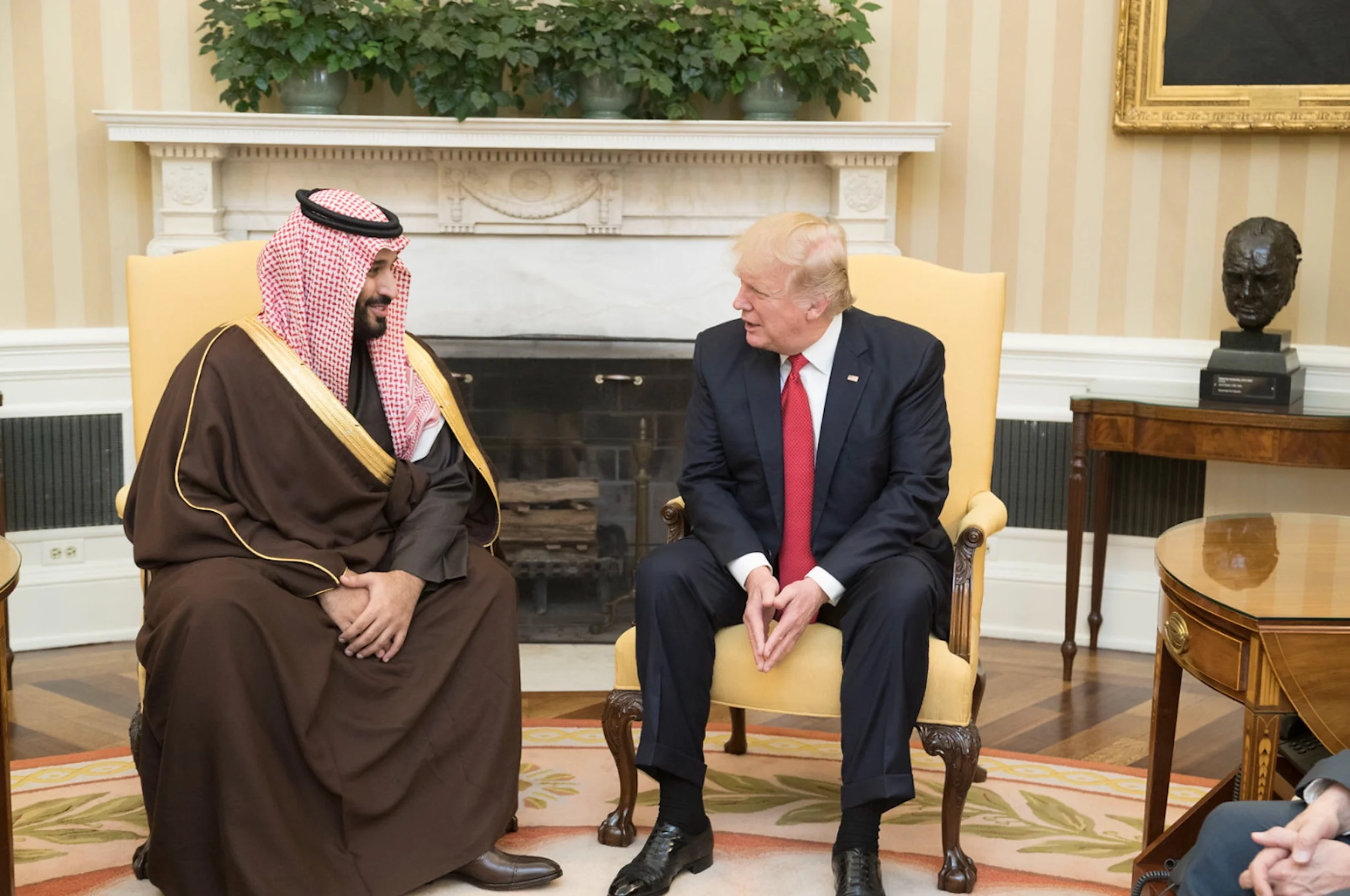
Against this troubling backdrop, the visit focused on strengthening defense ties, ramping up business investment, particularly in technology and energy, and crafting a shared vision for regional security in light of ongoing tensions in the Middle East.
Ceremonial Welcome and Symbolic Engagement
Mohammed bin Salman was given full military honors, including a flyover and a cavalry procession. This showed how important the visit was to both countries. Trump praised MBS’s “incredible” reforms in Saudi Arabia and talked about plans to help U.S. exports grow and work together on new technologies. There was an investment forum at the summit with big names in business like Elon Musk, Jamie Dimon, and Larry Fink. This showed that business and geopolitics are both important.
Key Agreements: Defense and Economic Collaboration
The White House announced a series of major agreements including a new defense agreement that involves selling F-35 fighter aircraft as well as missile defense systems to Riyadh. Cooperation around capital markets technology and policies, regulatory alignment, and broader opportunities for participation in international financial institutions were also emphasized. These initiatives are articulated as part of Trump’s larger mission to “put American workers first”, expanding production and jobs on American soil and solidifying strategic relationships with Saudi Arabia.
Notably, the trip also addressed civilian nuclear cooperation and investment in renewable energy with a tie to Saudi Vision 2030, signaling Saudi interests in economic diversification and leadership in emerging technologies.
Diplomatic Nuances and Regional Context
Even though Trump has publicly praised human rights, there is still a lot of debate about them. Trump publicly dismissed U.S. intelligence reports that said MBS knew about the Khashoggi murder. This went against what the government had said before and worried rights advocates and lawmakers. Still, both sides saw the visit as a partnership that looked to the future and was based on shared security and economic interests in a time of instability in the Gulf and wars like the one in Gaza.
Saudi-Israeli relations were still not normal, and Riyadh made it clear that progress on Palestinian issues was a condition for normalization. This shows that diplomatic issues are still complicated, even as economic ties grow.
Political and Business Elite Presence
The White House dinner signified Washington’s elite social circles, featuring the likes of Musk, Ronaldo, Dimon, Schwarzman, and executives from Chevron, Qualcomm, and Pfizer, among others, as the intersection of diplomacy, finance, technology, and entertainment have helped to create consequences for U.S.-Saudi relations.
It’s common to note the intermingling of business with statecraft in Trump’s approach, which raises questions about the influence of that involvement and governance overall.
Implications and Outlook
This meeting is a sign that the U.S. and Saudi Arabia are trying to improve their relationship by focusing on working together, even though there are still some problems. If the U.S. and Saudi Arabia can successfully carry out defense deals and economic projects, Saudi Arabia will become an important partner for the U.S. in the Middle East, which is changing quickly.
Trump wants to show off his administration’s foreign policy successes. But human rights issues, geopolitical problems, and global attention are still major obstacles to a fully normal relationship.






Inside Trump’s Capitol Hill Lunch: Senate Republicans Seek Reset as President Presses ‘SAVE America’ Act