
A partial government shutdown is what happens when Congress funds some, but not all federal agencies on time, forcing only the unfunded parts of Washington to grind to a halt while “essential” functions and mandatory programs keep running. The current debate in Washington, and a fresh lapse in funding, has turned a technical budget term into a live question for millions of Americans who rely on paychecks, public services, and a still‑fragile economy.
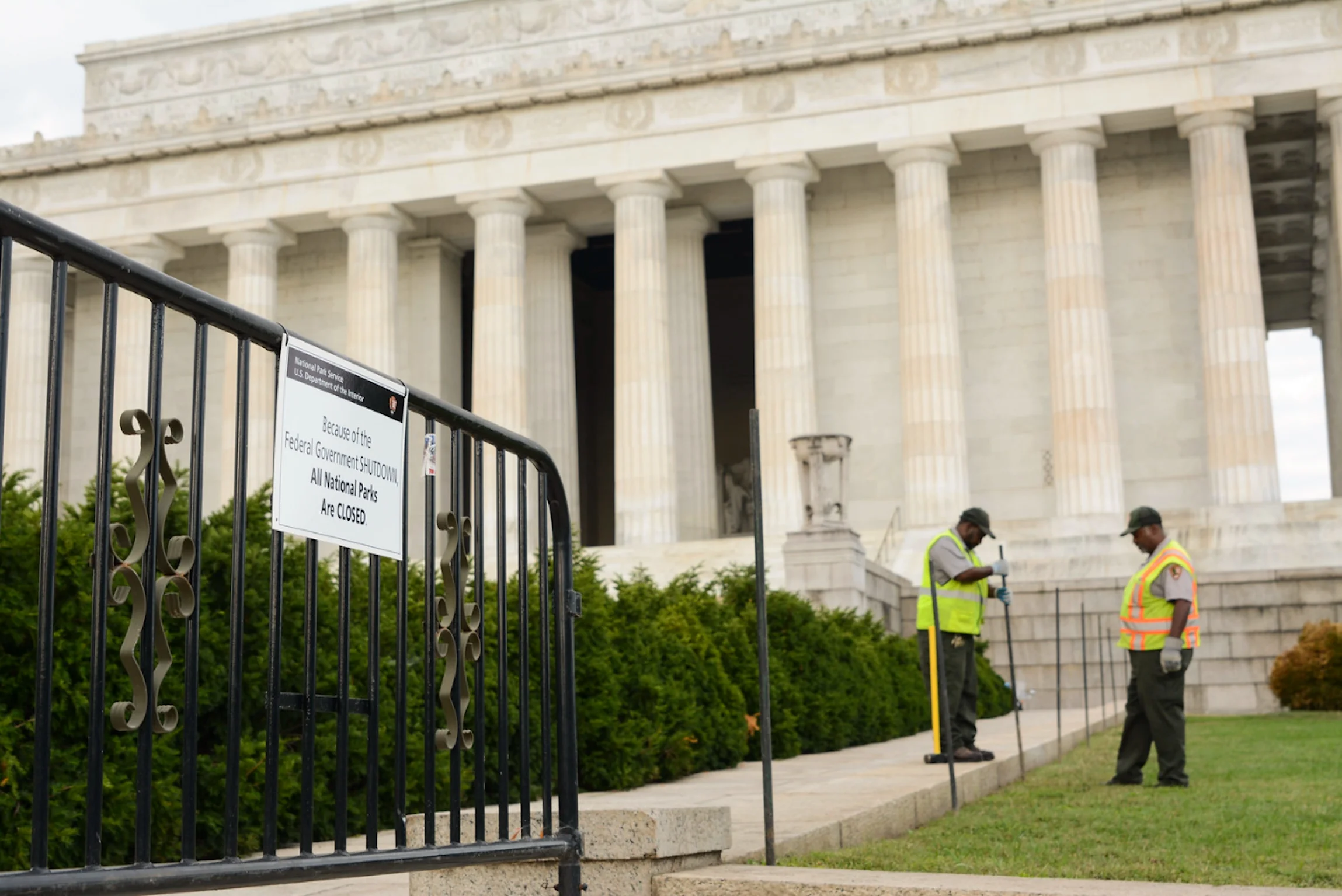
What is a partial shutdown?
Under US law, most federal operations need annual appropriations from Congress. When Congress fails to pass, or the president refuses to sign, one or more of those spending bills, affected agencies must stop spending money triggering a shutdown.
If lawmakers have approved only some of the 12 annual appropriations bills, the damage is limited to the departments that still lack funding. Analysts and budget experts describe this as a partial shutdown: the Agriculture or Justice Departments can keep working if they are funded, while the Pentagon or Homeland Security may have to scale back if they are not.
During a lapse, agencies covered by unfunded bills must halt all “non‑essential” discretionary functions until new legislation passes. Essential services continue, as do “mandatory” programs like Social Security and Medicare that are funded outside the annual appropriations process.
Essential vs. nonessential: who keeps working?
The line between essential and nonessential is drawn under the Antideficiency Act and refined by guidance from the White House budget office. A function can continue without new appropriations if it is:
- Explicitly authorized by other law (for example, Social Security payments).
- Needed to protect life or property (such as air‑traffic control, law enforcement, in‑hospital medical care).
- Required to carry out the president’s constitutional duties.
- Necessary to wind down operations in an orderly way.
In practice, this means:
- Essential employees (also called “excepted” staff) keep working but do not get paid until funding resumes. They include many Border Patrol agents, Transportation Security Administration screeners, air‑traffic controllers, in‑hospital VA medical staff, and certain law‑enforcement and national‑security roles.
- Nonessential employees in unfunded agencies are furloughed, sent home without pay and barred from doing their jobs, even voluntarily, until Congress acts.
USAFacts and legal analysts note that mandatory spending programs not subject to yearly appropriations, Social Security, Medicare, Medicaid and SNAP benefits authorized by separate law, generally continue, although administrative slowdowns can still cause delays.
The National Law Review points out that the “essential vs. nonessential” label can be counter‑intuitive: a senior policy analyst might be furloughed while a building security guard is deemed essential because, without someone to open the doors and keep systems powered, higher‑level staff could not function at all.
How today’s partial shutdown differs from a full closure
Recent history offers a stark contrast between partial and broader shutdowns.
- The 2018–2019 shutdown lasted five weeks and was “partial” because Congress had already passed five of the 12 appropriations bills; the remaining seven departments, including Homeland Security, ran out of money. The Congressional Budget Office estimated that it temporarily reduced GDP growth by 0.1 percentage point in late 2018 and 0.2 percentage point in early 2019, about $11 billion in lost output, of which roughly $3 billion was never recovered.
- The fall 2025 shutdown, by contrast, was far more sweeping and lasted about six weeks, with multiple major agencies running out of funds. CBO told Congress it would reduce annualized GDP growth by 1.5 percentage points in the fourth quarter, then create a 2.2‑point rebound when back pay and delayed spending hit in early 2026, with smaller drags afterward.
The current episode, which began over the weekend, is again partial. Congress has already enacted funding for roughly half of this year’s measures, so departments such as Agriculture, Justice and Veterans Affairs remain open and programs like SNAP and Social Security are expected to continue uninterrupted. Funding has temporarily lapsed, however, for the Pentagon, Homeland Security, Transportation, Health and Human Services and Labor, among others, forcing them to classify staff, furlough some workers and keep others on the job without pay.
A White House “shutdown clock” page frames the impasse in partisan terms, accusing Democrats of risking services for millions and emphasizing that the administration will keep paying air‑traffic controllers, TSA officers and 150,000 federal law‑enforcement officers once Congress restores funding.
Economic impact: small at first, but it grows with time
Economists say a short partial shutdown is unlikely to derail the broader US economy but warn that costs mount quickly if a funding fight drags on.
- ABC News, citing Moody’s Analytics chief economist Mark Zandi, reports that any immediate damage from a brief partial shutdown will be “on the margin,” largely tied to missed paychecks and the temporary pullback in spending by furloughed workers. Most of that lost consumption is typically recovered once back pay arrives.
- The longer a shutdown lasts, the larger the hit. A 43‑day full shutdown last year wiped out the equivalent of 0.8% of inflation‑adjusted GDP, or roughly half the growth the economy had posted over the previous six months, according to accounting firm EY. Some of that output was permanently lost as investment and hiring decisions were delayed or cancelled.
- The nonpartisan Committee for a Responsible Federal Budget notes that in any shutdown, “non‑essential discretionary functions” stop while essential and mandatory spending continue, meaning many private businesses that rely on federal permits, loans or contracts suddenly face delays, even if the broader consumer economy appears stable.
Brookings calculates that the 2018–2019 partial shutdown knocked about $11 billion off GDP, with $3 billion never recouped, and estimates that the six‑week 2025 episode shaved billions more from growth and increased uncertainty for markets and households.
For individual workers, analysts at the Bipartisan Policy Center told ABC News that the key pressure point is missed paydays: federal employees at affected agencies would skip their first paycheck on February 13 if the current lapse is not resolved quickly, forcing many to cut back spending, dip into savings or miss bills, effects that then ripple through local economies.
Who feels it: from airports to classrooms
Because only certain agencies are hit, the pain of a partial shutdown is uneven.
According to ABC News and budget explainers, the current funding lapse is set to disrupt or strain:
- National security and defense: The Pentagon halts some civilian activities, training and maintenance; uniformed military continue working but could face delayed pay if the stalemate persists.
- Homeland Security: Border Patrol, ICE and TSA agents are deemed essential and keep working without pay, raising the risk of staffing shortages and morale problems.
- Transportation: Air‑traffic controllers and many FAA safety staff remain on duty, but support staff may be furloughed, increasing the risk of flight delays and slower safety oversight.
- Public health and labor: Parts of Health and Human Services and the Labor Department cut back inspections, grant processing and regulatory work.
By contrast, agencies funded by already‑passed bills, including Agriculture, Justice and Veterans Affairs, stay open, and mandatory programs like Social Security and Medicare continue issuing benefits.
Small businesses can feel the strain in subtler ways: delays in Small Business Administration loans, federal research grants, environmental permits and export‑import financing all translate into postponed investments and hiring, especially if the shutdown lasts weeks rather than days.
Politics and precedent
Partial shutdowns are a relatively recent feature of US governance but are becoming more frequent. Paychex, summarizing Congressional Budget Office data, counts 15 shutdowns since 1981, including five in the past decade alone and three under President Trump’s two administrations. The 2025 shutdown, which extended from October 1 to November 12 as Congress fought over spending and immigration, was among the longest ever.
Analysts at Brookings and the Committee for a Responsible Federal Budget argue that shutdowns rarely alter the long‑term trajectory of the deficit but can undermine confidence in basic governance, raise questions about US reliability and distract from other policy priorities. Business groups warn that repeated brinkmanship increases uncertainty for investors and trading partners, even if each individual shutdown is brief.
At the same time, partisan messaging around shutdowns has hardened. The White House’s shutdown clock portrays the current partial closure as proof of Democratic “recklessness,” while progressive groups blame Trump and congressional hard‑liners for using federal workers as leverage in fights over spending and border policy.
What happens next?
Partial shutdowns end the same way they begin, with a vote. Once Congress passes, and the president signs, either:
- A full‑year appropriations bill for unfunded agencies, or
- A short‑term “continuing resolution” that extends current funding levels,
furloughed staff are recalled, back pay is processed, and “essential” workers are paid retroactively, as has happened after past shutdowns.
In the current episode, the House is expected to try to pass funding legislation quickly when lawmakers return on Monday, with both parties signaling they want to avoid a repeat of last fall’s drawn‑out standoff. Budget experts stress that there is no economic upside to a partial shutdown only varying degrees of avoidable harm.
For most Americans, that means the best‑case scenario is that the term “partial shutdown” remains more of a political headline than a lived experience. For hundreds of thousands of federal workers and contractors, however, each day of delay is another day of unpaid labor or forced idleness, an object lesson in how abstract Washington fights can land squarely in household budgets and Main Street cash registers.