
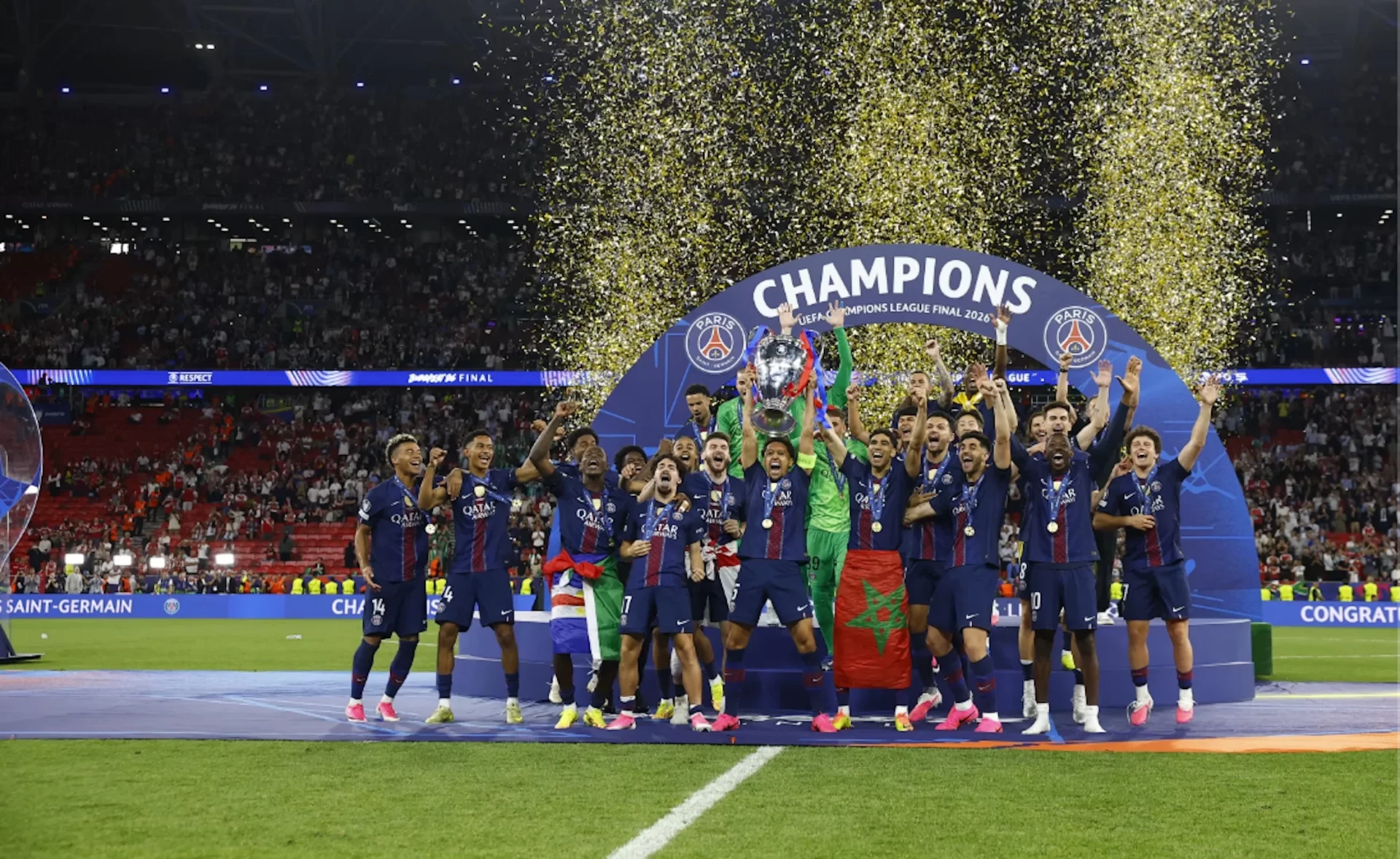
Paris Saint‑Germain have cemented their place among Europe’s elite by winning a second straight Champions League title, edging Arsenal 4–3 on penalties after a tense 1–1 draw through 120 minutes in Budapest. The back‑to‑back triumph makes PSG the first club since Real Madrid’s mid‑2010s three‑peat to retain the trophy in the modern Champions League era and the first French side ever to do so.
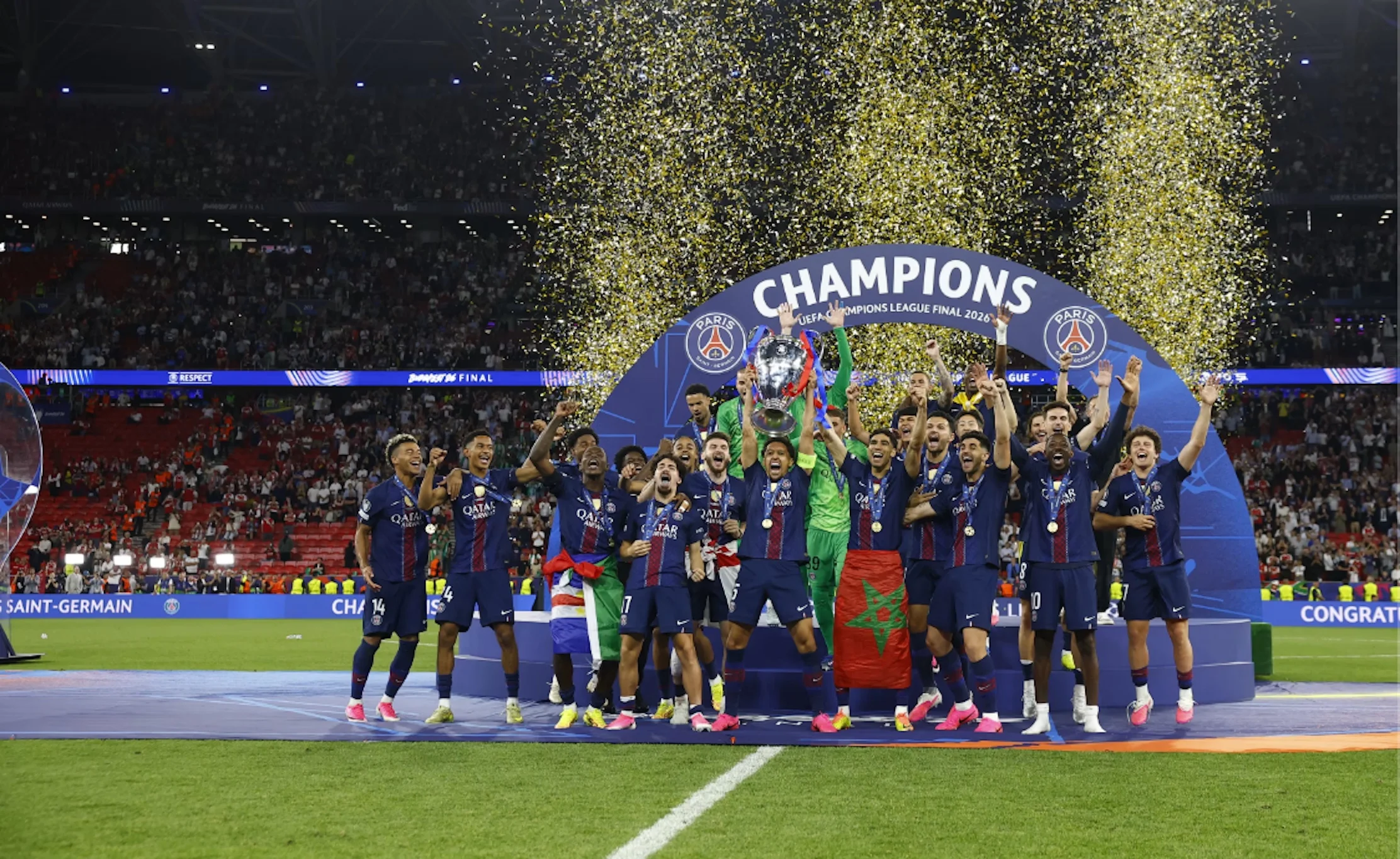
A final decided from the spot
At the end of two hours of football at the Puskás Aréna, there was almost nothing between Paris Saint‑Germain and Arsenal. Arsenal struck first when Kai Havertz slid home from close range in the sixth minute after a slick move down the right, giving the Premier League champions a dream start and briefly silencing the predominantly Parisian end.
PSG grew into the game, dominating possession and territory, and finally levelled on 65 minutes when Ousmane Dembélé converted a penalty awarded for a clumsy challenge on Vitinha. The Ligue 1 winners pushed hard for a winner in regulation and extra time, but Arsenal’s defense, led by William Saliba and Gabriel, survived a succession of crosses and long‑range efforts.
For the first time in a decade, the Champions League final went to a penalty shootout. PSG’s Gonçalo Ramos, Désiré Doué, Achraf Hakimi and Lucas Beraldo all found the net, while Arsenal’s Eberechi Eze pulled his effort wide before goalkeeper David Raya briefly revived hopes by saving from Nuno Mendes. The decisive moment came when Gabriel Magalhães, stepping up with Arsenal’s fifth kick and needing to score to extend the contest, sent his shot over the crossbar to seal a 4–3 shootout victory for PSG.
PSG’s historic back‑to‑back
The win confirms PSG as back‑to‑back European champions, following last season’s 5–0 dismantling of Inter Milan in Munich. According to BBC Sport and World Soccer Talk, the French club becomes only the second team in the Champions League era, after Real Madrid’s 2016–18 run, to successfully defend the trophy, and only the ninth club in history to retain the European Cup or Champions League.
World Soccer Talk notes that PSG now join an exclusive list that includes Real Madrid, Benfica, Inter, Ajax, Bayern Munich, Liverpool, Nottingham Forest, and AC Milan, making them the first French club ever to win Europe’s biggest prize in consecutive seasons. The achievement comes after years of near‑misses and painful collapses in Europe that had earned the club a reputation for fragility on the biggest stage.
“Last season felt almost too straightforward against Inter,” one BBC analysis observed. “This time, they had to suffer. With this back‑to‑back win, they join the ranks of the greatest of all time.”
Luis Enrique’s legacy and PSG’s evolution
For Luis Enrique, the victory represents a personal milestone and a tactical vindication. ESPN notes that by guiding PSG to consecutive Champions League titles, he has joined an elite group of coaches with three or more European Cup/Champions League wins, adding these two triumphs to his 2015 success with Barcelona. AP and CBS Sports point out that he has now achieved something even close friend Pep Guardiola has not: retaining the competition with the same club.
This second run to the title has underscored how PSG’s project has shifted from a star‑driven model to a more balanced collective. With global icons of previous eras gone, the current side has relied on a deeper cast: Dembélé’s work on the right, Vitinha’s control in midfield, Beraldo’s calm in defense and a bench capable of changing games.
ESPN’s analysis stresses that PSG “dominated the game but were unable to finish off Mikel Arteta’s side until the penalty shootout,” reflecting a team that has learned to manage frustration and risk rather than chase chaos. Their path to Budapest, following last year’s demolition of Inter, suggests a club that has finally married domestic dominance with the resilience required to navigate Europe’s knockout rounds.
Agony for Arsenal in first final under Arteta
For Arsenal, the night will be remembered as a bitter near‑miss. The Premier League champions were contesting only their second Champions League final, 20 years after losing to Barcelona in 2006, and appeared on course for a historic first title after Havertz’s early goal.
Mikel Arteta’s team defended with discipline for long stretches and carried a threat in transition, but struggled to maintain possession as fatigue set in and were unable to turn occasional openings in extra time into clear chances. In the shootout, the fine margins that have defined Arsenal’s season went against them: Eze’s miss and Gabriel’s skied effort left them one kick short of sudden death.
CBS Sports and ESPN describe the defeat as “agonizing” for a club that had already broken a domestic title drought and was close to completing a double. Yet analysts also note that taking the defending European champions to penalties in a second‑straight final signals Arsenal’s emergence as a genuine long‑term force at this level, rather than an overachieving outsider.
A night of celebration and tension in Paris
Back in the French capital, celebrations quickly turned to tension. ESPN’s match report notes that Paris police detained 45 people after clashes broke out following the final whistle, with some supporters attempting to storm a police station amid street parties marking PSG’s second Champions League win.
Authorities said they deployed tear gas in certain areas to disperse crowds and protect property, even as thousands of fans flooded the Champs‑Élysées and gathered around Parc des Princes to watch the trophy lift on big screens. The mixed scenes underlined both the scale of PSG’s support and the volatility that has sometimes accompanied their biggest nights.
PSG’s place in European history
With this victory, Paris Saint‑Germain have moved from the ranks of ambitious contenders into the inner circle of clubs that have defined eras in European football. Two consecutive Champions League titles, added to a domestic haul that includes 14 Ligue 1 crowns and four straight league titles, now give substance to an argument that was once dismissed as marketing: PSG are no longer chasing legitimacy, but defending it.
World Soccer Talk sums up the shift succinctly: “The triumph in Budapest capped another remarkable campaign… the significance extends far beyond a single final,” placing PSG alongside Real Madrid, Bayern, Liverpool, and Milan in the conversation about serial European winners. BBC goes further, suggesting that with back‑to‑back Champions League wins and a dominant domestic record, the club “join the ranks of the greatest of all time.”
For Arsenal and the rest of Europe’s elite, the task now is clear: find a way to knock Paris off a perch they have spent more than a decade climbing toward — and have finally, emphatically secured.