Venezuela awoke this weekend to a political paradox: Nicolás Maduro is in a New York detention cell, yet his government, at least on paper, still sits in Caracas, and the country’s future is being argued as fiercely in Washington and at the UN as it is on Venezuelan streets. What comes after Maduro will hinge on three overlapping battles: who claims legitimate authority at home, how far the United States pushes its promise to “run” Venezuela, and whether a credible path to elections and economic recovery can emerge before the shock hardens into a new status quo.
A president in New York, a regime still in Caracas
US special forces flew Maduro and his wife, Cilia Flores, out of Venezuela after a major air and missile campaign, delivering the Venezuelan leader into U.S. custody to face long‑standing drug‑trafficking and “narco‑terrorism” charges. Trump has trumpeted the operation as both law‑enforcement and regime change, boasting that the United States will “run” Venezuela until a “proper transition” can be arranged and hinting that U.S. oil firms will be “very strongly involved” in rebuilding the energy sector.
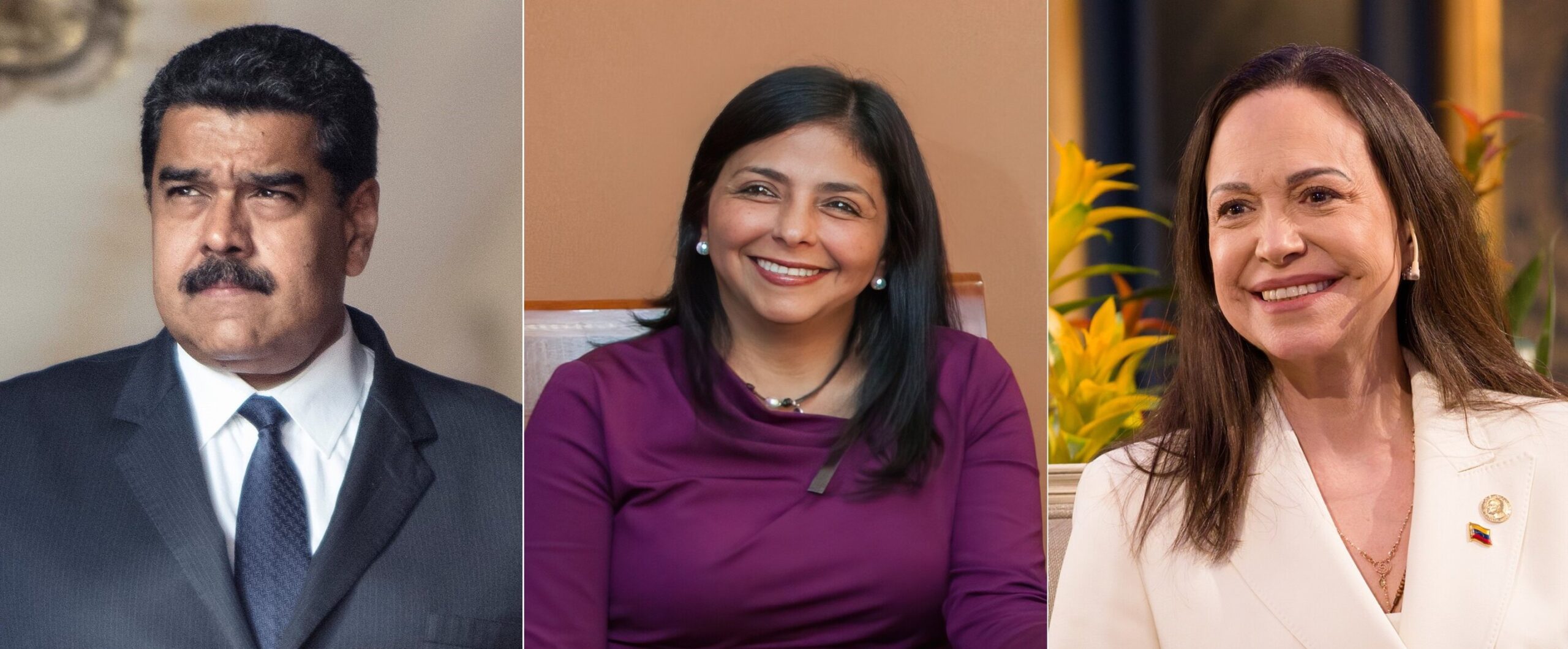
Inside Venezuela, however, the regime’s institutions did not vanish with Maduro’s capture. Vice‑president Delcy Rodríguez went on national television to brand the operation a “kidnapping,” insist that Maduro remains the “only president” of Venezuela and call for calm and unity. Within hours, the pro‑government Supreme Tribunal of Justice ordered Rodríguez to assume the presidency in Maduro’s absence on paper preserving Chavista control of the state.
That leaves Venezuela in constitutional limbo:
- The de facto government in Caracas claims continuity under Rodríguez.
- The U.S. executive claims a kind of informal trusteeship, with Trump saying Washington will oversee the country until a “safe and judicious transition” is ready.
- The opposition, whose candidate Edmundo González won the 2024 presidential election before it was nullified, insists it holds the only genuine democratic mandate.
The UN Secretary‑General has warned that the U.S. raid sets a “dangerous precedent” and that it is “not clear” how any claim to administer Venezuela squares with international law. On Monday, the Security Council is due to convene at the request of Colombia, Russia, and China to debate both the legality of the strike and the future governance of the country.
Three competing projects for Venezuela’s future
Policy forums and think‑tanks are already sketching scenarios. An Atlantic Council analysis frames the moment as “the most consequential” in recent Venezuelan history and argues that Maduro’s removal is clearly more than a simple extradition: it is a regime‑change effort, one that could still end in very different ways depending on who fills the vacuum.
Broadly, three projects are vying to shape what comes next:
- Chavista continuity without Maduro: Rodríguez and other regime insiders aim to preserve Chavismo, Maduro’s political project, by rallying the military and bureaucracy around a new figurehead. Experts note that she lacks Maduro’s personal grip and is sanctioned internationally, but she controls levers of state coercion and patronage in the short term.
- A U.S.‑steered transition with Chavista participation: The Trump administration has signaled it could work with a Chavista successor so long as they “capitulate to U.S. demands,” particularly on oil, sanctions, and security cooperation. That suggests Washington might accept a negotiated interim arrangement that blends regime and opposition figures under quiet U.S. oversight, what critics in the region fear could become an open‑ended foreign tutelage.
- An opposition‑led democratic roadmap: The Plataforma Unitaria Democrática, the broad opposition coalition, had already drafted a transition plan “for the day after” Maduro, centered on restoring civil liberties, tackling hunger, and preparing free elections. María Corina Machado, opposition leader, 2025 Nobel Peace Prize laureate, currently in hiding, has outlined a 100‑day program that prioritizes freeing political prisoners, reversing censorship and launching emergency social policies before turning to deeper economic reform.
Which of these projects prevails will depend largely on whether there is an elite split inside Chavismo and the armed forces, and on how firmly regional governments and multilateral institutions insist on a genuinely Venezuelan, election‑anchored transition rather than one dictated from Washington.
Oil, sanctions, and the risk of a “forever stewardship”
The stakes are not only political; they are also energy‑geopolitical. Venezuela sits on the world’s largest proven oil reserves as well as significant gold, iron, and rare mineral deposits, but years of mismanagement, corruption and sanctions have gutted production. Analysts at the Atlantic Council and the Council on Foreign Relations argue that any real recovery will require a new legal framework to attract long‑term private investment, most of it likely American or allied into a sector where infrastructure has decayed, and debt has piled up.
Trump has openly linked Maduro’s ouster to a promise that U.S. companies will play a “very strong” role in Venezuela’s oil revival, casting the operation as a way to push back China and Russia and reassert U.S. dominance in the hemisphere. Energy experts warn that:
- Rebuilding output will take many years and billions of dollars, even under a stable, investor‑friendly government.
- If Washington insists on heavily shaping the sector’s new rules while keeping sanctions as leverage, what is billed as a transitional stewardship could slide into an open‑ended occupation in all but name.
- A perception that Venezuelan oil is being carved up as spoils of war could delegitimize any new authorities at home, even if they are nominally democratic.
CFR experts warn that there is “no clear exit strategy” yet for U.S. involvement and that the administration appears to have planned the strike far more carefully than the post‑strike stabilization, a pattern that echoes Iraq and Afghanistan.
Democracy vs. tutelage: the opposition’s narrow window
For Venezuela’s opposition, Maduro’s capture opens a narrow but genuine window—and a trap. Their transition blueprint, drafted long before the raid, centers on three immediate steps: restoring freedoms, addressing the humanitarian emergency, and laying the groundwork for credible elections. Machado’s 100‑day plan envisions:
- Restoring freedom of speech and independent media.
- Releasing political prisoners and exiles.
- Launching emergency programs to combat food insecurity and malnutrition.
Only after that, she argues, should deeper economic reforms begin: streamlining bureaucracy, unlocking private‑sector investment, and reconnecting with global markets that have shunned Venezuela under Maduro.
But the opposition’s leverage is complicated by the way Maduro fell. Because he was removed by a foreign military raid rather than an internal electoral process, any opposition figure seen as too closely aligned with Washington risks being cast by Chavistas, and some international actors, as a proxy installed at gunpoint.
Analysts therefore stress that:
- The opposition must insist on a civilian‑led, Venezuelan‑designed transition, even as it engages with U.S. and regional partners.
- Any interim arrangement should be explicitly time‑limited and anchored in a roadmap to free and fair elections supervised by credible international observers.
- Amnesty or safe‑passage guarantees for parts of the regime may be unavoidable to encourage defections and avoid a violent escalation.
Without such guardrails, a “liberation” narrative abroad could quickly turn into a legitimacy crisis at home.
Regional and global shockwaves
Maduro’s removal is already sending ripples through the region and beyond. Neighboring Colombia has mobilized forces along the border and pushed for the UN debate, warning that any prolonged vacuum in Caracas could drive new migration waves and empower armed groups operating in the frontier. Cuba, Chile, China, Iran, France, and South Africa are among the governments that have condemned the U.S. strike, arguing that it violates the UN Charter and risks normalizing cross‑border abductions of sitting leaders.
Security analysts note that the operation is also being read in Tehran, Moscow, and Beijing as a demonstration of U.S. reach, especially after Trump coupled it with a “locked and loaded” warning to Iran. But experts caution that the Venezuelan raid took months of planning and does not necessarily signal a new doctrine of pre‑emptive decapitation strikes elsewhere.
For Latin America, the deeper concern is precedent. Governments across the ideological spectrum have long rejected both Maduro’s authoritarianism and foreign military solutions; now they must navigate between supporting Venezuelans’ aspirations for democracy and opposing a model in which Washington effectively chooses when and how regimes fall.
The hinge moment: choices in the next 100 days
In the short term, much remains unresolved: Rodríguez’s ability to hold the security apparatus together; the opposition’s capacity to coordinate under pressure; the Trump administration’s willingness to share rather than monopolize decision‑making; and the UN’s success or failure in framing a transition within international law.
Experts converge on a few red lines for a better outcome:
- No open‑ended U.S. “caretaker” government. Any international role must be explicitly temporary and geared toward handing power to a legitimate Venezuelan authority chosen in free elections.
- A credible election roadmap. A timetable, basic rules of the game and impartial oversight will be essential to avoid a slide into either Chavista restoration or foreign tutelage.
- Immediate humanitarian relief. Stabilizing food, medicine and power supplies is a prerequisite for any political project to gain popular legitimacy.
- Security guarantees. Without some form of limited amnesty or safe exit for segments of the current elite, the risk of internal conflict or sabotage remains high.
For millions of Venezuelans, those still inside the country and the nearly eight million who have fled, the question “after Maduro, what next?” is not a geopolitical thought experiment; it is about whether this moment finally marks the beginning of a freer, more prosperous era, or just another chapter in a long story of decisions taken over their heads.