
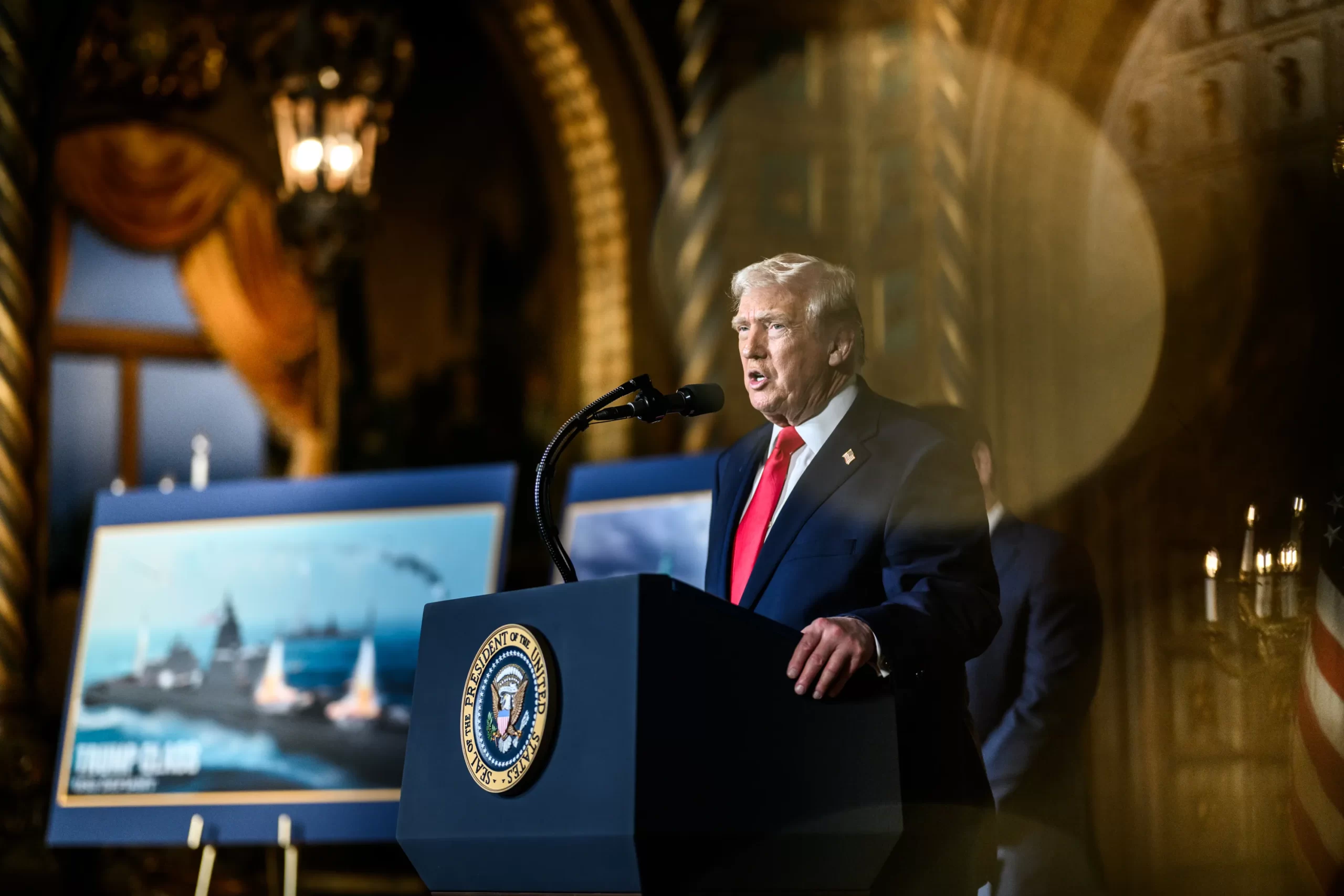
President Donald Trump is calling for U.S. military spending to surge to 1.5 trillion dollars in 2027, a roughly 50 percent jump over this year’s 901‑billion‑dollar defense budget and by far the largest single‑year increase ever floated by a modern White House. He says the extra money is needed to build a “Dream Military” in what he calls “troubled and dangerous times,” tying the request to his recent operation to capture Venezuelan leader Nicolás Maduro and to rising tensions with rivals from Russia to China.
What Trump is proposing
Trump laid out the headline number in a Truth Social post on Wednesday, saying he had decided the military budget for 2027 “should not be $1 Trillion Dollars, but rather $1.5 Trillion Dollars.” He cast the proposal as the product of “long and difficult negotiations” with lawmakers and advisers, and as a response to a world he described as “very troubled and dangerous.”
The figure would represent roughly a 600‑billion‑dollar increase over the planned 2026 defense outlays and push military spending to well over 5 percent of U.S. gross domestic product, levels not seen in decades. Trump argued that the money would allow the Pentagon to overhaul weapons stockpiles, expand shipbuilding, strengthen air and missile defenses, and invest heavily in artificial intelligence, hypersonic weapons, and other advanced technologies.
“For the Good of our Country … this will allow us to build the ‘Dream Military’ that we have long been entitled to and, more importantly, that will keep us SAFE and SECURE, regardless of foe,” he wrote.
Tariffs as the promised funding source
Rather than tax rises or broad spending cuts, Trump says tariff revenue will pay for the expansion. He has repeatedly pointed to “tremendous numbers being produced by tariffs from other Countries” and argued that foreign governments “that ripped off the United States” for years will now effectively underwrite the U.S. military build‑up.
“If it weren’t for the tremendous numbers being produced by Tariffs from other Countries … I would stay at the $1 Trillion Dollar number,” he wrote, insisting that levies on both allies and adversaries give him room to go higher. Trump has also touted plans to return some tariff proceeds to “moderate‑income patriots” as dividend‑style checks, even as he calls for higher defense outlays.
Budget analysts and independent economists quoted in early reactions say the math is uncertain. They note that tariff revenue depends on trade volumes and can fall if higher duties suppress imports and warn that treating tariffs as a stable funding stream for permanent spending commitments could widen deficits if receipts come in below expectations.
“Dream Military” after Venezuela operation
The proposal comes days after Trump ordered U.S. forces to carry out a controversial mission to seize Maduro in Caracas and fly him to New York to face drug‑trafficking charges, followed by additional strikes on Venezuelan targets. U.S. ships and aircraft remain massed in the Caribbean Sea, and the operation has drawn sharp criticism at the United Nations and from some U.S. allies.
Trump has used the episode as evidence for his case that the United States must be prepared to project power quickly and decisively. He has also hinted at possible future actions involving countries such as Colombia and Cuba, suggesting that adversaries should see the proposed budget as a sign that Washington is ready to sustain high‑tempo operations.
Supporters in his party say the spending would help replenish munitions stocks and logistics capacity strained by years of aid to Ukraine and Israel and by post‑pandemic supply bottlenecks. They argue that rivals in Moscow and Beijing are expanding their own militaries and that the U.S. must stay well ahead to deter conflict.
Pressure on defense contractors: “No more stock buybacks”
Trump paired his call for a bigger budget with an unusually sharp warning to Raytheon and other large defense contractors. In his social‑media posts and public remarks, he accused major firms of being too slow to deliver weapons while spending “tens of billions of dollars” on stock buybacks, dividends and what he described as “exorbitant” executive pay.
“Raytheon must either step up and start channeling more capital into upfront investments such as plants and equipment, or they will no longer have contracts with the Department of War,” Trump wrote, using an old‑fashioned name for the Pentagon. He added that companies seeking new government business would be “prohibited from engaging in any additional stock buybacks” until they expand production capacity.
Industry groups have not yet laid out a full response, but analysts say such conditions would mark a significant shift in how Washington manages its defense‑industrial base, tying access to federal contracts directly to corporate capital‑allocation choices. Some warn that sudden constraints on buybacks without broader reforms could unsettle investors and complicate long‑term planning for firms that already face labor and supply‑chain shortages.
A tough sell in Congress
Congress must approve any defense budget, and lawmakers have not yet passed a full‑year appropriation for 2026, underscoring how contentious even smaller requests have become. Trump’s 1.5‑trillion‑dollar target arrived before the administration has formally submitted its detailed 2027 Pentagon proposal, giving legislators and budget offices time to digest the headline number and the assumptions behind it.
Early reaction has been mixed even among Republicans. Some national‑security hawks have praised the ambition and said that a 1‑trillion‑dollar top line would not cover both readiness and modernization needs, particularly in the Indo‑Pacific. Others, including fiscal conservatives and watchdog groups such as Taxpayers for Common Sense, have warned that “simply throwing money at the Pentagon” without tighter oversight and clear priorities risks waste and higher deficits.
Democrats have criticized the plan as excessive and questioned both the tariff‑funding rationale and the broader foreign‑policy direction signaled by the Venezuela operation. Some have said they would back targeted increases for specific capabilities, such as cyber‑defense and munitions, but not a blanket 50 percent jump.
What a $1.5 trillion defense budget could mean
If Congress were to agree to Trump’s target, defense spending would take up a much larger share of the federal budget and leave less room for domestic programs unless coupled with tax rises or cuts elsewhere. Budget experts note that interest costs on the national debt are already rising and warn that committing to such a high military baseline could lock in elevated borrowing for years.
Pentagon officials, speaking in recent months about long‑term plans, have pointed to priorities that would likely absorb much of any increase: shipbuilding to expand the Navy’s presence, next‑generation aircraft, missile‑defense systems, AI‑enabled command‑and‑control networks and industrial‑base investments to boost output of artillery shells, missiles, and other munitions.
Foreign‑policy analysts say the proposal underscores Trump’s vision of military strength as central to U.S. leverage, whether in confronting adversaries or negotiating with allies over trade and security contributions. But they also caution that budgets at this scale can be hard to sustain politically if Americans do not see clear benefits at home. For now, the 1.5‑trillion‑dollar number is a marker, not a law. It sets the stage for a year‑long fight in Washington over how much the United States is willing to spend on hard power, who should bear the cost and how a “Dream Military” fits into an already strained fiscal landscape.