
Key Facts
- Astronomical autumn begins in the United States at 8:05 p.m. Eastern time on Tuesday, Sept. 22, when the September equinox occurs.
- At that precise moment, the center of the sun crosses Earth’s equatorial plane, moving southward in its annual apparent path.
- The event marks the start of fall in the Northern Hemisphere and the start of spring in the Southern Hemisphere.
- Day and night are close to equal around the equinox, but they are not precisely 12 hours each because of atmospheric refraction and the way sunrise and sunset are measured.
- Days will continue to shorten across the United States until the winter solstice, expected this year on Dec. 21.
Summer is not ending with a switch in the weather, a sudden wave of cool air or the first turning leaf. It ends, astronomically speaking, at a precise instant Tuesday evening, when the sun crosses Earth’s equator and the Northern Hemisphere enters autumn.
The autumnal equinox of 2026 occurs at 8:05 p.m. Eastern time on Sept. 22, or 5:05 p.m. on the West Coast. It will be 7:05 p.m. in the Central time zone and 6:05 p.m. in the Mountain time zone. The event happens simultaneously around the world, though the calendar date differs by location: it occurs at 00:05 UTC on Sept. 23.
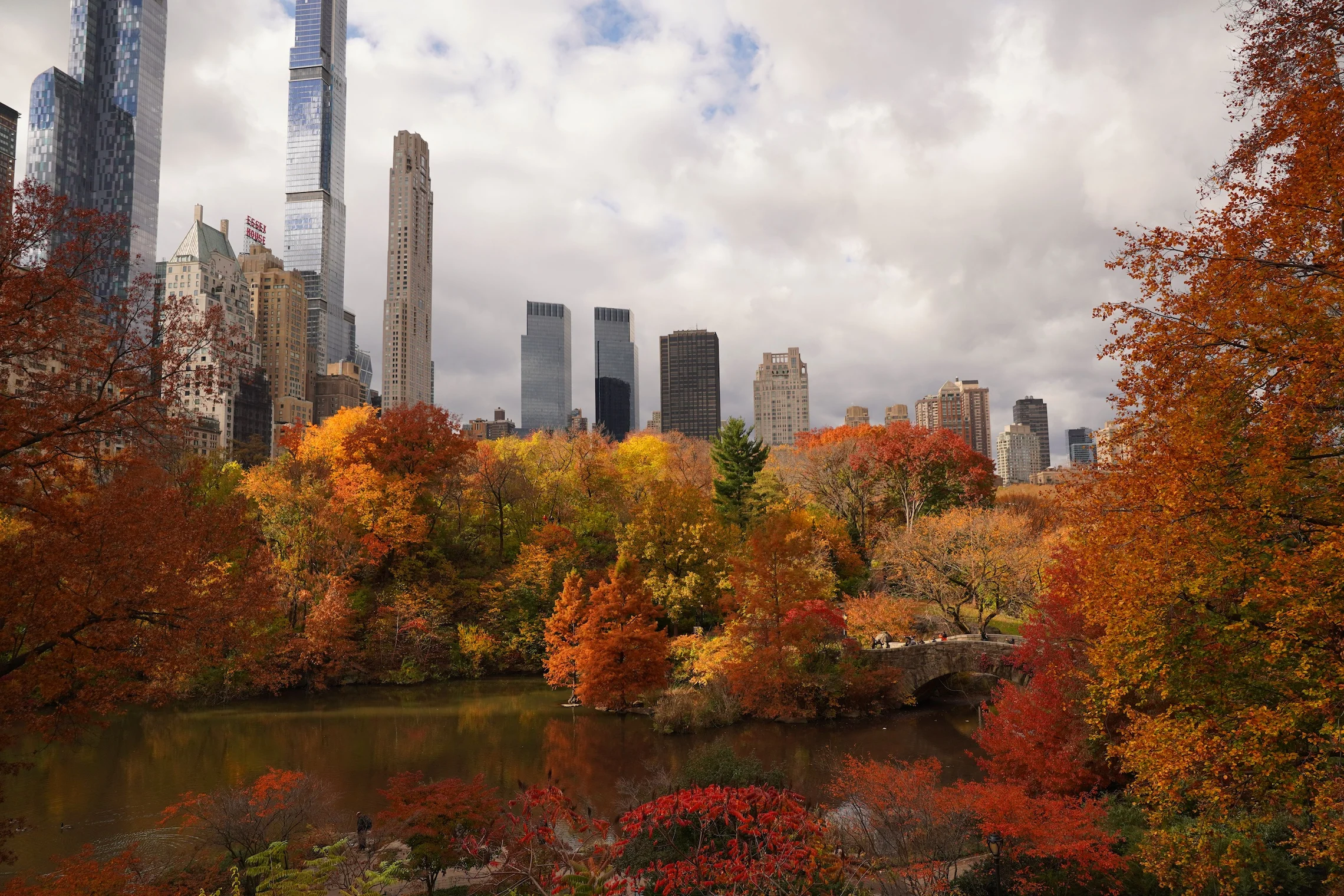
For Americans, the equinox marks the official start of astronomical fall. For people south of the equator, it marks the beginning of astronomical spring. It is a global moment with opposite seasonal meanings, shaped not by Earth’s distance from the sun but by the planet’s 23.5-degree axial tilt.
The transition is easy to miss. It arrives after dark for much of the Eastern United States, and many communities may still be experiencing summerlike heat. Yet the equinox signals a larger, irreversible seasonal turn: the sun’s direct rays will continue shifting south, daylight will keep shrinking and nighttime will steadily gain ground until the December solstice.
The precise moment fall begins
The word “equinox” comes from Latin words often translated as “equal night.” The name is useful, but it can also create a misleading impression.
The equinox is a specific astronomical event, not an all-day condition. It occurs when the center of the sun crosses the celestial equator, an imaginary extension of Earth’s equator into the sky. On the September equinox, the sun’s apparent motion carries it from the Northern Hemisphere into the Southern Hemisphere.
At that point, neither hemisphere is tilted more directly toward the sun. The most direct solar rays fall near the equator, and both the North and South poles receive sunlight at roughly the same time.
That alignment is why day, and night are approximately equal in length worldwide near the equinox. But “approximately” is important. Most places do not receive exactly 12 hours of daylight and 12 hours of darkness on Sept. 22.
Atmospheric refraction bends sunlight slightly around Earth’s curve, allowing people to see the sun briefly before it has physically risen above the horizon and after it has geometrically set. Sunrise and sunset are also calculated using the sun’s upper edge, rather than its center. The result is that daylight is generally a few minutes longer than nighttime on the date of the equinox. The date on which a location experiences its closest balance of daylight and darkness is often called the “equilux,” and it may fall before or after the equinox.
For the public, the practical meaning is simple: the September equinox begins the annual stretch when nights become longer than days in the Northern Hemisphere.
Why autumn does not always feel cool
The calendar’s beginning of fall often conflicts with local experience. Much of the United States can remain hot well after the equinox, especially across the South, Southwest and coastal regions. A late-September heat wave does not mean fall has been delayed; it reflects weather patterns and the slow response of land and oceans to seasonal changes in sunlight.
The atmosphere and oceans retain heat accumulated during summer. That is why the warmest average weather of the year often arrives weeks after the June solstice, when the Northern Hemisphere receives its greatest annual amount of direct sunlight. The same lag operates in reverse as autumn begins: temperatures may remain elevated even as the sun sits lower in the sky and daylight declines.
Forecasts around the country illustrate that distinction. In San Antonio, for example, the fall equinox is not expected to immediately bring falllike temperatures, while other areas are likely to see cooling conditions close to or shortly after the seasonal transition.
In the coming weeks, the country’s weather will increasingly be shaped by contrasts between lingering warm air and advancing colder air masses. Those differences can help fuel changing storm patterns, stronger fronts and growing temperature swings.
But the seasonal clock is already moving. After Tuesday night, each successive day will bring a little less daylight across the United States until the winter solstice on Dec. 21, the shortest day and longest night of the year in the Northern Hemisphere.
Astronomical fall vs. meteorological fall
There are two widely used ways to mark the beginning of fall, and they serve different purposes.
Astronomical fall begins at the September equinox. Its dates vary slightly from year to year because Earth’s orbit does not match the 365-day calendar perfectly. The 2026 equinox falls on Sept. 22, though in other years it can occur on Sept. 23 or, less commonly, later in September.
Meteorological fall, by contrast, began Sept. 1. Meteorologists divide the year into fixed three-month seasons to make climate records and weather comparisons more consistent:
| Seasonal system | Fall begins | Fall ends | Main purpose |
|---|---|---|---|
| Astronomical | September equinox | December solstice | Tracks Earth’s position and axial tilt |
| Meteorological | Sept. 1 | Nov. 30 | Simplifies climate statistics and seasonal averages |
The meteorological calendar groups September, October and November as fall in the Northern Hemisphere. That approach makes it easier to compare temperature, precipitation, snowfall and severe-weather patterns from year to year, without having seasons begin at different times of day or on different dates.
Neither definition is more “real” than the other. The astronomical system captures the planet’s relationship with the sun. The meteorological system organizes weather and climate data. For many Americans, cultural markers, from Labor Day to school calendars, football season and pumpkin displays, create yet another informal sense of when summer ends.
A global turning point
The September equinox may be most familiar as the arrival of fall in the United States, but its importance is global.
In the Southern Hemisphere, the same moment begins spring. Countries including Australia, New Zealand, Argentina, Chile and South Africa move toward longer days, warmer temperatures and the December summer solstice. In contrast, the Northern Hemisphere moves toward colder conditions, lower sun angles and the onset of winter.
At the equator, seasonal temperature changes are generally less dramatic than at higher latitudes. Many equatorial areas experience relatively consistent daylight through the year, while precipitation patterns, monsoons and local geography play a larger role in defining seasonal change. The equinox still matters astronomically: the sun can appear directly overhead at local noon for locations along the equator.
The event also offers a reminder that the seasons are caused by Earth’s tilt, not its distance from the sun. Earth is actually closer to the sun during Northern Hemisphere winter than it is during summer. The temperature difference arises because a hemisphere tilted toward the sun receives sunlight at a steeper angle and for more hours each day; a hemisphere tilted away receives less concentrated sunlight for fewer hours.
That geometry now favors the Southern Hemisphere. In the United States and elsewhere north of the equator, the sun will appear progressively lower in the southern sky at midday, reducing the intensity and duration of solar heating.
What changes next
For people across the United States, the coming months will bring recognizable signs of the seasonal shift, though not all will arrive at once.
- Sunrise will occur later and sunset will occur earlier, reducing available daylight.
- The sun’s lower angle will weaken daytime heating and lengthen morning and evening shadows.
- Cold fronts will become more frequent and, in many places, sharper.
- Tree leaves will change color as decreasing daylight and cooler nights affect chlorophyll production.
- Hurricane season will remain active through Nov. 30, even as summer ends on the astronomical calendar.
- Daylight saving time will end on Nov. 1, moving clocks back one hour across most of the United States.
Autumn also represents a transitional period rather than a uniform weather state. In the northern tier, colder nights and the season’s first frosts can arrive quickly. In southern states, heat and humidity may linger well into October. In the West, fire weather can remain a major concern; in coastal areas, tropical systems can still bring heavy rain, storm surge and damaging winds.
The equinox does not forecast weather. It does, however, establish the astronomical framework within which the next season unfolds.
This year’s equinox arrives later in the day than in recent years. In 2024, it occurred at 8:43 a.m. Eastern time; in 2025, it came at 2:19 p.m.; and in 2026 it occurs at 8:05 p.m. That gradual shift reflects the interaction between Earth’s orbit, the calendar and leap-year adjustments.
As the last hours of astronomical summer pass, the seasonal message is clear even if the thermometer says otherwise. Summer’s sunlit dominance is receding. Autumn begins Tuesday night, and the march toward winter has already started.