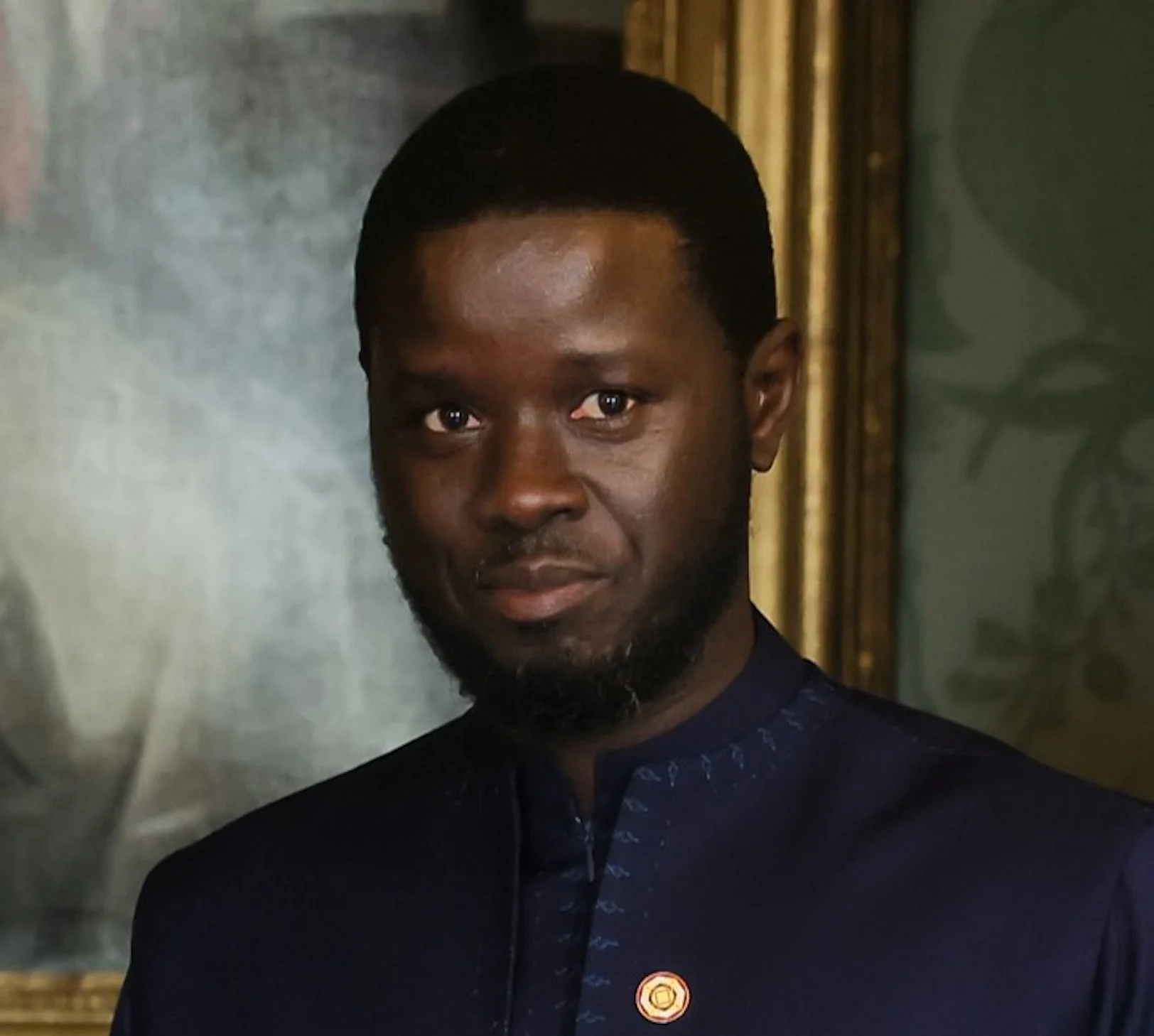
Senegal’s President Bassirou Diomaye Faye has launched a new political party, making official a split with former ally Ousmane Sonko and opening a new phase in the country’s ruling coalition just as it faces economic strain and political uncertainty. The move formalizes a rupture that had been building for months and could shape local elections in 2027 and the presidential contest in 2029.
A formal split
Faye’s new party was unveiled on Saturday in Dakar, according to Reuters, AP, and other reports, ending months of speculation about whether the president would break with the movement that carried him to power. The new formation makes public a political divorce from Sonko, the former prime minister and longtime ally who had led the ruling Pastef banner.
Reuters reported earlier this month that Faye had already instructed senior adviser Aminata Touré to lead a task force to build the new party, a sign that the rupture was no longer just a rumor. That preparation culminated in the weekend launch, which officially drew a line between the president and his former political partner.
The split is especially notable because Faye and Sonko rose together under Pastef, a party whose name stands for African Patriots of Senegal for Work, Ethics and Fraternity. Their alliance helped carry Faye to the presidency in 2024 and gave Pastef enormous parliamentary strength, but personal and strategic disagreements eventually overtook that success.
Why the rupture matters
The launch is more than a branding exercise. It reflects a deeper power struggle over who controls Senegal’s reform agenda, who speaks for the ruling camp and whether the presidency should remain tied to a party structure at all.
Sonko has backed constitutional changes that would prevent a sitting president from leading a political party, a proposal that Faye has chosen to submit to a referendum rather than simply accept. That decision has turned an internal disagreement into a broader national debate about institutional independence and executive authority.
The timing also matters because Senegal is dealing with a major debt crisis and rising pressure on public finances. In that environment, a leadership split inside the ruling camp could complicate economic decision-making just when investors and creditors are looking for stability.
For ordinary Senegalese voters, the practical question is whether the new party will change governance or merely redistribute influence among familiar political figures. Critics say the real test is whether the split produces policy clarity, while supporters argue that Faye needs his own political vehicle to govern effectively.
Sonko’s shadow
Sonko remains central to the story even after losing his post as prime minister in May. He is now speaker of the National Assembly and still commands a strong following among Pastef supporters, giving him leverage in any future contest over party structures and reform proposals.
The relationship between the two men has been deteriorating for months, with tension first emerging over control of the government and later over the president’s strategic direction. Reuters and Africanews both described the launch as the clearest sign yet that the partnership had broken down beyond repair.
That matters because the original appeal of the Faye-Sonko alliance rested on unity, opposition to the old order and promises of ethical governance. Their split now raises questions about whether the reform coalition can survive the strains of power, especially with local and national elections ahead.
Electoral stakes
The new party is likely to shape the 2027 local elections and could influence the 2029 presidential race. Even if Faye remains broadly popular, party fragmentation can weaken discipline, complicate candidate selection, and create confusion about who owns the ruling agenda.
Reuters noted that the political showdown is likely to unfold first in local elections, where municipal power can serve as a test of each camp’s organizational strength. If Faye’s party performs well, it could establish him as independent from Sonko’s influence; if it struggles, the split may be seen as a costly gamble.
The move also intersects with constitutional reform, adding another layer of uncertainty. By putting party-leadership rules to a referendum, Faye is effectively asking voters to decide not only on a technical political question but on the structure of his own authority.
What it means for Senegal
Senegal is usually seen as one of West Africa’s more stable democracies, which makes elite splits in Dakar especially important. When the president and his former ally fall out publicly, the consequences can ripple through institutions, the opposition, and the broader reform agenda.
The creation of Faye’s party also suggests he wants a direct political base rather than relying on the legacy machinery of Pastef. That could give him more room to govern, but it could also weaken the coalition that helped carry him into office in the first place.
For now, the launch appears to be both a declaration of autonomy and a warning shot. Faye has chosen to separate his presidency from Sonko’s political brand, but whether that strengthens or weakens Senegal’s ruling bloc will depend on how the public, the party and the referendum respond in the months ahead.