
TOKYO — Sony has confirmed that it will announce a new Xperia product on Aug. 25, setting the stage for what is widely expected to be the debut of the Xperia 10 VIII, the next entry in the company’s midrange smartphone line.
The virtual announcement will stream on Sony Xperia’s YouTube channel at 11 a.m. Japan Standard Time on Aug. 25. That corresponds to 10 p.m. Eastern time and 7 p.m. Pacific time in the United States on Aug. 24.
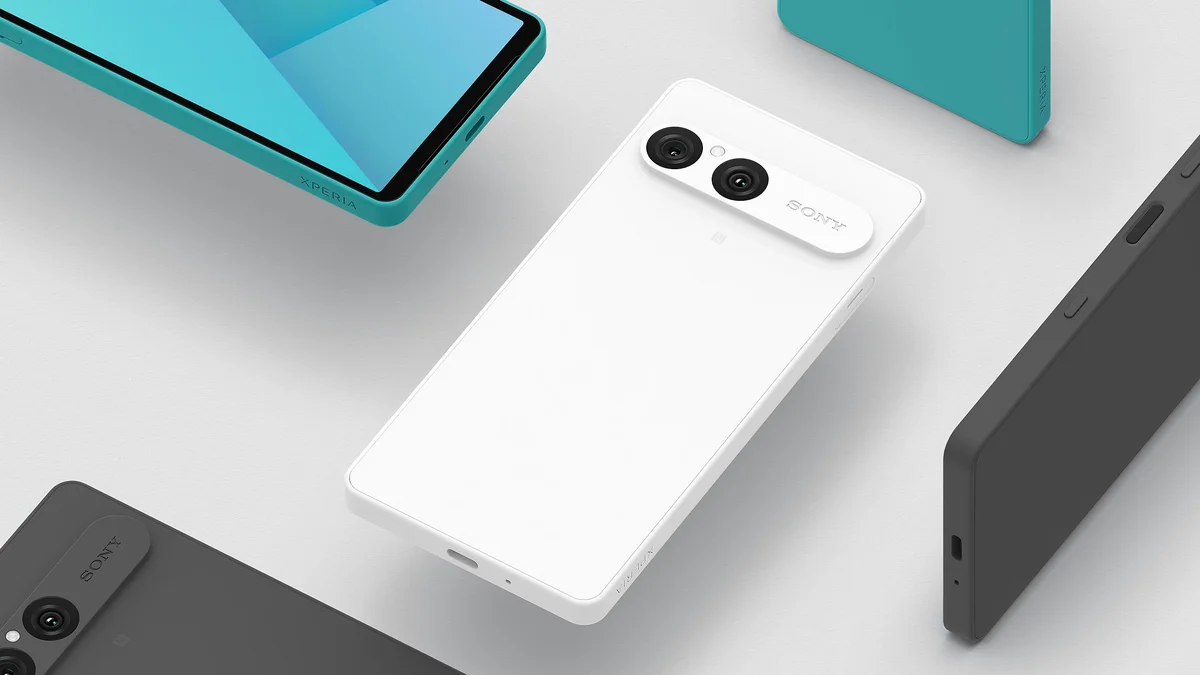
Sony has not named the device in its official teaser, disclosed specifications or announced pricing. But recent regulatory filings, benchmark listings and reports from Xperia-focused publications point strongly to the Xperia 10 VIII, also known as the Xperia 10 Mark 8, as the likely product.
The expected launch comes as Sony continues to operate in a smartphone market dominated by Apple, Samsung, Google and Chinese manufacturers. The company’s Xperia line retains a smaller but loyal following among users who value Sony’s distinctive industrial design, relatively compact phones, camera heritage, expandable storage and continued support for the 3.5mm headphone jack.
The Xperia 10 VIII will be judged on whether it offers enough meaningful improvement to justify its place in an increasingly competitive midrange market. Early information suggests a familiar formula: practical hardware, a clean Android experience, and a focus on features that other manufacturers have largely abandoned. But the same leaks also suggest Sony may retain the Qualcomm chip used in the previous generation, raising questions about the scale of the upgrade.
What Sony has confirmed
Sony has confirmed only one major fact: a new Xperia product will be announced on Aug. 25.
The company’s official event listing identifies it as a “new Xperia” product announcement and directs viewers to a YouTube livestream. The event begins at 11 a.m. in Japan, or 2 a.m. UTC. For U.S. audiences, the timing places the presentation on the evening of Aug. 24.
The limited nature of Sony’s teaser has created uncertainty about the product name. Sony has not officially said “Xperia 10 VIII,” meaning the device remains unconfirmed until the announcement.
However, the timing and recent regulatory activity make the midrange phone the leading candidate. A new Sony handset carrying the model number XQ-GH54 has appeared in the Geekbench database, and earlier IMEI information linked related model numbers, XQ-GH44, XQ-GH54 and XQ-GH74, to the forthcoming Xperia 10 VIII.
A separate filing with the U.S. Federal Communications Commission, or FCC, also indicated that a new Xperia device was approaching release. The filing revealed support for Wi-Fi 6, Bluetooth and several LTE bands, while confirming that the phone retains a 3.5mm headphone jack.
Those clues do not provide a complete picture. They do, however, offer a credible outline of Sony’s likely direction before the official launch.
Expected performance: Snapdragon 6 Gen 3
The most notable detail from the Geekbench listing is the phone’s expected processor.
The benchmark entry lists a Qualcomm chipset identified internally as “QTI SM6475,” a designation linked to the Snapdragon 6 Gen 3. Reports say the device includes four processor cores clocked at 2.4 GHz and four clocked at 1.8 GHz.notebookcheck+1
The Snapdragon 6 Gen 3 is a midrange processor manufactured on a 4-nanometer process. It is designed for everyday smartphone tasks, including web browsing, social media, streaming, photography, messaging, and moderate gaming.
The potential issue is that the same chip was used in the Xperia 10 VII, according to Notebookcheck and Android Headlines. If that information is accurate, the Xperia 10 VIII may not offer a major leap in raw performance over its predecessor.
That decision would be consistent with Sony’s conservative approach to midrange phones. Rather than chasing benchmark leadership, the company has often emphasized battery endurance, display quality, software stability, and practical features.
But the market has changed. Competing phones increasingly offer faster processors, higher-refresh-rate displays, larger camera sensors, faster charging, and aggressive pricing. If Sony retains the previous generation’s chip, it will need to show improvements elsewhere, perhaps in cameras, battery life, software support, display tuning or build quality.
The Geekbench listing reported scores of 871 in single-core testing and 3,028 in multi-core testing. Those results place the phone solidly in the midrange category rather than among performance-focused devices.
For many buyers, that may be sufficient. But users who prioritize mobile gaming, video editing, artificial-intelligence features or long-term performance may look closely at whether Sony has improved cooling, memory management and software optimization.
Android 16 and 8GB of RAM
The benchmark listing suggests the Xperia 10 VIII will ship with Android 16, the latest version of Google’s mobile operating system.
Launching with Android 16 would give Sony a current software foundation, though the more important question for buyers will be how many years of Android-version upgrades and security updates the company promises. Sony has not yet disclosed its support policy for the new device.
Long-term software support has become a major factor in smartphone buying decisions. Google, Samsung, and Apple have extended support periods for many of their recent products, increasing pressure on smaller manufacturers to make clearer commitments.
The same Geekbench entry indicated that the tested Xperia 10 VIII had 8GB of RAM.
Eight gigabytes of memory is a reasonable standard for a modern midrange Android phone. It should support everyday multitasking, web browsing, social-media use, and switching between common apps without excessive reloading.
Sony may offer other memory and storage configurations depending on the market. That has not been confirmed. The company could also retain microSD card expansion, a feature that has historically distinguished Xperia models from many competitors, but no current leak has verified it for the Xperia 10 VIII.
Headphone jack remains a differentiator
One of the most concrete details to emerge from regulatory documents is the continued presence of a 3.5mm headphone jack.
That feature is increasingly uncommon in midrange and premium smartphones. Many manufacturers have removed wired headphone ports in favor of Bluetooth audio, USB-C adapters, and wireless earbuds.
Sony’s decision to retain the jack would appeal to users who prefer wired headphones, need a dependable connection for calls or gaming, own high-quality analog audio equipment, or want to avoid charging another device.
The headphone jack also fits Sony’s broader identity. The company operates across music, film, gaming, audio and imaging, and it has traditionally marketed Xperia devices to users who care about media quality.
A wired connection can provide lower latency than Bluetooth, a benefit for mobile gaming, video monitoring and some creative uses. It can also eliminate concerns about wireless-codec compatibility or battery life.
The feature alone will not determine the phone’s success. But in a market where phones increasingly look and function alike, it gives Sony a recognizable point of difference.
Connectivity and regional availability
The FCC filing indicates that the expected device supports Wi-Fi 6, Bluetooth and LTE bands 4, 5, 12 and 41.
Wi-Fi 6 can improve network performance in crowded environments and may provide better efficiency than older Wi-Fi standards. The LTE-band information offers some clues about compatibility but does not establish full carrier support, 5G coverage or whether the phone will be sold officially in the United States.
Sony’s Xperia availability varies widely by country. The company has reduced its smartphone presence in several markets, and reports suggest the Xperia 10 VIII may not receive a broad U.S. retail launch.
That remains one of the company’s biggest challenges. Even a well-designed phone has limited impact if consumers cannot easily buy it, test it in stores, or use it reliably on local carrier networks.
Sony is expected to announce regional availability and pricing during the Aug. 25 presentation. Until then, buyers should treat any claims about release dates, supported carriers or retail channels as provisional.
The model number XQ-GH54 is believed to correspond to a European version, based on reports tied to earlier device registrations.
Design, camera and battery: still uncertain
Much of the Xperia 10 VIII’s hardware remains unknown.
Sony has not confirmed display size, refresh rate, camera specifications, battery capacity, charging speed, storage configurations, water-resistance rating, or physical design. Leaks have not provided enough reliable information to establish those details.
That uncertainty matters because the Xperia 10 series has traditionally competed through its overall balance rather than a single headline feature.
The previous generation emphasized a tall display format suited to video, long battery life, Sony’s camera-processing approach and practical ports. The Xperia 10 VIII may continue that strategy, but it will need to meet rising buyer expectations.
Midrange Android phones now commonly offer OLED screens with refresh rates of 90Hz or 120Hz, larger batteries, fast charging, multiple rear cameras and advanced computational-photography features. Buyers will want to know whether Sony has matched those standards or chosen to differentiate in another way.
Camera performance will be especially important. Sony supplies image sensors to many of the world’s smartphone manufacturers, but Xperia phones have sometimes struggled to translate that sensor expertise into the easiest and most consistent camera experience for average users.
The company may use the launch event to highlight image processing, video features, or integration with Sony’s broader camera ecosystem. But until Sony releases official specifications and independent reviewers test the phone, any claims about image quality should be treated cautiously.
Sony’s midrange challenge
The Xperia 10 VIII arrives at a difficult time for smaller smartphone brands.
The global market is mature, and many users now keep phones longer before upgrading. That means manufacturers need a strong reason to persuade buyers to switch devices.
Sony cannot compete purely on price against companies on a larger scale. It must compete through brand identity, design, features, and trust among users who value its particular approach.
The Xperia 10 line has traditionally appealed to people who want a less generic Android phone. Its audience includes Sony enthusiasts, audiophiles, users who prefer narrow handsets and buyers who still value features such as wired audio and expandable storage.
The risk is that a conservative update may not be enough. If the Xperia 10 VIII uses the same processor as its predecessor and offers only minor changes, consumers may decide to wait or choose a rival with more obvious performance gains.
Sony’s event will need to answer that concern. The company must show why the Xperia 10 VIII is not simply a routine refresh, but a phone with a clear place in the 2026 midrange market.
What to watch on Aug. 25
The upcoming announcement should resolve several key questions:
- Whether the product is officially named Xperia 10 VIII.
- The phone’s price and release date.
- Regional availability, including U.S. and European markets.
- Processor, RAM, and storage configurations.
- Display size, panel type and refresh rate.
- Camera hardware and software features.
- Battery capacity and charging speeds.
- 5G bands, carrier compatibility and connectivity features.
- Whether microSD expansion remains available.
- Sony’s Android update and security support commitment.
Sony’s Aug. 25 event will offer the first official answers. Until then, the Xperia 10 VIII remains a well-supported expectation rather than a confirmed product.
The early signs point to a familiar Sony proposition: a practical Android phone with 8GB of RAM, current Android software, wired-audio support and modest midrange performance. Whether that is enough to stand out will depend on the details Sony has yet to reveal.




