
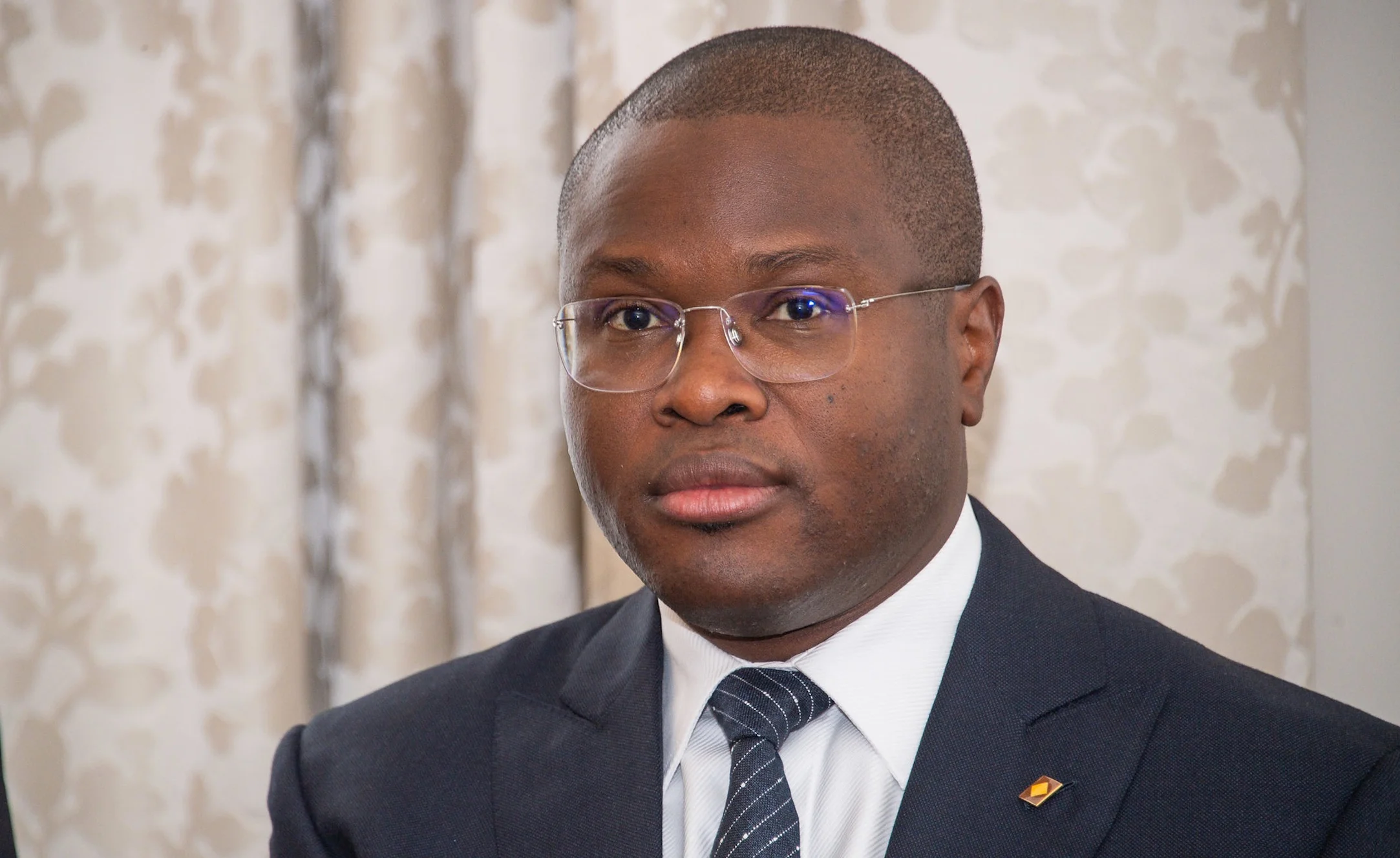
Romuald Wadagni has been sworn in as Benin’s ninth president, completing a carefully managed handover of power from outgoing leader Patrice Talon after a landslide election that gave the former finance minister more than 94% of the vote. The 50‑year‑old technocrat, long credited with steering Benin’s fast‑growing economy, now faces a dual mandate: sustain high growth while answering concerns over political openness and security in the country’s troubled north.
From finance minister to president
Wadagni, a former auditor and finance executive who has served as Benin’s minister of economy and finance since 2016, officially assumed the presidency on 24 May 2026, according to updated official and academic records. His election in April followed a campaign in which he ran as the clear favorite of Talon’s ruling camp, promising continuity on economic reforms that have drawn both domestic praise and criticism from opponents who say benefits have not reached all citizens.
Wikipedia’s profile of Wadagni notes that he is now the ninth president of Benin, taking over both the roles of head of state and head of government under a constitution that was amended in 2025 to extend presidential terms from five to seven years, with a two‑term limit. At 50, he belongs to a younger generation of West African leaders and has built his reputation less as a party strongman than as a technocrat credited with helping to lift annual GDP growth from around 1.8% in 2015 to roughly 8% in 2025.
A landslide win amid a hollowed‑out opposition
Wadagni’s path to office was paved by a dominant, but contested, electoral victory. Benin’s electoral commission and international media say he won more than 94% of the vote in the 12 April presidential election, defeating his sole challenger, opposition figure Paul Hounkpè, who secured about 6%. The commission reported turnout at roughly 58–59%, a level broadly in line with past polls but interpreted by some analysts as modest enthusiasm in an environment where the main opposition was effectively sidelined.
Reuters reported that the electoral commission head, Sacca Lafia, announced the preliminary numbers on national television with more than 90% of ballots counted, calling Wadagni’s lead “overwhelming.” BBC coverage described the result as “irreversible” even before counting was complete, noting that Hounkpè conceded and offered “republican congratulations” while ballots were still being tallied.
Yet the scale of the win has raised questions. An analysis in The Conversation points out that Wadagni’s 94% share came in an election where the principal opposition party, the Democrats, failed to get a candidate on the ballot because of internal divisions and legal hurdles. “Given the lack of a viable opposition, many observers perceived the election as a mere formality,” the BBC wrote, even as it acknowledged that turnout was higher than in 2021.
Swearing‑in day: symbolism and expectations
Wadagni’s inauguration in Cotonou capped what observers have called Benin’s fifth democratic transition of power since the landmark 1990 National Conference, which ended years of authoritarian rule. Local broadcasters and social media posts trailed the event for weeks, with one widely shared clip titled “Romuald Wadagni Set for May 24 Swearing‑In as Benin President, What Will His Leadership Mean for the Nation’s Future?” framing the ceremony as the start of a new chapter.
The president‑elect took the constitutionally required oath of office on 24 May, the date set to align with the expiry of Talon’s second term, in line with a constitutional provision that the mandate of the new president begins when the predecessor’s mandate ends. In a short inaugural address carried by regional outlets, Wadagni pledged to pursue “social wellbeing for all, a diversified and competitive economy, and national cohesion and security”, the three pillars that the Institute for Security Studies (ISS) identifies as the core of his 2026‑33 governance program.
Parliamentarians, regional leaders, and foreign diplomats attended the ceremony, which came a day after Cotonou hosted a symbolic women’s march backing the new president and calling for continued investment in education, health, and jobs. The peaceful handover stood out in a West African region where coups and third‑term bids have become increasingly common.
A growth mandate, and a democratic test
Analysts say Wadagni’s strongest asset as he enters office is his track record on the economy. As finance minister under Talon, he was widely viewed as one of the architects of reforms and public‑investment drives that helped Benin become one of Africa’s faster‑growing economies. The ISS notes that GDP growth rose from 1.8% in 2015 to around 8% in 2025, driven by a push to transform agro‑industry, tourism, and services into “key drivers of inclusive, sustained and sustainable economic growth.”
His published programme for 2026‑33, summarised by ISS Africa, centres on three priorities:
- Social wellbeing for all, including investment in health, education, and social protection.
- A diversified and competitive economy, reducing dependence on cotton and re‑exports and deepening value‑added processing.
- National cohesion and security, particularly in the north, where jihadist attacks and banditry have increased in recent years.
But Wadagni’s mandate is not only about growth. “How Benin’s new president ensures inclusive growth, opens civic and political space and rebuilds regional ties will define his term,” ISS Africa writes, framing his election as “both a growth mandate and a democratic test.” The Conversation goes further, arguing that his landslide victory “raises questions about his legitimacy,” given the constrained competition and the shrinking space for dissent under Talon.
Talon’s legacy and regional context
Wadagni inherits a system shaped by Talon’s decade in power. The outgoing president, a businessman‑turned‑politician who took office in 2016, oversaw major infrastructure projects and economic reforms but also tightened controls on political parties and civil society, leading to boycotts and deadly clashes during earlier elections.
In that sense, Talon’s decision to step down after two terms, honoring the constitutional limit, is seen as significant in a region where attempts to extend presidential mandates have often sparked crises. “In a regional context where failure to respect presidential term limits is a recurring source of instability, outgoing president Patrice Talon’s decision to honor the constitutional two‑term limit reinforces institutional stability,” ISS Africa notes.
Reuters and AP both highlight that Wadagni was viewed as Talon’s preferred successor, with the finance minister’s candidacy effectively endorsed by the ruling camp long before the vote. That lineage gives him political capital but also binds him to a record that opposition activists say includes a worrying trend toward centralized power and muted dissent.
Challenges ahead: security, poverty and political space
As he takes office, Wadagni faces a set of challenges that extend beyond macroeconomic figures. BBC reporting on the election stresses that the new president will have to grapple with “escalating insecurity and persistent poverty, particularly in the northern regions of the country,” where armed groups linked to Sahel‑based jihadists have mounted attacks near the borders with Burkina Faso and Niger.
ISS Africa underlines the importance of “national cohesion and security” in his program, noting that insecurity could undermine investor confidence and strain the social contract if not contained. The think‑tank also calls on Wadagni to “open civic and political space,” warning that the credibility of Benin’s democracy depends on reversing measures that have marginalized opposition parties and restricted protest.
Economically, the task will be to spread the gains of growth more evenly. Africa‑focused outlet Africa24 notes that Wadagni campaigned on “transforming agro‑industry, tourism, and services into key drivers of inclusive, sustained, and sustainable economic growth,” alongside investment in human capital and infrastructure. Turning those promises into tangible improvements for rural communities and urban youth will be critical to maintaining public support.
A new chapter for Benin, and a signal to West Africa
The orderly swearing‑in of Wadagni sends a signal beyond Benin’s borders at a time when West Africa has been roiled by coups, transitions, and contested mandates. AP and ISS both frame the election and handover as a reminder that constitutional term limits and civilian transitions remain possible in the region, even as they caution against complacency over democratic quality.
For many Beninese, the hope is that the new president can combine the technocratic competence he displayed at the finance ministry with a more open political style, easing tensions that have flared in recent years and rebuilding trust with opposition parties, civil society, and regional partners.
As Wadagni settles into the presidential palace, the expectations are clear. Voters have, in effect, handed him a strong mandate to keep the economy on its current trajectory. Analysts and activists, meanwhile, are watching whether he will also use that mandate to widen democratic space and tackle the insecurity and inequality that still shadow Benin’s growth story.



