
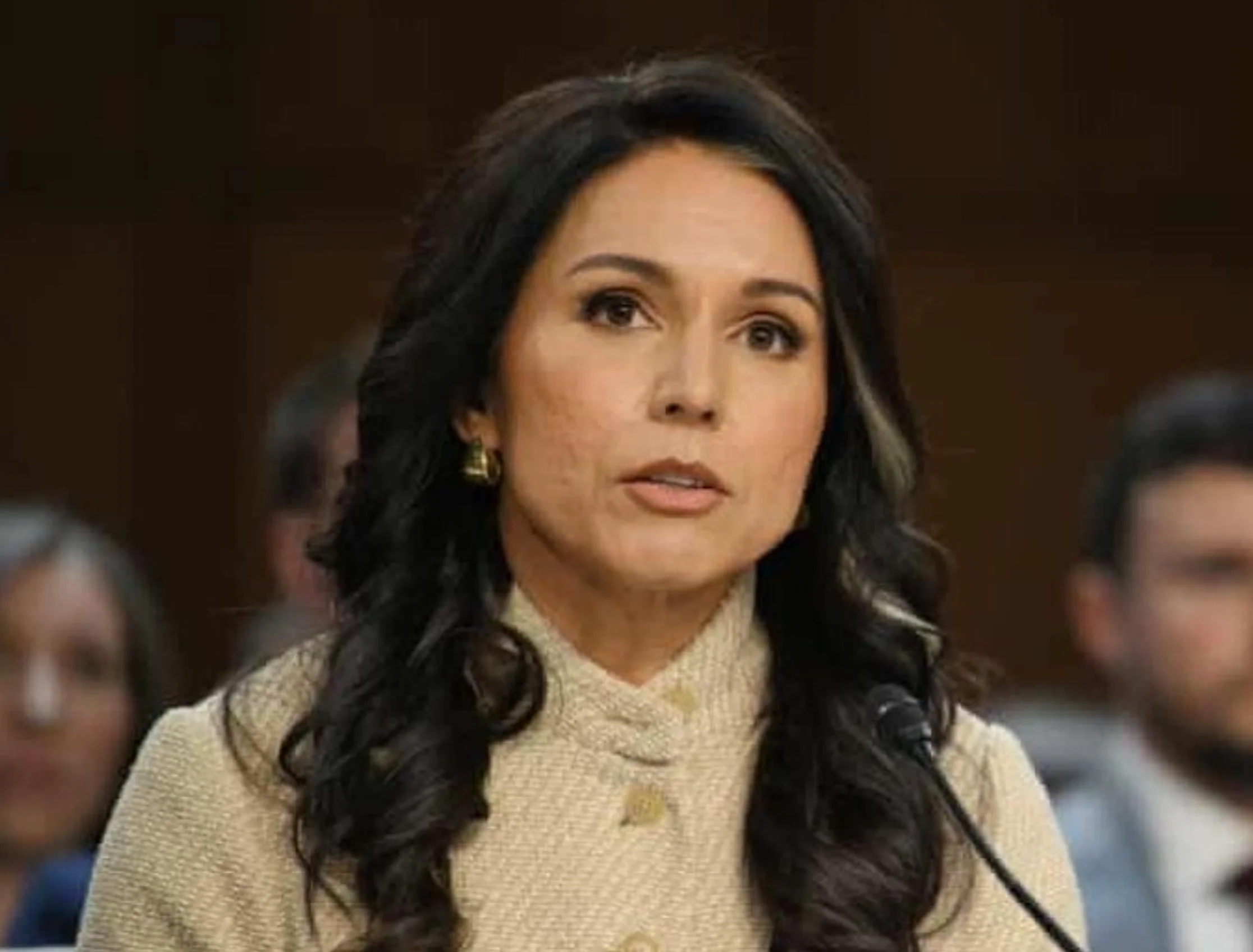
Tulsi Gabbard has resigned as director of national intelligence (DNI), becoming the most senior departure so far from Donald Trump’s second‑term national security team and ending an 18‑month tenure that reshaped the U.S. intelligence community’s posture on wars and surveillance. The former Democratic congresswoman cited her husband’s diagnosis with a rare and “extremely aggressive” form of bone cancer as the reason for stepping down, saying in a letter that she “cannot, in good conscience,” continue in a job that keeps her away from his side.
The resignation: “I must be by his side”
Gabbard’s departure was announced Friday through a resignation letter to President Trump that she simultaneously posted on X, the social platform formerly known as Twitter.
In the letter, published in full by PBS, she revealed that her husband, cinematographer Abraham Williams, had been diagnosed with “an extremely rare and aggressive form of bone cancer.”
“His strength and love have supported me through every obstacle,” she wrote. “I cannot, in good conscience, ask him to confront this battle alone while I persist in this demanding and time‑intensive role… At this time, I must step away to be by his side and fully support him through this battle.”
Her resignation will take effect June 30, giving the administration just over five weeks to manage the transition at the top of an intelligence apparatus that spans 18 agencies and offices. In her message, Gabbard called it “a profound honor” to have served as DNI and said she remained “confident in the men and women of the intelligence community and the work we have done together.”
Fox News was the first outlet to report her planned resignation, NBC News said.
Trump’s response and the line of succession
President Trump confirmed Gabbard’s exit in a post on his own social platform on Friday, praising her performance and naming her temporary successor.
“After having done an incredible job, Gabb will be leaving the Administration June 30th,” Trump wrote, using his characteristic shorthand. “Tulsi has an incredible heart, and we will miss her.”
He added that Aaron Lukas (referred to as Aaron Luk in some reports), the principal deputy director of national intelligence, would take over as acting DNI. NBC News reports that Lukas, a career intelligence official, has served as Gabbard’s number two and is expected to provide continuity while Trump considers a permanent replacement.
Gabbard’s departure marks the fourth resignation from Trump’s Cabinet in his second administration, following Labor Secretary Lori Chavez‑DeRemer’s exit in April amid an investigation into alleged misconduct and earlier changes at other departments.
The White House did not immediately say when Trump would nominate a new DNI or who was on the shortlist. Any nominee would require Senate confirmation, potentially setting up a new confirmation battle over the direction of U.S. intelligence and foreign policy.
From Hawaii Democrat to Trump’s intelligence chief
Gabbard’s mere presence in Trump’s Cabinet was once considered improbable. A U.S. Army veteran who served in Iraq, she represented Hawaii’s 2nd District in the House of Representatives as a Democrat from 2013 to 2021 and ran for president in the 2020 Democratic primaries.
Over time, she broke with her party, styling herself as an anti‑interventionist critic of U.S. foreign policy and eventually leaving the Democrats altogether. Her skeptical stance on regime‑change wars and intelligence‑driven interventions in places like Syria and Libya, along with regular appearances on conservative media, drew Trump’s attention even before his 2024 campaign.
When Trump returned to the White House in January 2025, he nominated Gabbard as director of national intelligence, placing a former Democratic insurgent in charge of the agencies that brief the president and Congress on threats ranging from Russia and China to cyberattacks and terrorism.
Her appointment drew mixed reactions: supporters saw a rare chance to inject skepticism about endless wars and warrantless surveillance into the intelligence hierarchy; critics worried about her previous outreach to leaders like Syria’s Bashar al‑Assad and her willingness to break with mainstream foreign‑policy consensus.
A low‑profile tenure marked by controversies
In office, Gabbard kept a lower public profile than many expected. BBC News notes that she had been “largely out of public view during recent US operations,” even as the administration navigated crises in the Middle East and rising tensions with China.
Behind the scenes, her 15–18 months in the role were not without controversy. PBS reports that she faced criticism over some of her actions and management decisions, including questions about how intelligence was handled around sudden troop movements and cyber operations. NBC similarly notes that her tenure “drew pushback” from some career officials, though detailed accounts remain classified or confined to anonymous sourcing.
At the same time, Gabbard used the office to champion a more restrained approach to foreign interventions and to raise civil‑liberties concerns about bulk surveillance, according to people familiar with internal debates cited by NBC and Politico. She was said to have clashed at times with more hawkish figures in the Pentagon and State Department over the use of targeted strikes and covert operations.
Her resignation letter alluded obliquely to this unfinished agenda. “We have made significant progress in refocusing the intelligence community on genuine threats to our nation’s security and away from political distractions,” she wrote, while acknowledging that “there is still important work to be done.”
A personal decision in a political context
Publicly, officials and Gabbard herself have framed the resignation as driven by personal necessity, not policy dispute. NBC, Politico, the BBC, and Al Jazeera all emphasize that her husband’s diagnosis, a rare and severe type of bone cancer, was the decisive factor, quoting the same passages from her letter.
Yet the departure comes amid broader churn in Trump’s second‑term Cabinet and national‑security team, and after months in which Gabbard’s voice has been less visible during public briefings about global crises. Some critics on both left and right had urged her to resign earlier, including after high‑profile disagreements over Ukraine and surveillance authorities, according to NBC’s reporting.
One source told NBC that Gabbard had resisted calls to step down on policy grounds and wanted to remain to “see through” internal reforms but concluded that her husband’s illness changed the calculation.
Politico notes that Gabbard’s exit removes one of the administration’s most prominent anti‑interventionist voices from a senior national‑security role, potentially shifting the internal balance toward more traditional intelligence and defense officials.
What her exit means for U.S. intelligence
The DNI serves as the president’s chief intelligence adviser and coordinates analysis across agencies including the CIA, NSA, FBI, DIA, and others. A change at the top therefore matters for both day‑to‑day operations and long‑term strategy.
With Aaron Lukas stepping in as acting director, the immediate priority will be continuity: ensuring that daily briefings, covert programs, and liaison work with allies continue without disruption during a period of global volatility.
Longer term, the choice of a permanent successor will send a signal about Trump’s second‑term priorities. A nominee from the career ranks or with strong bipartisan credentials could reassure allies and Congress; a more ideological pick could trigger fierce confirmation battles and deepen concerns about political pressure on intelligence assessments.
For the thousands of analysts and operators who make up the intelligence community, Gabbard’s departure is the latest reminder of how quickly leadership can change—and how much personal circumstances, as well as politics, shape the course of national‑security policy.
From here to June 30
Until the end of June, Gabbard is expected to remain on the job, managing the transition and handing off responsibilities to Lukas and other senior officials.
Her resignation letter closed on a note that was both personal and institutional. “It has been a profound honor to serve the American people in this role,” she wrote. “I remain confident that the intelligence community will continue to uphold its duty to our Constitution and our security.”
For an unusually polarizing figure who crossed party lines to join a Republican administration, that blend of personal sacrifice and institutional appeal is likely to define how her brief, contested chapter as director of national intelligence is remembered, both by those who welcomed her skepticism of war and surveillance and those who saw her as an awkward fit for the job she is now leaving behind.