Iran has entered one of the most uncertain moments in its modern history after state television and the official IRNA news agency reported that Supreme Leader Ayatollah Ali Khamenei is dead, confirming hours of claims from US and Israeli officials that the 86‑year‑old cleric was killed in a massive aerial assault on Tehran.
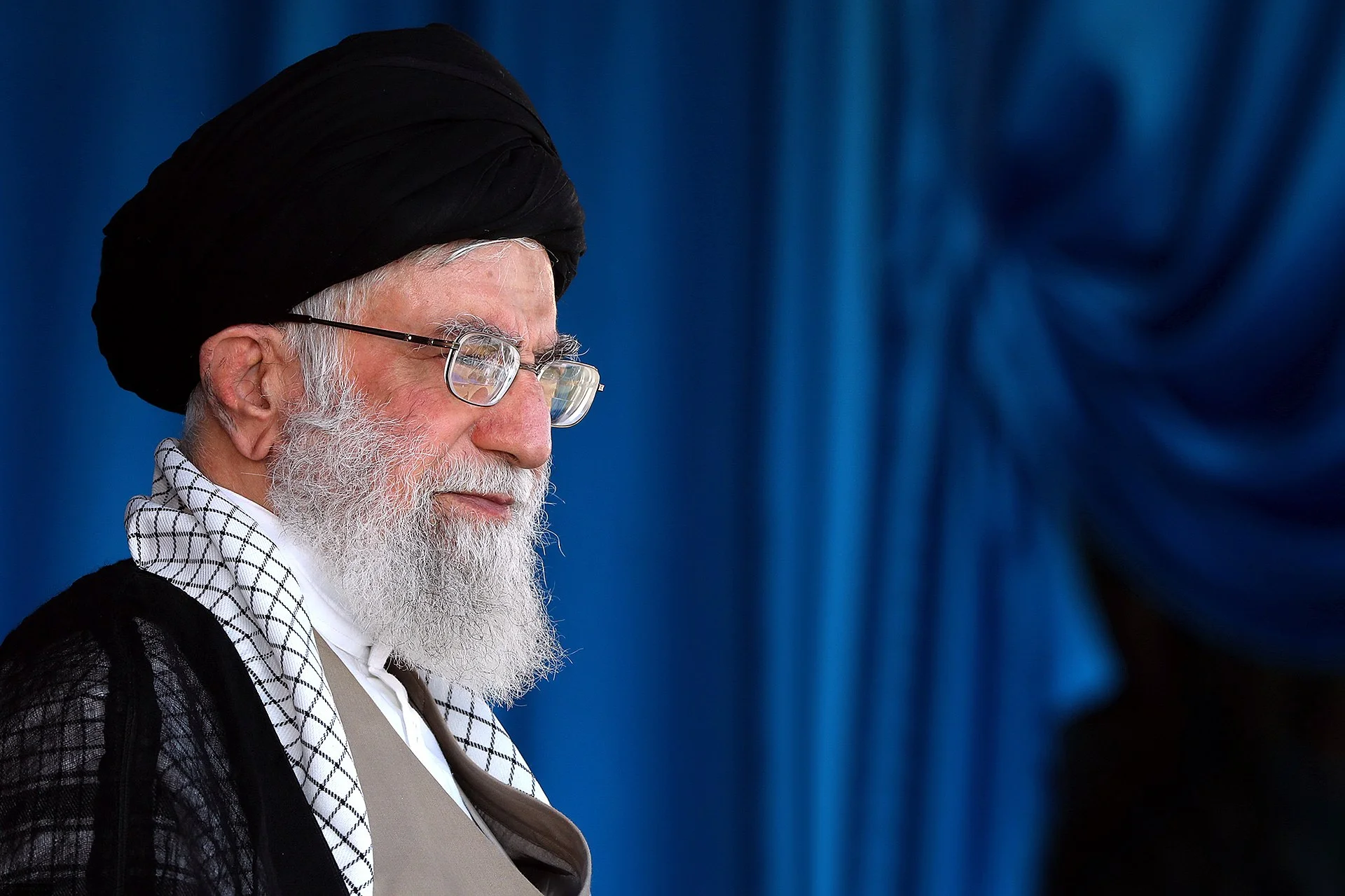
The announcement, carried in brief bulletins with little detail on the cause, triggered a 40‑day period of national mourning and set off an intense global debate over who will control a nuclear‑armed state whose ideological leader has just been removed in wartime.
Confirmation after a day of claims and denials
News of Khamenei’s death first surfaced via foreign capitals, not Tehran. President Donald Trump announced on social media that a joint US‑Israeli operation had killed the Iranian leader, calling him “one of the most evil people in History” and warning that “heavy and pinpoint bombing” of Iran would continue. Israeli officials briefed outlets that Khamenei was believed to have died when precision munitions struck near his compound in Tehran.
For hours, however, Iranian authorities said nothing. A deputy foreign minister told NBC News early on Saturday that “as far as I know” Khamenei and other senior leaders were alive and managing the crisis, even as strikes and missile salvos continued. State broadcasters aired routine religious programming and patriotic music, fueling speculation that the leadership was buying time to verify what had happened and choreograph a response.
By Sunday, that posture shifted. The state‑run IRNA news agency and Iran’s main television channel announced that “the Supreme Leader of the Islamic Republic, Ayatollah Ali Khamenei, has joined the martyrs,” without specifying whether he died instantly in the attack or later from his wounds. Gulf News and other regional outlets reported that a 40‑day official mourning period had been declared.
Trump quickly claimed vindication, telling US media that Iranian reports “confirm what we already knew” and suggesting that “most” of Iran’s senior leadership had been killed in the opening wave of strikes, a statement that has not yet been independently verified.
A leadership vacuum in the middle of a shooting war
Khamenei’s reported death comes amid the most direct military confrontation in years between Iran and its adversaries. Iranian officials say hundreds of civilians have been killed and wounded in US‑Israeli attacks on command centers, air‑defense sites, and suspected nuclear facilities. In response, Tehran has launched missiles and drones toward Israel and US bases in the region, with exchanges of fire continuing.
The strikes also appear to have decapitated parts of Iran’s security apparatus. Axios and other outlets report that several top figures, including Ali Shamkhani, a senior security adviser; Mohammad Pakpour, a powerful Revolutionary Guard commander; and Defense Minister Aziz Nasirzadeh, are believed to have been killed alongside Khamenei. Forbes notes that Iran had already left some high‑level posts unfilled after earlier clashes, meaning two tiers of leadership have now been severely depleted in less than a year.
Despite this, Iran’s missile batteries and drone units have continued to operate, suggesting that pre‑delegated chains of command are in place. Analysts say Khamenei had long prepared contingency plans, empowering selected political and military allies to make decisions if he were incapacitated. That planning may keep Iran’s war‑fighting machinery running in the short term, even as the political system struggles to decide who ultimately holds authority.
Who succeeds Khamenei?
Under Iran’s constitution, the power to choose a new supreme leader lies with the Assembly of Experts, an 88‑member body of senior clerics elected to eight‑year terms. In theory, the assembly can meet quickly to appoint a successor or, if no single candidate commands a majority, to establish a provisional leadership council.
In practice, the path is far from clear.
Analyses by the New York Times, Forbes and academic observers highlight several names long seen as contenders:
- Mojtaba Khamenei, the late leader’s son, a powerful but rarely seen cleric with close ties to the Revolutionary Guard.
- Sadeq (Sadiq) Larijani, a conservative former judiciary chief who heads one of Iran’s most influential political families.
- Mohammad Mohammadi‑Mirbagheri and Mohsen Araki, clerics with strong establishment backing.
- Hassan Khomeini, a more moderate grandson of the Islamic Republic’s founder, Ayatollah Ruhollah Khomeini, who is popular among reformist circles.
Some reports, citing unnamed Iranian officials, claim Khamenei had privately signalled a list of preferred successors, though none was ever announced publicly. Before his death, he is said to have resisted the idea of turning the post into a hereditary monarchy, telling aides he did not want the leadership to become “dynastic”, a comment widely interpreted as skepticism toward elevating Mojtaba.
The Assembly of Experts itself may have been hit by the strikes; Forbes notes that several senior clerics were in Tehran at the time and that communications with Qom and other religious centers have been disrupted. Until the assembly can meet and signal a path forward, rival factions in the Revolutionary Guard, the clerical establishment and the presidency will be jockeying for influence.
Domestic reaction: shock, defiance, and uncertainty
Inside Iran, the state narrative has moved quickly from denial to martyrdom. State TV has broadcast black‑framed portraits of Khamenei alongside images of his predecessor, Ruhollah Khomeini, interspersed with footage of crowds gathering at mosques and central squares. Anchors speak of “continuity of the revolution” and emphasize that the “system” is larger than any individual.
Yet signs of strain are evident:
- Internet connectivity in parts of Tehran and other major cities has been intermittent, with reports of social‑media restrictions and messaging outages.
- Videos verified by news organizations show both large gatherings of mourners and smaller groups celebrating with fireworks, particularly in Kurdish and Arab minority areas that have long chafed under Tehran’s rule.
- Inflation, sanctions, and years of protest have already eroded public trust; for many Iranians, the death of the man who symbolized the post‑revolutionary state is less a moment of national unity than a question mark about what comes next.
Parliament speaker Mohammad‑Bagher Ghalibaf and other conservative leaders have vowed to avenge Khamenei’s killing, with one senior figure writing on social media that “brave soldiers of the great nation of Iran will teach the international tyrants an unforgettable lesson.” Whether that rhetoric translates into sustained escalation will depend partly on who consolidates power in the coming days.
Regional and global stakes
Khamenei’s death removes a central, if deeply polarizing, actor from Middle Eastern politics. For nearly 36 years, he was the final arbiter of Iran’s nuclear policy, its support for proxy groups such as Hezbollah and the Houthis, and its calibrated confrontations with the United States, Israel, and Gulf states.
The immediate risk is uncontrolled escalation:
- Iran has already fired ballistic missiles toward Israel and at US facilities in Iraq and the Gulf; intelligence agencies will be watching for signs that commanders feel pressure to go further in order to prove they are not paralyzed by the loss of their leader.
- Israel and the US, for their part, face decisions about whether to expand strikes against remaining command nodes, missile sites and nuclear infrastructure, or to pause and see whether internal turmoil weakens Iran’s capacity over time.
Longer term, much depends on who emerges as supreme leader, or whether Iran experiments, even temporarily, with a leadership council that includes both clerics and military commanders.
For global markets, the shock is already visible in oil prices and risk premiums. Any prolonged conflict that disrupts shipping in the Strait of Hormuz, through which a significant share of the world’s crude flows, would reverberate far beyond the Middle East.
Washington, Jerusalem, and the question of precedent
In Washington, Trump and his advisers are framing the operation as decisive and justified, arguing that eliminating Khamenei and other senior figures was necessary to cripple Iran’s nuclear ambitions and deter attacks on US forces. Supporters compare it to the 2020 killing of Qassem Soleimani, the powerful Quds Force commander, but on a far larger scale.
Critics, including some former US officials and European allies, warn that assassinating a sitting head of state, even one who is a non‑elected theocratic leader, sets a dangerous precedent, and may embolden other powers to target leaders they view as threats. They also question whether Washington has a clear strategy for what comes after a decapitated Iranian regime, pointing to the chaos that followed leader removals in Iraq and Libya.
In Israel, Prime Ministerial officials have hailed the strike as a historic blow against a state they see as existentially hostile. But Israeli analysts note that short‑term tactical success could give way to long‑term instability, especially if fragmented Iranian factions respond with asymmetric attacks via allied militias in Lebanon, Syria, Iraq, and Yemen.
A hinge moment for the Islamic Republic
For four decades, the Islamic Republic has been built around the concept of velayat‑e faqih, rule by a supreme jurist whose authority bridges religion and state. Khamenei’s death in a foreign airstrike, if confirmed as described by US and Israeli officials and now echoed by Iranian media, is a shattering blow to that model’s aura of invulnerability.
Yet history suggests that authoritarian systems can adapt in surprising ways. Iran’s sprawling bureaucracy, Revolutionary Guard networks and clerical institutions have deep roots, and many insiders have an interest in preserving as much of the old order as possible, even without its central figure.
Over the coming days, two parallel dramas will unfold:
- A visible one, as state media choreograph mourning rituals, the Assembly of Experts signals its intentions and foreign governments calibrate their responses.
- A hidden one, in which security chiefs, senior clerics and political operators test loyalties, float trial balloons for succession candidates and weigh whether to back continuity, reform or a harder turn toward military rule.
For ordinary Iranians watching from apartments in Tehran, villages in Khuzestan or exile communities abroad, Khamenei’s reported death may feel less like closure than the opening of a new, uncertain chapter.
Whether that chapter leads to a more accountable government, a renewed revolutionary clampdown or prolonged fragmentation is a question that neither missiles nor television bulletins can yet answer.