
Global markets are starting the second quarter in a cautious holding pattern: equities have clawed back some of March’s losses, bond yields are grinding higher again as investors dial back rate‑cut hopes, and a strong dollar is reminding everyone that inflation’s retreat is real but incomplete. Underneath the day‑to‑day moves, the bigger story is a world economy that is growing steadily around 3.3% a year while living with structurally higher borrowing costs and persistent geopolitical shocks.
Equities: stabilizing after a volatile quarter
Equity markets are entering April on slightly firmer ground after a choppy first quarter dominated by oil shocks, war headlines and a sharp rethink of how quickly central banks can cut rates.
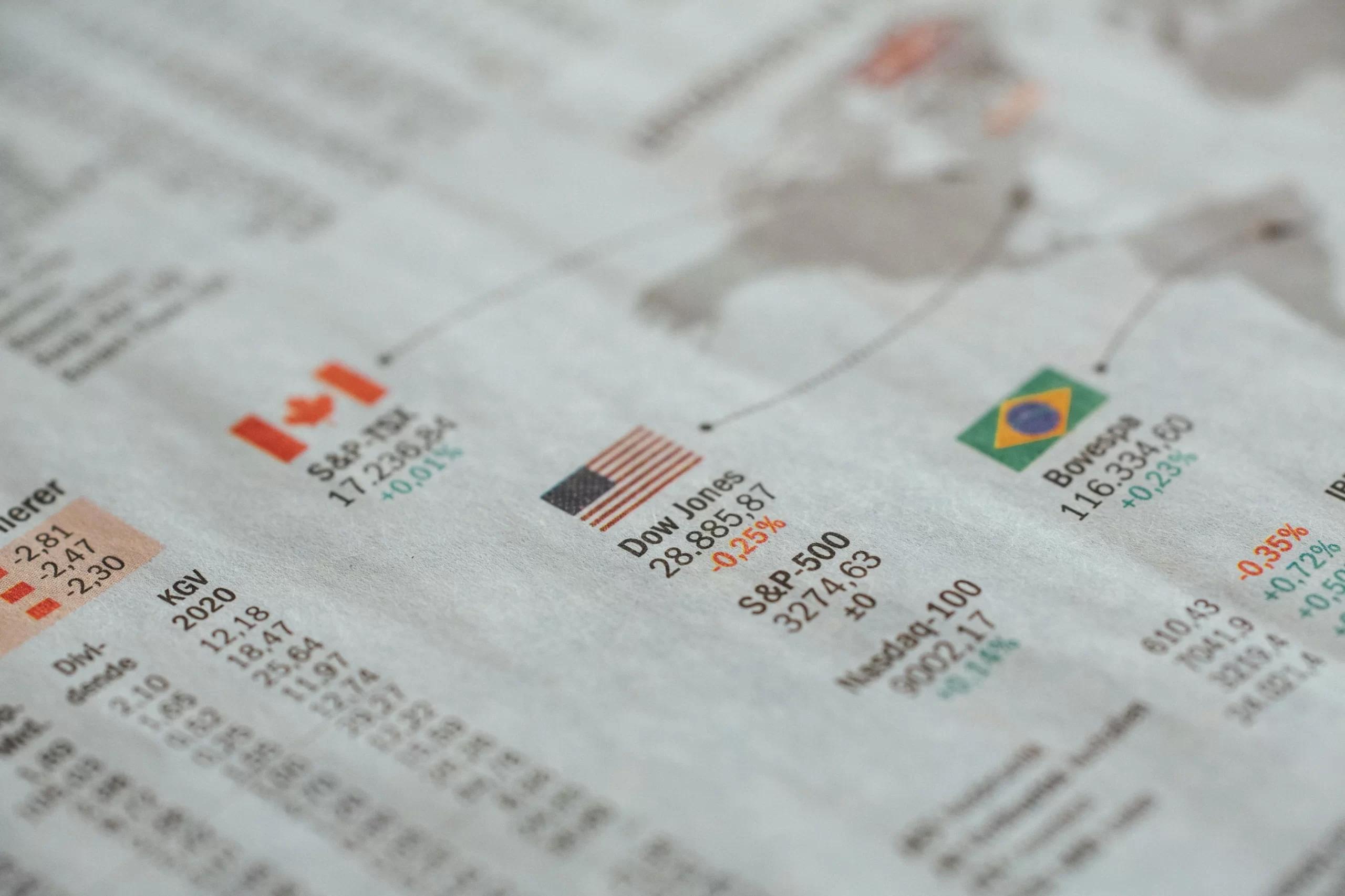
The MSCI World Index, a broad barometer of developed‑market stocks, is up about 3.2% over the past five trading days and roughly 3.2% year‑to‑date, even after a bruising February‑March correction. FT data show the S&P 500 trading around 6,612, up 0.44% on the day, while the Dow Jones Industrial Average sits near 46,670, about 0.36% higher. Europe’s DAX is edging up about 0.3%, and London’s FTSE 100 is modestly positive.
J.P. Morgan’s review of the first quarter highlights a notable rotation under the surface: value stocks eked out a small gain of 1.3%, while growth names, including some mega‑cap tech leaders of recent years, fell about 8.4% as investors took profits and reassessed lofty valuations in a higher‑rate world. Emerging‑market equities slipped 0.1% but still outperformed developed markets, which dropped 3.5% in Q1, helped by relatively resilient Asia despite the drag from Middle East tensions.
In short, headline indices suggest calm, but the leadership within them is changing, with global investors tiptoeing away from the most expensive tech and back toward more cyclically sensitive sectors such as financials, energy, and industrials.
Bonds: yields rise as “higher for longer” sinks in
If equities look relatively stable, bond markets tell a story of renewed stress. J.P. Morgan notes that government bonds “were volatile throughout the quarter and sold off sharply as higher energy prices fueled inflation concerns,” with short‑dated maturities hit hardest.
The logic is straightforward: markets have moved from pricing multiple rate cuts in 2026 to expecting fewer, later cuts, and in some regions, even the risk of further hikes if inflation proves sticky. J.P. Morgan Global Research now expects global core inflation to hover around 2.8% this year, down from about 3% in 2024 but still above many central banks’ 2% goals. Its analysts see inflation likely accelerating in the U.S. even as it moderates in Europe, a divergence that is already feeding into bond spreads and currency moves.
Earlier episodes show how quickly stress can show up when yields jump. A Reuters analysis of a past April sell‑off found that high‑yield corporate spreads in Europe spiked more than 80 basis points in a matter of days, and U.S. junk bonds registered their largest weekly drop since 2022 as investors reassessed credit risk. While today’s readings are less dramatic, the underlying dynamic remains as borrowing costs rise, weaker borrowers, from speculative‑grade firms to heavily indebted governments, are first in line for market scrutiny.
For now, the message from fixed income is that the era of “free money” is definitively over, and markets are still adjusting to what a world of structurally higher real yields looks like.
Currencies and commodities: strong dollar, regional cross‑currents
A strong dollar remains one of the defining features of today’s market landscape. MSCI commentary and FX summaries point to a U.S. dollar index climbing as investors seek yield and safety, with the yen under particular pressure. J.P. Morgan’s inflation outlook suggests that if U.S. core inflation does edge higher relative to Europe’s, the dollar could stay supported for longer, reinforcing capital flows into U.S. assets.
That has knock‑on effects across global markets:
- For emerging‑market borrowers with dollar‑denominated debt, every tick higher in the greenback raises repayment costs.
- For commodity importers in Europe and Asia, a stronger dollar can amplify the impact of higher oil and gas prices driven by geopolitical conflict.
Energy remains a key swing factor. J.P. Morgan attributes much of the recent bond sell‑off to higher energy prices stoking inflation fears, and the IMF has warned that “global conflicts that disrupt energy prices” are among the biggest downside risks to its baseline growth and inflation forecasts.
Growth and inflation: a steady but uneven global picture
Zooming out from daily price moves, the macro backdrop helps explain why markets are jittery but not panicked.
In its January World Economic Outlook update, the International Monetary Fund raised its forecast for global growth in 2026 to 3.3%, matching 2025 and marking a third consecutive year at that pace. That revision was 0.2 percentage points higher than its October prediction, reflecting stronger‑than‑expected investment and easing tariff headwinds.
The IMF sees advanced economies growing about 1.8% on average, while emerging and developing economies expand just above 4%, maintaining a familiar two‑speed split. At the same time, it expects global inflation to continue to decline, from 4.1% in 2025 to 3.8% in 2026 and 3.4% in 2027. J.P. Morgan’s separate forecast for global core inflation, around 2.8% this year, is broadly consistent, though it highlights regional divergences that are already showing up in markets.
Risks to this “steady but not spectacular” scenario include:
- A slowdown in AI‑related investment that has been propping up capital expenditure in the U.S. and parts of Asia.
- Escalating trade conflicts and unresolved tariff disputes, including the possibility that U.S. tariffs could be struck down or reshaped by court rulings, forcing a rapid policy reset.
- Geopolitical shocks that send energy prices sharply higher, which could re‑ignite inflation and force central banks back into tightening mode.
For now, though, both the IMF and major banks see a world that is muddling through: not booming, not in recession, but growing just fast enough to absorb higher rates without triggering a global credit event.
Regional patterns: Asia’s edge, Europe’s catch‑up, Wall Street’s rotation
Within that global picture, regional equity trends offer a more granular snapshot.
MSCI data compiled by MarketScreener show Asia “comfortably outperforming Wall Street in 2026,” thanks in part to relatively cheaper starting valuations and exposure to manufacturing and AI hardware demand. Europe’s STOXX 600 recently hit a record high, with Reuters reporting that defense and mining stocks helped drive the index up almost 1% in a single session as investors regrouped after an AI‑stock sell‑off.
In the U.S., major benchmarks are hovering near record territory but with a changing cast of leaders. J.P. Morgan notes that the early‑year rotation away from mega‑cap tech allowed value sectors to outperform, even as the broad market slipped in Q1. Investors are increasingly sensitive to earnings, cash flow and balance‑sheet strength rather than simply rewarding “growth at any price.”
These cross‑currents mean that “global markets” are anything but monolithic. An investor overweight Japanese exporters or Korean chipmakers has had a very different 2026 so far than one concentrated in U.S. software or small‑cap European retailers.
What today’s trends mean for investors and policymakers
For investors, today’s global market trends point to a few clear themes:
- Selectivity matters more than ever. With broad equity indices grinding higher but leadership rotating, stock picking (or sector allocation in index form) is playing a bigger role in returns than during the one‑way tech rally of earlier years.
- Duration risk is back. Rising bond yields and shifting rate‑cut expectations are introducing real price risk into fixed‑income portfolios, especially at the short and intermediate end.
- Currency and regional calls are critical. A strong dollar and divergent inflation paths across the U.S., Europe and emerging markets mean that where you invest — and in what currency — can be as important as what asset class you choose.
For policymakers, the message is equally nuanced. The IMF’s upgraded forecast gives central banks some room to keep policy tight enough to finish the job on inflation without choking off growth entirely. But the bond market’s renewed volatility is a reminder that mis‑steps, whether cutting too soon or staying too tight for too long, will quickly show up in borrowing costs for governments, firms, and households.
In other words, today’s global market trends are not those of a world in crisis, nor of a world awash in cheap money. They are the patterns of an economy and a financial system learning to live with “normal” interest rates again, and discovering just how much harder that makes every investment and policy choice.