
Iran has been largely cut off from the global internet as security forces struggle to contain the biggest wave of anti‑government protests since the “Woman, Life, Freedom” uprising, with new demonstrations ignited by soaring prices and calls for the downfall of the Islamic Republic. Monitoring groups say traffic collapsed nationwide on Thursday evening, just as crowds poured into streets and onto rooftops in cities across the country shouting “Freedom, freedom” and “Death to the dictator.”
Nationwide blackout as protests reach “tipping point”
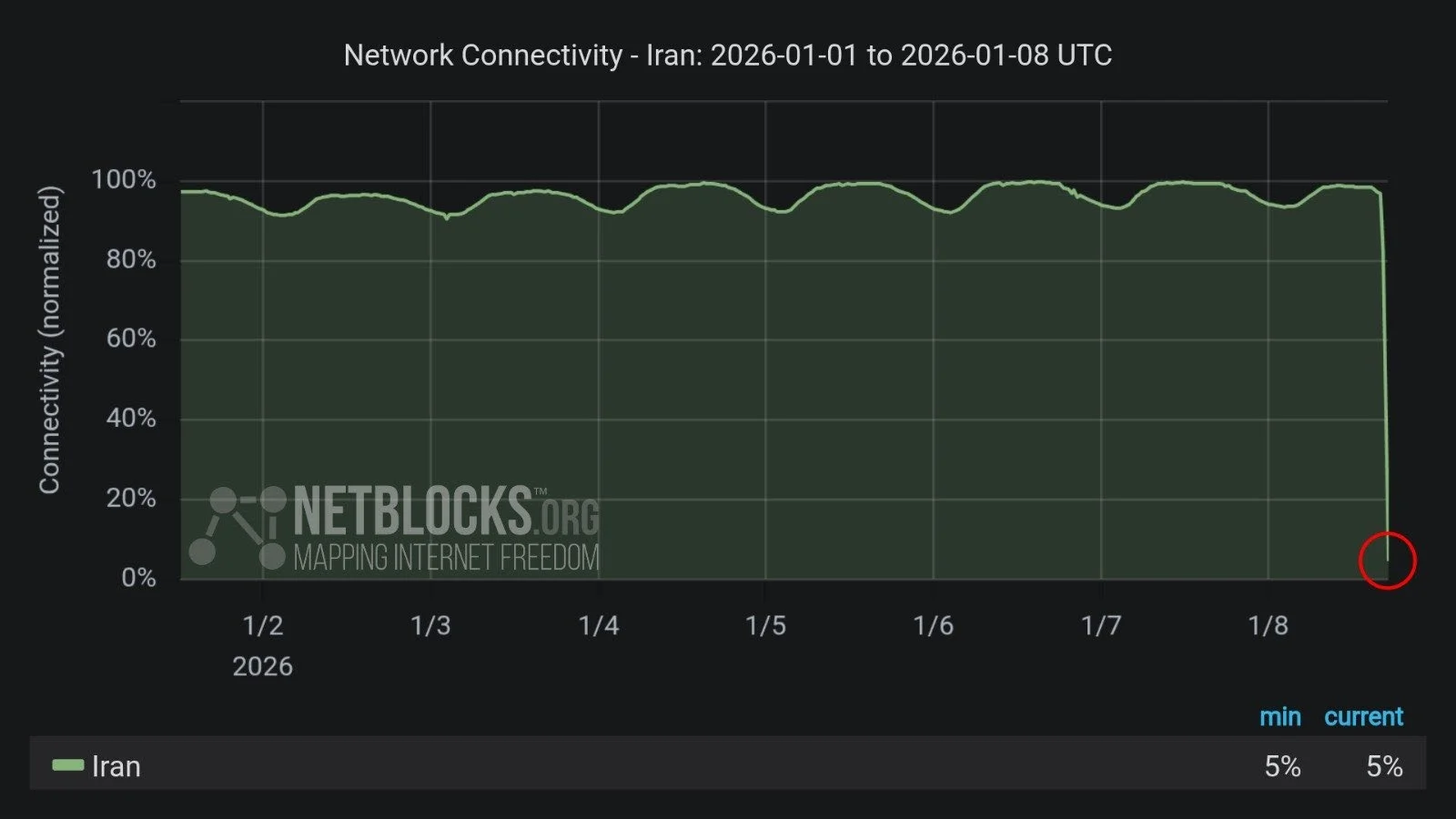
Internet access and many phone lines were throttled or cut on Thursday afternoon and evening, according to NetBlocks and the Internet Outage Detection and Analysis project, leaving most of Iran “nearly entirely offline.” The blackout followed days of slower speeds and targeted blocking of platforms; part of what observers describe as an escalating pattern of digital censorship in response to unrest.
NetBlocks said live network data showed traffic collapsing shortly after calls circulated for mass protests at 8 p.m. local time, including a campaign by exiled crown prince Reza Pahlavi urging Iranians to lean out of their windows and shout slogans against the regime. Multiple sources in Tehran told CBS News and other outlets that mobile data and many fixed‑line services went down as chants began echoing through the capital.
The shutdown also appeared to disrupt some state and semi‑official news sites. Iran’s state broadcaster only acknowledged the protests in an 8 a.m. bulletin on Friday, calling demonstrators “rioters” and blaming unnamed foreign enemies. Human‑rights advocates say cutting communications is now a standard tactic for Tehran when protests reach what one analyst called a “critical juncture,” used in 2009, 2019, 2022 and again now.
From prices to politics: “Death to the dictator”
The latest protests began in late December as scattered demonstrations over inflation and the plunging rial but have since spread to dozens of cities and taken on overtly political slogans. Footage verified by international media shows crowds in Tehran, Mashhad, Isfahan, Kermanshah, and smaller towns chanting “Death to the dictator” and “Neither Gaza nor Lebanon, my life for Iran,” a familiar chant directing anger at the leadership’s regional policies.
Shops were shuttered in parts of Tehran’s Grand Bazaar and in provincial markets as strike calls mixed with street protests. Videos from the capital and other cities show government buildings, banks and vehicles set on fire, including what NBC News described as an apparent attack on facilities of the Islamic Republic of Iran Broadcasting in Isfahan.
What began as largely peaceful marches has turned more violent at night in some areas, with protesters clashing with police and the Islamic Revolutionary Guard Corps (IRGC) and security forces firing tear gas, birdshot and, in some cases, live ammunition, according to Amnesty International and local monitors. An exiled human‑rights group cited by Bloomberg and Fox News put the death toll at more than 40 after roughly two weeks of unrest, while BBC Persian and others have independently confirmed at least 21 fatalities.
Leaders vow “no leniency” as hard‑liners blame Trump
Iran’s top authorities have signaled a harder line. Judiciary chief Gholamhossein Mohseni‑Ejei said protesters were acting “for the enemy” and warned that this time “no one will be spared,” telling families there would be “no excuses left” for those who take to the streets. Another senior official, a member of parliament’s national security and foreign policy committee, claimed on social media that foreign adversaries were orchestrating the unrest and that the Islamic Republic “will not allow destabilization.”
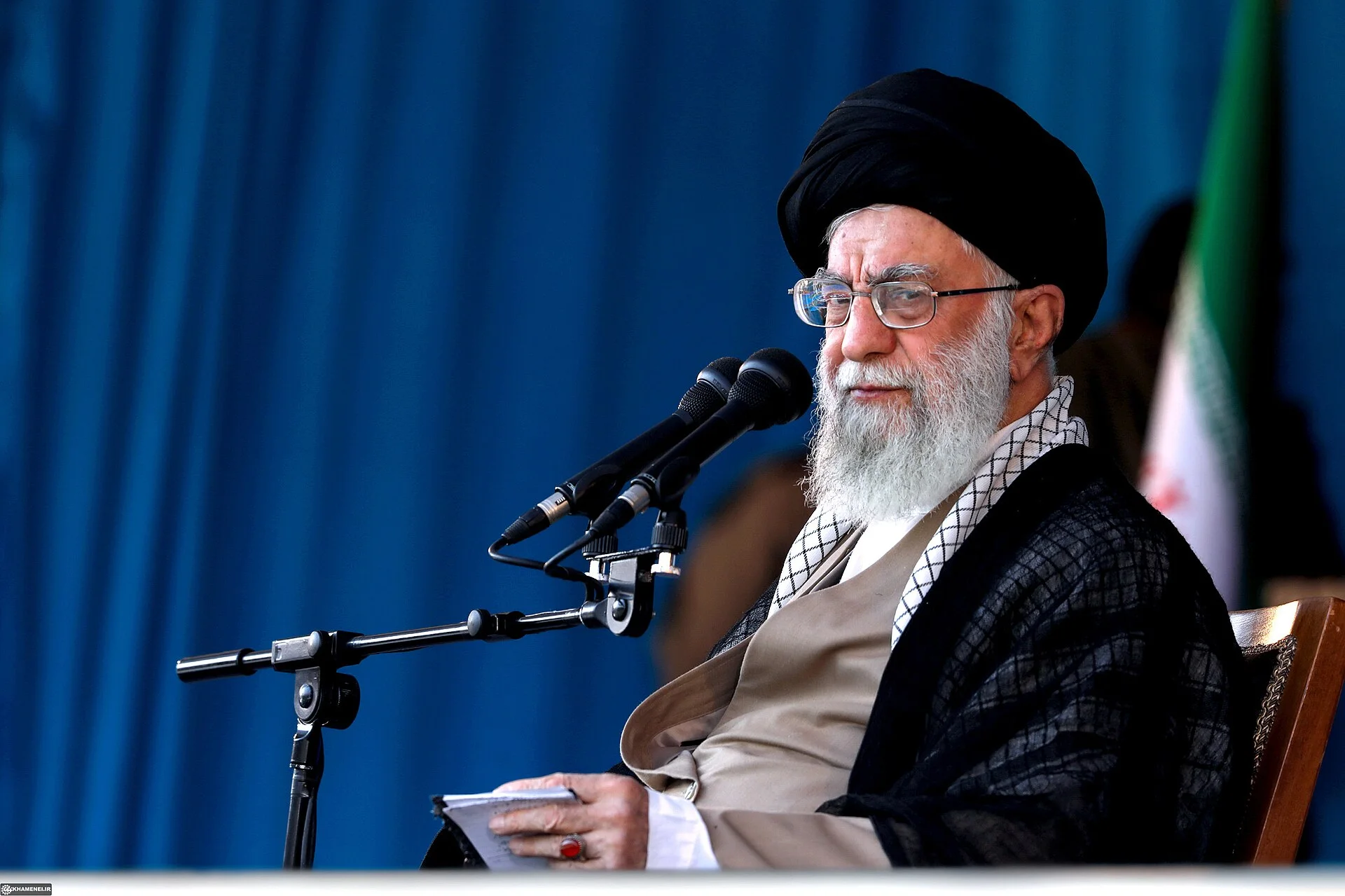
Supreme Leader Ayatollah Ali Khamenei, speaking publicly for the first time since the new wave of protests, accused demonstrators of “ruining their own streets” to please U.S. President Donald Trump, who has pledged support for those protesting peacefully. State media has aired footage of burned buses, police posts and torched cars and accused “vandals” of attacking ordinary people’s property.
At the same time, President Masoud Pezeshkian, a reformist elected last year, has called for “utmost restraint” from security forces and urged “dialogue, engagement, and listening to the people’s demands,” highlighting divisions within the ruling establishment over how to respond. A senior official quoted anonymously told The New York Times that authorities were “overwhelmed” and that the IRGC, usually focused on external threats, might be asked to take fuller control of internal security.
Families abroad, activists and rights groups cut off
The blackout has left Iranians overseas scrambling for word from relatives and activists and made verification of casualty figures and arrests more difficult. Reza Pahlavi wrote on X that “millions of Iranians demanded their freedom tonight,” adding that the regime had “cut all lines of communication” and might even try to jam satellite signals.
Amnesty International said in a statement that security forces have “illegally utilized shotguns loaded with pellets, water cannons, tear gas and beatings to disperse, intimidate and punish predominantly peaceful demonstrators,” and urged the U.N. and foreign governments to pressure Tehran to restore communications and allow monitors into the country. Human‑rights channels such as Iran International’s English service and the U.S.‑based Human Rights News Agency have become key conduits for videos and testimony smuggled out during brief windows of connectivity.
Given the shutdown, much of the footage now emerging is delayed, uploaded during short periods when connections flicker back or via VPNs and satellite links. Monitoring groups warn that such conditions make it easier for authorities to use force away from cameras and then control the narrative later through state media.
A familiar playbook with higher stakes
Analysts note that the current blackout closely resembles tactics used during the 2019 fuel‑price protests, when Iran cut most internet access for nearly a week and then carried out a deadly crackdown that rights groups say killed hundreds. The pattern now escalating censorship, then an almost total shutdown as slogans turn explicitly against the supreme leader suggests authorities view the unrest as a serious threat.
What is different, regional observers say, is the context: years of overlapping crises, from sanctions and inflation to environmental stresses and lingering anger over the killing of Mahsa Amini in 2022. Many of the protesters in videos circulating this week appear to be young, with women again prominent in some marches, echoing earlier movements but with economic grievances more front‑and‑center.
Whether this round of demonstrations grows into a sustained challenge or ebbs as previous waves have may hinge on factors that are hard to see from outside: how long protesters can organize under blackout conditions, whether strikes spread, and how far the security forces are willing, or ordered to go. For now, Iran’s streets are louder, its connections quieter, and a familiar battle over control of both public squares and information is once again underway.





