
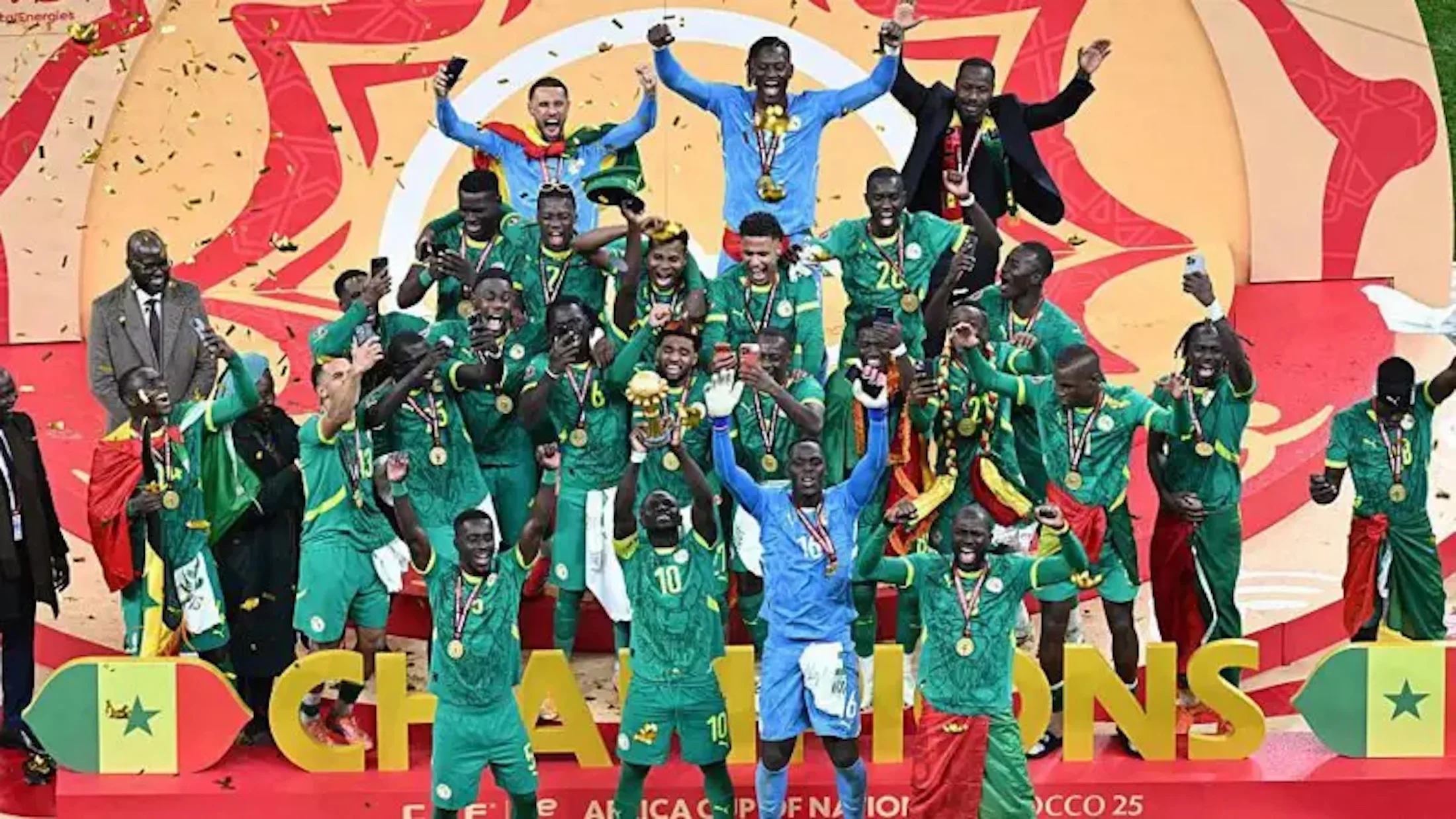
Senegal are champions of Africa again after Pape Gueye’s thunderous extra‑time strike sealed a 1‑0 win over hosts Morocco in Rabat, closing a chaotic, ill‑tempered Africa Cup of Nations final that showcased both the Teranga Lions’ resilience and the continent’s lingering officiating and crowd‑control problems. The victory delivers Senegal a second AFCON title in four years and deepens Morocco’s half‑century wait for a continental crown, after a night that saw a disallowed goal, a saved 98th‑minute penalty and players briefly walk off the pitch in protest.
A final decided in extra time
In front of a feverish crowd at Rabat’s Prince Moulay Abdellah Stadium, Senegal and Morocco went into extra time locked at 0–0 after 90 minutes of missed chances, last‑ditch defending and goalkeeping heroics. Villarreal midfielder Pape Gueye finally broke the deadlock in the fourth minute of extra time, latching onto an Idrissa Gana Gueye lay‑off on the edge of the box and rifling a left‑footed shot into the top‑right corner beyond Yassine Bounou.
Morocco, chasing their first AFCON title since 1976, had earlier seen chances for Ayoub El Kaabi and Ismael Saibari go begging, while Bounou twice denied Senegal in the first half, including a point‑blank stop from Ismaïla Sarr. At the other end, Edouard Mendy produced key saves as the hosts poured forward, including a sprawling block on El Kaabi and a late stop in the second period of extra time as Morocco threw men into the box.
When the final whistle blew after 120 tense minutes, Senegal’s players sprinted towards their end of the stadium to celebrate in front of supporters ringed by riot police, a jubilant scene that contrasted sharply with the anger and confusion of stoppage time just half an hour earlier.
Controversy: disallowed goal, walk‑off protest, saved penalty
The defining drama arrived deep into second‑half stoppage time. With eight minutes added, Senegal thought they had grabbed a late winner when Abdoulaye Seck’s header crashed off the crossbar and Ismaïla Sarr nodded in the rebound, only for Congolese referee Jean‑Jacques Ndala to rule the goal out for a foul on Achraf Hakimi.
Moments later, VAR sent Ndala to the monitor at the other end after Brahim Díaz went down under a challenge from El Hadji Malick Diouf. After review, the referee pointed to the spot, awarding Morocco a penalty in the 98th minute and sparking fury on the Senegal bench. Coach Pape Thiaw led most of his players off the pitch toward the dressing room in an unprecedented walk‑off protest, leaving the stadium in limbo for around 14 minutes as officials and senior players, including Sadio Mané, tried to cool tempers.
When Senegal finally returned, Díaz stepped up with the last kick of regulation time, but his tame effort was comfortably gathered by Mendy, who held his position and allowed the chipped shot to drop into his arms. The save took the game to extra time, where Pape Gueye’s strike restored a sense of footballing justice for many Senegalese fans who felt hard done by the earlier decisions.
Both the Confederation of African Football (CAF) and FIFA said players and officials from both sides could face “appropriate action” after reviewing video of the walk‑off incident and clashes involving staff and supporters near the touchline, calling the scenes “disappointing” for African football’s showcase event.
Tactical battle: Senegal’s resilience vs Morocco’s missed chance
If the last 20 minutes will dominate debate, the preceding 90 underscored why these two sides were pre‑tournament favourites. Senegal, without suspended captain Kalidou Koulibaly, relied on stand‑in centre‑back Mamadou Sarr to marshal a back line that survived repeated aerial assaults from Morocco’s wide players. Sarr produced a crucial block on a fierce El Kaabi effort in the second half, while full‑back Ismaila Diomande and Mendy combined to smother several dangerous crosses.
In midfield, Lamine Camara and Idrissa Gana Gueye set the tone with aggressive pressing and quick switches of play, freeing Mané to drift into half‑spaces and stretch Morocco’s back four. Senegal missed chances of their own, with Bounou denying Cherif Ndiaye one‑on‑one late in extra time and pushing away another long‑range strike from Pape Gueye as the Teranga Lions sought to kill the match.
Morocco, backed by a partisan home crowd, will lament their finishing. El Kaabi, so prolific earlier in the tournament, spurned two clear openings inside the box and headed wide when well‑placed, while substitute Bilal El Khannouss saw a drilled cross‑shot flash across the face of goal. After the match, coach Walid Regragui admitted: “When you get a penalty in the last minute, you can see victory very close, but in the end, football catches up with you… We congratulate Senegal, even if what we showed of African football was disappointing given everything that happened.”
Second star for Senegal, more heartbreak for Morocco
Senegal’s win adds a second continental star to the one they claimed in 2022 (AFCON 2021 edition) against Egypt, further entrenching their status as one of Africa’s modern powers. Before this golden generation, the Teranga Lions had lost three AFCON finals (2002, 2019, 2021) without scoring from open play, but in Rabat they combined big‑game maturity with the spine that has formed under first Aliou Cissé and now Pape Thiaw.
For Morocco, the defeat prolongs a 50‑year wait for a second Africa Cup title, despite a resurgence that included a historic World Cup semi‑final in 2022. The Atlas Lions had hoped to lift the trophy on home soil and cap a narrative arc that began in Qatar, but instead leave with questions over discipline and game management in the most intense moments.
CAF officials will also face scrutiny over refereeing standards and security after violent altercations between Senegal supporters and Moroccan authorities around the away end, where members of Senegal’s Gaïndé fan group appeared to try to reach officials and opposition staff before being held back by lines of riot police.
Dakar erupts, Africa takes stock
Back in Dakar and in cities across Senegal, late‑night celebrations erupted almost instantly after the final whistle. Crowds poured onto the Corniche, traffic ground to a halt and fireworks lit up the sky as fans waved flags, blared car horns and chanted Pape Gueye’s name into the early hours.
Elsewhere on the continent, reactions mixed joy for Senegal with unease at the final’s flashpoints. For many neutrals, the tournament showcased the depth and drama of African football, from rising stars in West and Central Africa to North African heavyweights; yet the chaotic ending in Rabat rekindled old criticisms about officiating, infrastructure, and crowd management at major events.
Senegal’s win is part of a bigger trend: African national teams are no longer dark horses but established forces. They send talent to Europe’s top leagues and expect to compete for trophies, not just play spoiler. The Teranga Lions’ roar could be heard far beyond the stadium as Pape Gueye and his teammates raised the trophy under the Rabat floodlights. This was a reminder that African football’s competitive heart is beating stronger than ever, even on a night of chaos.